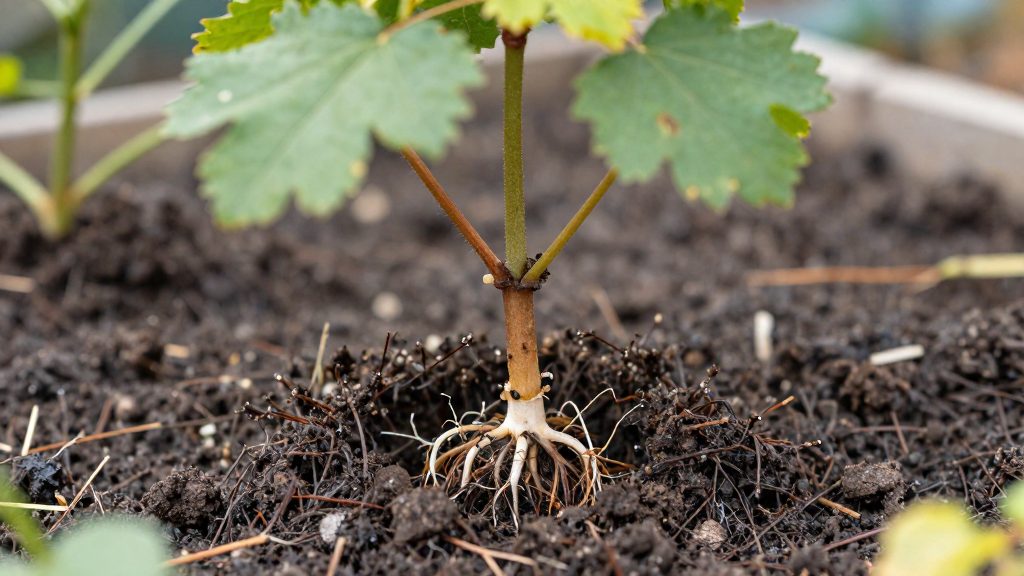
Deciduous shrubs transplant best in fall after they drop their leaves and enter dormancy, and early spring before new growth begins is the other recommended window. According to Iowa State University Extension and Outreach (2023), these are the best transplanting times for deciduous shrubs. Fall is not a universal rule, though. Colorado State University Extension recommends early spring instead and warns of greater mortality from moves in late summer and early fall, especially for conifers. Check your regional extension guidance before digging.
When Should You Transplant Shrubs in Fall?
Leaf drop and dormancy open the fall window
For deciduous shrubs, the fall window opens once the plant has lost its leaves and dormancy has begun. Iowa State University Extension and Outreach (2020) states that deciduous woody plants are better moved after dormancy begins, which is why leaf drop is the practical signal to start planning a fall move.
Timing options compared
| Timing | Guidance for deciduous shrubs | Source |
|---|---|---|
| Fall, after leaf drop | Recommended | Iowa State University Extension and Outreach (2023) |
| Mid-to-late fall (Maryland) | Dormant trees and shrubs can be moved under suitable conditions | University of Maryland Extension (2026) |
| Late winter to early spring (Maryland) | Dormant trees and shrubs can be moved | University of Maryland Extension (2026) |
| Early spring, before growth begins | Recommended | Iowa State University Extension and Outreach (2023) |
Early spring as the alternative
Early spring, before growth begins, is the second recommended window for deciduous shrubs. Iowa State University Extension and Outreach (2023) lists it alongside fall. Colorado State University Extension favors early spring more broadly, so spring is a sound choice where fall conditions are uncertain.
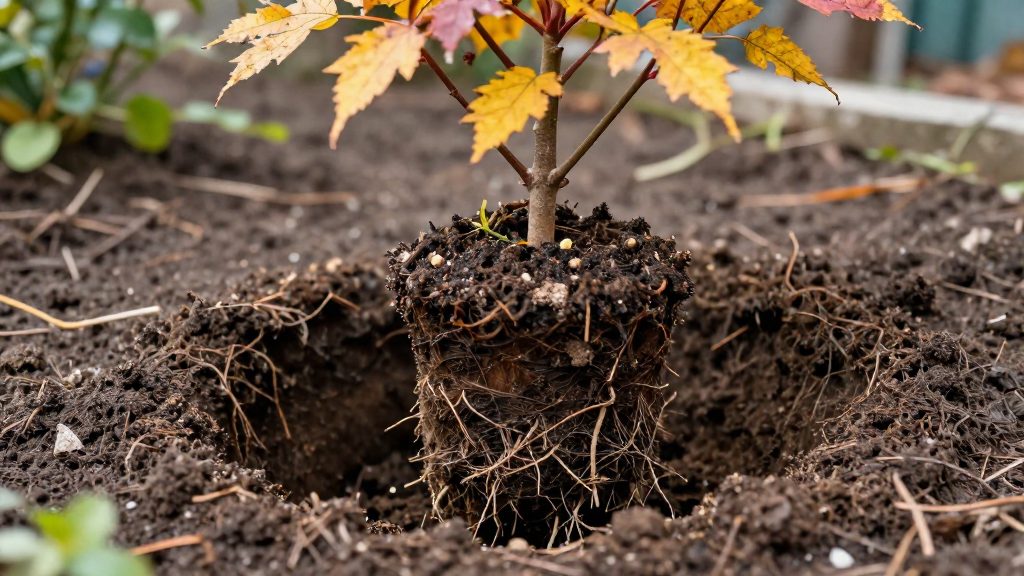
Deciduous Shrubs Versus Evergreen Shrubs
Evergreen shrubs follow different timing, and the group is not uniform. Conifers and broadleaf evergreens need separate handling.
| Plant group | Timing in the cited guidance | Source |
|---|---|---|
| Conifers | Late August through September, when moved in fall | Iowa State University Extension and Outreach (2020) |
| Broadleaf evergreens (general) | Spring is preferred | University of Maryland Extension (2026) |
| Mountain laurel, boxwood, hollies | Early fall, with deep watering and mulch | University of Maryland Extension (2026) |
Colorado State University Extension warns of greater mortality from late-summer and early-fall transplanting, especially for conifers. This regional warning does not establish that conifers face greater transplanting risk than deciduous shrubs throughout fall nationwide. Iowa State’s late-August-to-September window applies to its own guidance and should not be treated as a universal rule.
Broadleaf evergreens are generally better planted in spring. Mountain laurel, boxwood, and hollies are the exceptions named by University of Maryland Extension, which allows early-fall planting for them when deep watering and mulch are applied.
For fall transplanting of evergreen shrubs:
- Water deeply before planting so the root ball is moist when it is moved.
- Apply mulch after planting to protect the root zone.
- Monitor soil moisture and water as needed during the first two years, including winter. Do not water frozen ground.
How Local Climate Changes Fall Timing
Fall transplanting windows depend on local conditions, so one national date does not apply everywhere. Published guidance for the New York City area and for Maryland gives different calendar ranges, and the ranges also differ by plant type. Treat these figures as examples of how regional timing is set, not as dates for your own garden.
| Location | Plant type | Recommended window | Source |
|---|---|---|---|
| New York City area | Most deciduous woody plants | October 15 to December 1, during dormancy | New York Botanical Garden (2025) |
| New York City area | Evergreens | Mid-August to October 1 | New York Botanical Garden (2025) |
| Maryland | Dormant trees and shrubs | Mid-to-late fall or late winter to early spring | University of Maryland Extension (2026) |
| Maryland | Mountain laurel, boxwood, hollies | Early fall, with deep watering and mulch | University of Maryland Extension (2026) |
Within a single region, the window is only open when the ground is workable. If the root zone is frozen or waterlogged, wait for a better day within the same season rather than digging.
Dry soil also changes the timing. Iowa State University Extension and Outreach (2023) recommends watering thoroughly three to four days before digging a shrub whose soil is dry, so the root ball holds together when lifted.
Fall is not the best season everywhere. Iowa State and Maryland guidance accepts fall moves under specified conditions. Where local winters are harsher or summers run longer, a regional extension service is the most reliable source for the local start of the window.
Is It Too Late to Transplant?
Fall is not a fixed cutoff for moving shrubs. Whether a move is still reasonable depends on ground and weather conditions on the day of digging and planting. According to University of Maryland Extension (2026), dormant trees and shrubs can be moved in mid-to-late fall.
Frozen ground and soggy soil both call for waiting. If the soil is frozen or saturated, delay the move until it is workable.
Late-fall frost and winter wind are a separate risk. For the New York City area, New York Botanical Garden (2025) warns against late-fall planting of evergreens because of frost and winter-wind damage. This guidance is specific to evergreens and to that region, so check local conditions before applying it elsewhere.
| Condition | Recommended action | Source |
|---|---|---|
| Late-fall frost and winter wind (evergreens, New York City area) | Avoid late-fall planting | New York Botanical Garden (2025) |
Dry soil does not always mean the move must wait.
Preparing Shrubs Before the Move
Preparation starts several days before digging. Three tasks should be done in advance: soil moisture management, a ready planting hole, and a check of site drainage. Iowa State University Extension and Outreach (2023) gives the watering interval, and the other steps are standard practice for keeping the root ball intact.
Timeline
| When | Task |
|---|---|
| Before the digging day | Dig and prepare the new planting hole |
| Before the digging day | Gather tools and materials |
| Before the digging day | Check drainage at the new site |
Water the Soil Ahead
Moist soil holds together better when the shrub is lifted, which supports the root ball. Check moisture by pushing a trowel or soil probe into the root zone before deciding whether to water.
Prepare the New Planting Hole
Dig the new hole before the digging day so the shrub can go into the ground soon after it is lifted. Iowa State recommends a hole about twice the width of the root ball and as deep as the soil ball (Iowa State University Extension and Outreach, 2023). Set the spoil aside and keep the sides of the hole clean.
Gather Tools and Check Drainage
Collect the spade, tarp or sheet for the root ball, bucket, hose, and any other equipment before the digging day. Check the new site’s drainage in advance by digging a test hole and filling it with water. Follow University of Maryland Extension’s drainage test: dig a hole 12 inches deep and 12 inches wide, fill it with water, and refill it the next day. All the water should drain within eight hours; slower drainage warrants further assessment before planting.
Iowa’s guidance applies to deciduous shrubs, so check regional extension advice before scheduling a fall move.
How to Dig and Replant Shrubs
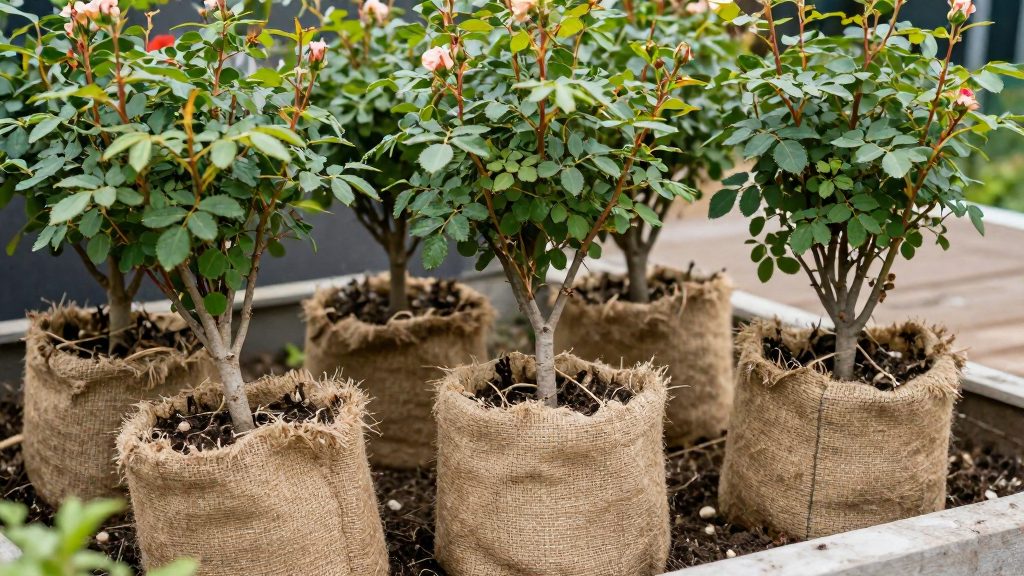
Digging and replanting technique determines how much of a shrub’s root system survives the move. Iowa State University Extension and Outreach (2023) advises moving deciduous shrubs with their soil ball intact to reduce transplant shock, and replanting immediately when possible.
Keep Soil Attached to the Roots
- Dig around the shrub and lift it with the soil ball still around the roots. Do not shake the roots bare.
- Keep the soil ball intact during transport, and move the shrub to its new site without unnecessary delay.
- Replant the shrub as soon as the hole is ready. Roots left out of the ground for long periods dry out quickly.
Set the Root Ball at the Original Soil Depth
Iowa State University Extension and Outreach (2023) recommends a hole as deep as the soil ball. Set the shrub so the top of the root ball sits at the same level it occupied before digging. Planting too deep or too shallow can stress the plant after the move.
Backfill and Firm the Soil
Backfill around the root ball with the original soil, then firm it gently to remove air pockets. Iowa State University Extension and Outreach (2023) recommends watering thoroughly after backfilling.
| Planting hole element | Guideline | Source |
|---|---|---|
| Width | Approximately twice the root-ball width | Iowa State University Extension and Outreach (2023) |
| Depth | As deep as the soil ball | Iowa State University Extension and Outreach (2023) |
Watering and Mulching After Transplanting
Water a replanted shrub thoroughly once the hole is backfilled. According to Iowa State University Extension and Outreach (2023), thorough watering at this stage settles the soil around the roots, and a shrub moved with soil attached to its roots experiences less transplant shock. Use deep watering to moisten the full root ball, not just the surface.
Apply a layer of mulch over the root zone to help hold soil moisture and insulate the roots. Keep the mulch pulled back from the stem or trunk so the bark stays dry. Check local extension guidance for suitable mulch materials and application depth.
After planting, track soil moisture rather than following a fixed schedule. Push a finger or trowel into the soil to check whether the root zone is dry before watering.
| Timing | Action | Basis |
|---|---|---|
| Immediately after backfilling | Water thoroughly | Iowa State University Extension and Outreach (2023) |