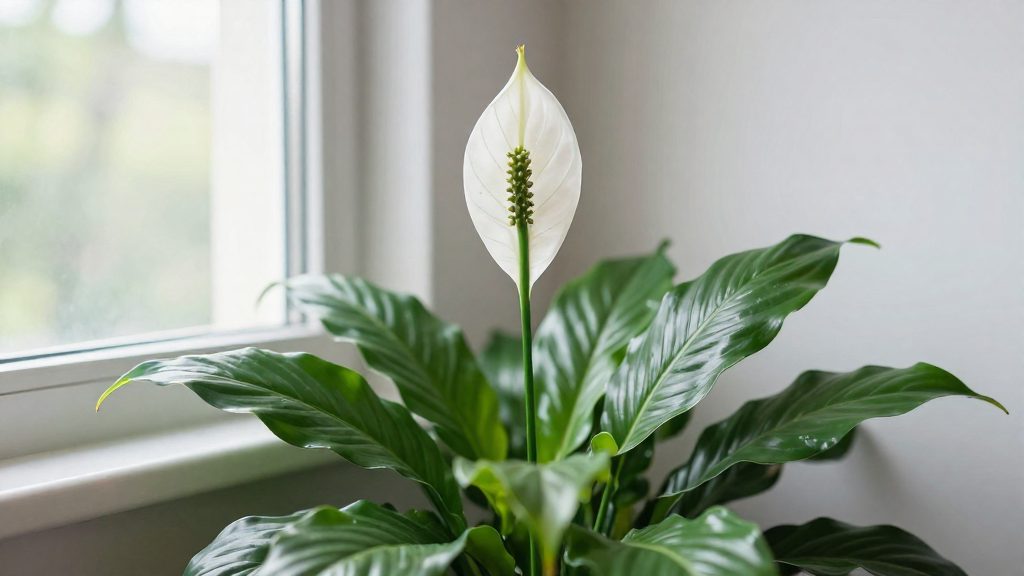
Do air purifying plants actually clean bedroom air?
Plants can remove some airborne compounds under controlled test conditions, but the evidence does not show that they clean bedroom air at a rate that matters in a typical home. For a bedroom, potted plants are a supplement at most and cannot replace ventilation.
Early research and the pollutants studied
Interest in plants as indoor air cleaners dates to the late 1980s. A 1989 NASA study by Wolverton, Johnson and Bounds, published through the NASA Technical Reports Server, evaluated leaves, roots, soil and associated microorganisms as possible ways to reduce indoor air pollutants (NASA Technical Reports Server, 1989).
The Drexel University review by Cummings and Waring (2019) covered about a dozen studies spanning roughly 30 years of research. Its central measurement concerns VOCs, the category of gases released by many building materials, furnishings and household products.
How plant removal compares with normal air exchange
The gap is expressed in orders of magnitude, where each order represents a tenfold difference. Drexel University (2019) reported that plants remove VOCs orders of magnitude more slowly than normal building air exchange, meaning the ordinary movement of indoor air out of a building and replacement with outdoor air. A room that exchanges its air through ordinary building operation clears pollutants far faster than plant uptake alone.
| Study | Date | Key finding for bedroom air |
|---|---|---|
| NASA Technical Reports Server study (Wolverton, Johnson, Bounds) | 1989 | Proposes plants combined with an activated-carbon filter; no measured removal rates in the abstract |
| Drexel University review (Cummings and Waring) | 2019 | Plant removal of VOCs is orders of magnitude slower than normal building air exchange |
Why chamber results do not transfer to bedrooms
Much of the early work relied on sealed chamber studies. Drexel University (2019) noted that these small enclosed test spaces do not resemble homes. Inside a sealed chamber, the plant is the main variable affecting air quality. A bedroom is different: it is not sealed, air moves through doors, gaps and heating or cooling systems, and pollutant sources change with daily use. These differences mean a result measured in a chamber cannot be read as a predictable change in a bedroom.
Practical guidance for a bedroom
- Treat plants as a decorative and maintenance choice, not as an air-quality measure. Choose species for light conditions, room temperature and your ability to care for them.
- Place plants where they receive the light their species needs, since a plant that declines will not contribute anything to the room.
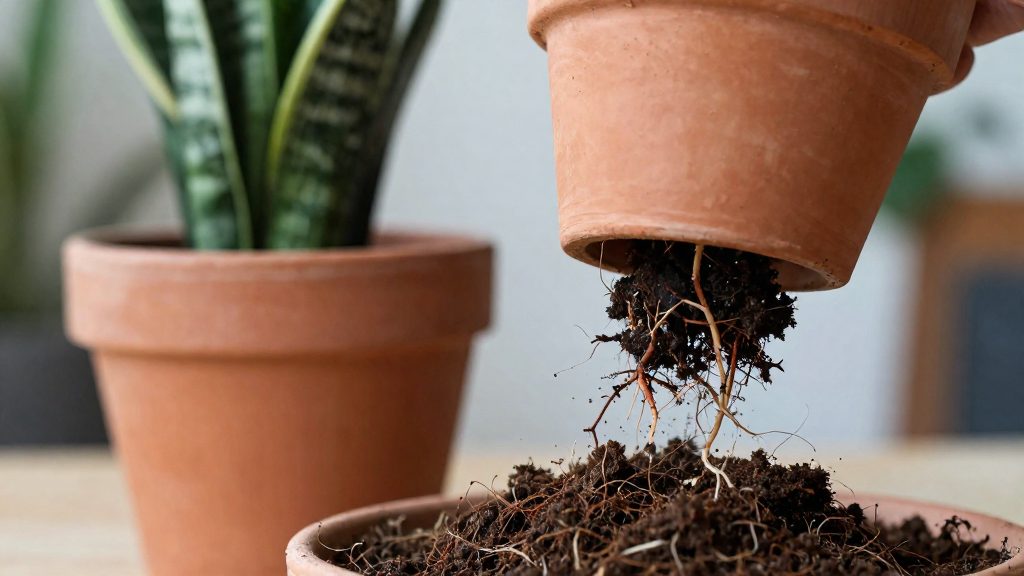
- Water to keep the root zone moist without letting the pot stay waterlogged. Standing water is a common cause of root problems in potted plants.
- Rely on ventilation and air exchange for the bedroom’s air quality. Plants do not replace these measures.
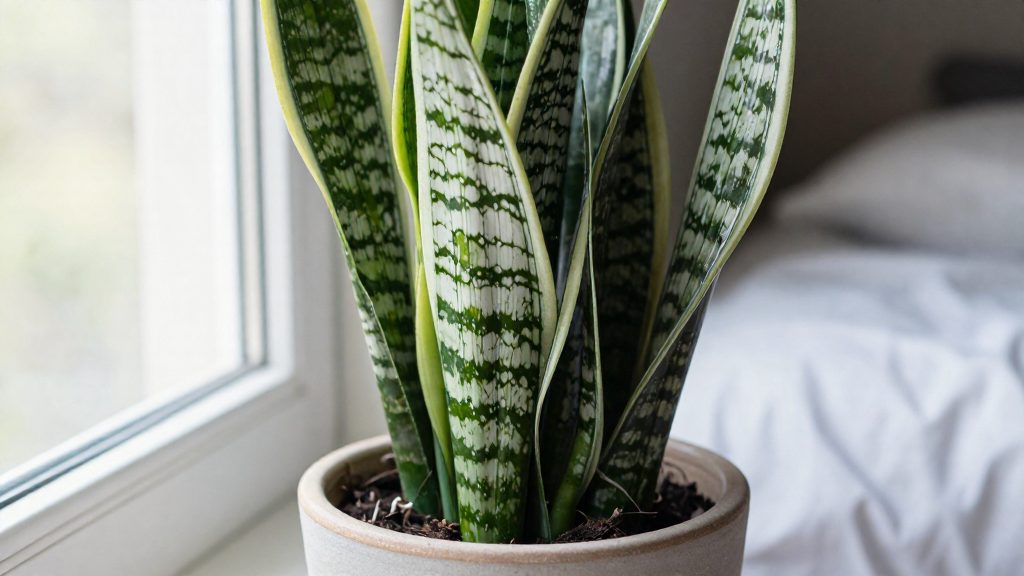
What the NASA Clean Air Study really found
The 1989 NASA study by Wolverton, Johnson and Bounds asked whether plants could help reduce indoor air pollutants. According to NASA Technical Reports Server (1989), the researchers evaluated plant leaves, roots, soil and microorganisms as possible ways to do this. The study looked at the whole growing system, not only the foliage.
The abstract proposes a combined plant and activated-carbon filter, which pairs plants with a carbon filter in one design. It presents this as a design concept. The abstract does not report measured removal rates, so it cannot tell you how much a specific plant or room setup would reduce pollutants.
A 2019 review by Drexel University (2019) addressed the study’s test conditions. A sealed chamber isolates the plant and the air around it, so results describe that enclosed space. A bedroom in a real home is not sealed. Its air mixes with the rest of the building, and it changes when doors and windows open and when heating or air-handling systems run. None of these factors were part of the chamber setup.
When you evaluate a claim based on the 1989 study, check three things:
- Whether the source reports measured results from a real room, or only from a chamber
- Whether the source describes ventilation conditions
- Whether the claim is about the plant system tested by NASA or about a single species in a home
How to choose a low-maintenance bedroom plant
Choosing a low-maintenance bedroom plant depends on three factors: the light the room receives, the footprint available on a nightstand or in a corner, and how closely the plant needs to be checked. Selection should be based on fit and care needs, not air-cleaning claims. The official sources consulted do not specify measured light thresholds, mature sizes or pest resistance rankings for individual species, so the checks below are practical methods to apply before buying.
Species tolerating low light
Bedrooms often receive less light than living rooms, and many are shaded by furniture or face north. Observe the intended spot at midday and classify it as direct sun, bright indirect light, or dim ambient light. Compare this with the light requirement on the plant label or from the retailer, and treat that requirement as a minimum. Avoid placing a plant in a spot darker than its label allows.
Compact mature sizes for nightstands and corners
Measure the surface or corner, then compare it with the plant’s expected mature height and spread. Nursery size often understates the final dimensions. Leave clearance around the pot so foliage does not press against walls, bedding or lamps.
| Selection check | What to examine | Why it matters |
|---|---|---|
| Light tolerance | Brightest and darkest points of the spot at midday | Confirms the plant meets its minimum light requirement |
| Mature size | Expected height and spread on the label | Ensures fit on a nightstand or in a corner |
| Pest checks | Leaf undersides, leaf joints, stems | Catches webbing, sticky residue or spots early |
| Growth habit | Upright or trailing form | Keeps floor and surfaces clear |
Pest resistance and forgiving growth habits
The official sources consulted do not specify pest resistance for named species, so inspection is the main safeguard. Examine each plant at purchase, then keep new plants separate from others for a short period. Choose plants whose leaves and growth are easy to observe, since changes in colour, shape or density are then visible early and can be addressed before they spread.
Why ventilation beats plants for air quality
Bedroom air quality depends mainly on how much outdoor air enters the room and how much indoor air leaves it. Ventilation, whether through opened windows or a mechanical ventilation system, replaces the air of the whole room. A few houseplants affect only a small volume around them. For a bedroom, the practical lever is the air exchange rate itself.
Airing the room with opened windows
- Open windows on two opposite sides when possible, so air crosses the room instead of stalling.
- Ventilate before sleeping and again after waking, when the room has been closed for hours.
- Keep the bedroom door partly open during airing so air can circulate into the rest of the home.
- Air when outdoor conditions are favorable. Wind, temperature and local air quality vary by region and season.
The official sources consulted do not give a specific air exchange rate for opened windows, so the length of airing depends on room size, wind and outdoor conditions.
Mechanical ventilation and filter care
- Run the ventilation unit as its controls specify, following the manufacturer’s operating schedule.
- Clean or replace filters at the interval stated in the manual. A clogged filter reduces airflow.
- Check that supply and extract vents in the bedroom are not blocked by furniture, curtains or bedding.
- Record each filter change date so the next one is not missed.
Humidity and carbon dioxide overnight
Two indicators are worth tracking in a sleeping room: relative humidity and carbon dioxide. A closed bedroom with occupants gradually accumulates carbon dioxide from breathing and moisture from sleep. Stale air can make the room feel stuffy, and persistent high humidity favors condensation on cold walls and mold growth. A basic indoor monitor that displays both values lets you see whether overnight ventilation is adequate. Use the readings to adjust airing and ventilation settings, and compare them over several nights rather than reacting to a single value.
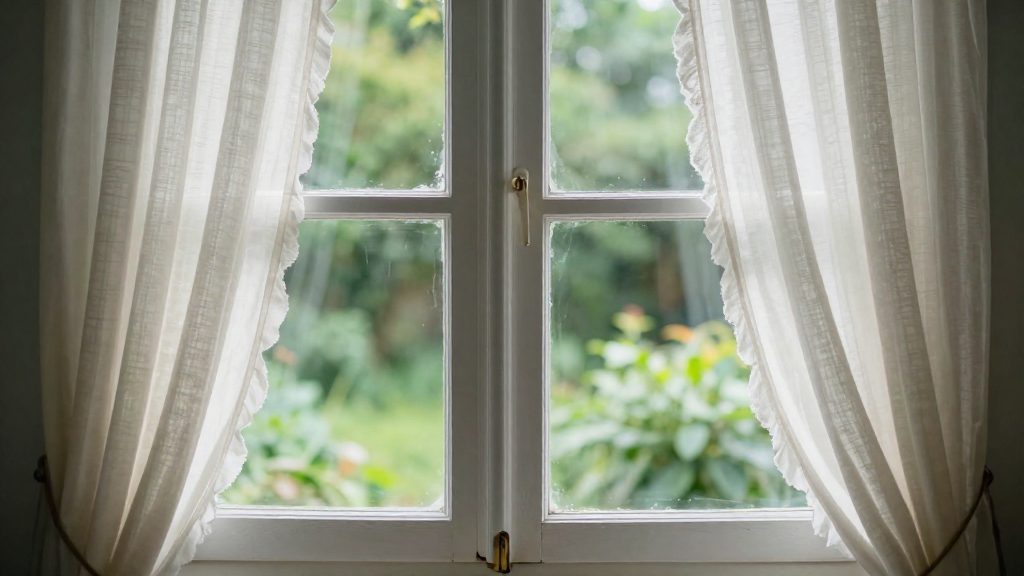
Are bedroom plants safe for cats and dogs?
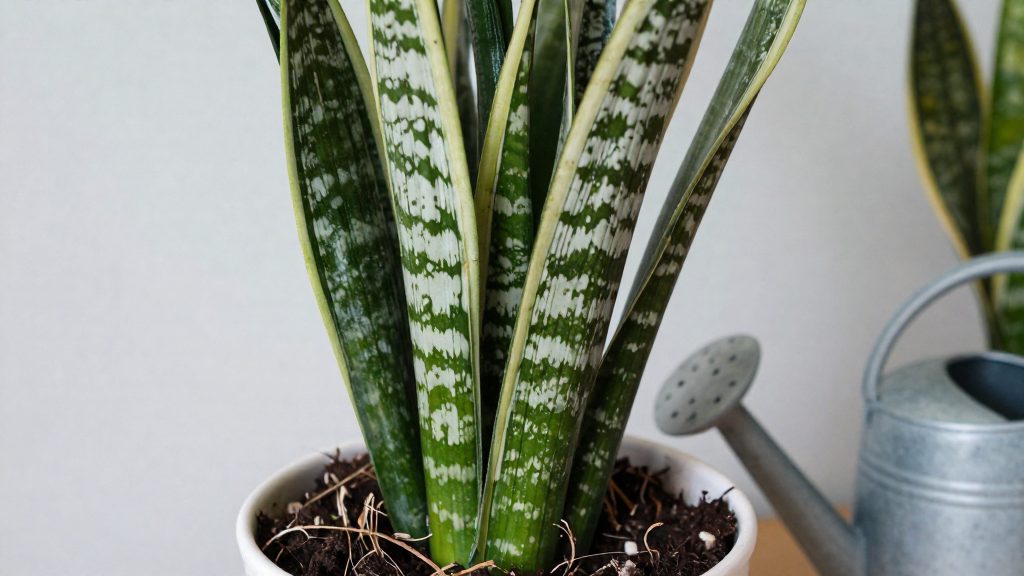
Not all bedroom plants are safe for pets. The ASPCA lists snake plant as toxic to both dogs and cats, and the official sources consulted do not specify toxicity details for other species covered here. Toxicity depends on the species, not the room, so a plant on a nightstand is a risk if a pet can reach it. Check each species against the ASPCA plant database before bringing it home.
Snake plant and its toxic component
According to ASPCA (2026), the toxic component of snake plant is saponins. Exposure can cause:
- Upset stomach
- Vomiting
- Diarrhea
These are the symptoms the ASPCA associates with snake plant toxicity in dogs and cats. Symptoms can appear after a pet chews or swallows plant material, so any sign of digestive distress after contact with a houseplant should be treated as a possible exposure.
Pet hazard when plants are chewed
Pets are exposed to toxic houseplants mainly when they chew or swallow plant material. Cats and dogs may bite leaves out of curiosity or while playing, and a plant kept in a sleeping area can be more accessible to a pet than one kept in a living room. Chewing is the main pathway to watch for with snake plant, because the saponins are in the plant tissue itself.
What to do after exposure
| Situation | Action |
|---|---|
| Pet chewed a snake plant, no symptoms | Remove the plant material from the pet’s mouth if possible and monitor the animal closely |
| Upset stomach, vomiting or diarrhea | Contact a veterinarian and ASPCA Poison Control at (888) 426-4435 |
| Unsure which plant was chewed | Call ASPCA Poison Control with the plant name, and bring a leaf sample to the veterinarian |
How many plants does a bedroom need?
According to Drexel University (2019), matching the air handling of a building, or the effect of a few open windows, would take between 100 and 1,000 plants per square meter of floor space (roughly 9 to 93 plants per square foot). The estimate comes from a review by Cummings and Waring. The range is therefore a measure of how large the effect would need to be, not a dose for a single room.
Scaling the density to bedroom floor area
To estimate the count for a given room, multiply the room’s floor area in square meters by the density range:
- Lower estimate: floor area (m²) × 100
- Upper estimate: floor area (m²) × 1,000
The table below applies this arithmetic to three hypothetical bedroom sizes. These are calculated results, not measured values for any real room.
| Hypothetical floor area | Plants at 100 per m² | Plants at 1,000 per m² |
|---|---|---|
| 8 m² | 800 | 8,000 |
| 12 m² | 1,200 | 12,000 |
| 16 m² | 1,600 | 16,000 |
Practical limits of household plant numbers
Even the lowest value in the table is far more plants than a bedroom can physically hold. A count of this size would cover the floor, the furniture and the windowsills several times over. The main constraints are:
- Space: pots, stands and the clearance needed to move around the room
- Weight: soil and containers add load to shelves and floors
- Light: each plant needs a suitable position, and dense groupings compete for the same light
- Practicality: the number of plants needed would make routine daily living in the room difficult
The 1989 NASA study by Wolverton, Johnson and Bounds, published through the NASA Technical Reports Server, proposed combining plants with activated carbon in a filter. It shows that plants have been considered as one component of an air-cleaning system, not as the sole means of cleaning a bedroom’s air.
Care tips for bedroom plants
Bedroom plants stay healthy with three routines: watering matched to the pot, placing each plant where its light changes with the seasons, and keeping leaves clean. These routines do not measurably clean the air.
Watering frequency and pot drainage
- Water when the top layer of soil feels dry rather than on a fixed calendar. The official sources consulted do not specify a universal interval, because needs vary with pot size, soil type and room temperature.
- Choose pots with drainage holes. Standing water in a saucer or decorative cachepot keeps the root zone wet for longer.
- Water until liquid runs out of the base, then empty the saucer after a few minutes. Let the top of the soil dry before watering again.
Window placement and seasonal light changes
Bedrooms often receive less daylight than living rooms, and the angle and strength of light shift through the year. Review each plant’s position at every change of season.
| Season | Placement routine |
|---|---|
| Autumn and winter | Move plants closer to the brightest window and clean the glass so more light reaches the leaves |
| Spring | Turn pots a quarter turn each time you water so growth stays even, and check for leaves leaning toward the window |
| Summer | Shade plants from strong midday sun with a sheer curtain, especially behind south- or west-facing windows |
Leaf dusting and humidity
- Wipe leaves with a soft, damp cloth to remove dust, which can block light from reaching the leaf surface. Support the leaf from underneath while wiping.
- Avoid heavy leaf-shine sprays. A damp cloth is enough for routine cleaning.
- Group plants together or set pots on a tray of wet pebbles, keeping the pot base above the water line. Misting raises humidity only briefly, so grouping is the steadier option for bedroom plants.
Frequently asked questions
Can a bedroom plant clean the air well enough to replace opening a window?
No. Drexel University (2019) found that plants remove VOCs orders of magnitude more slowly than normal building air exchange, so ventilation remains the more effective way to refresh bedroom air.
How many plants would I need to match a room’s ventilation?
Drexel University (2019) estimated that matching a building’s air handling or a few open windows would take between 100 and 1,000 plants per square meter of floor space, roughly 9 to 93 per square foot. Those numbers make clear that a few pots on a nightstand cannot do that job.
Is a snake plant safe to keep in a bedroom with pets?
The ASPCA (2026) lists snake plant as toxic to dogs and cats, mainly because of its saponins, which can cause an upset stomach, vomiting and diarrhea. If you suspect your pet has eaten any part of the plant, contact a veterinarian or ASPCA Poison Control at (888) 426-4435 right away, without waiting for symptoms to appear.