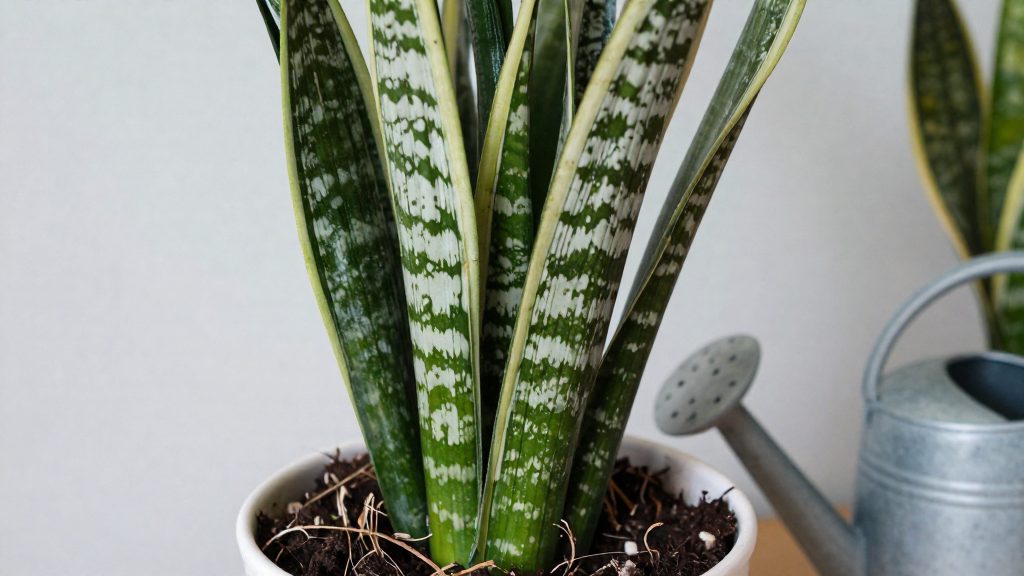
A snake plant needs noticeably less water in winter. According to NC State Extension, it should be watered only every one to two months in winter, while from spring through autumn the soil should be allowed to dry between waterings. In every season, check that the soil is dry before watering. The plant tolerates cool temperatures of around 50°F, and soil takes longer to dry in winter. Because the soil stays wet for longer in winter, the usual warm-season watering routine leads to overwatering and root rot.
Does a snake plant need less water in winter?
Cooler conditions slow the drying of the potting mix, so the soil stays wet for longer in winter. Watering on a warm-season schedule in winter therefore keeps the roots wet for longer than the plant needs. Watering on a warm-season schedule in winter therefore keeps the roots wet when they are not actively taking up water.
The official sources consulted do not describe the plant’s winter growth in detail, so the reasoning below is based on how soil moisture behaves in cooler conditions:
- Slower drying in cool months: Hunker (2026) notes that soil takes longer to dry in winter, so moisture remains in the pot for longer.
- Soil stays moist longer: Hunker (2026) adds that soil takes longer to dry in winter.
- The dry-between-waterings rule still applies: Letting the soil dry between waterings still matters, but the time between waterings must be extended to match the slower drying.
| Period | Soil moisture pattern | Source |
|---|---|---|
| Spring through autumn | Soil should dry between waterings | NC State Extension |
| Winter | Soil takes longer to dry, so the same schedule keeps it wet | Hunker (2026) |
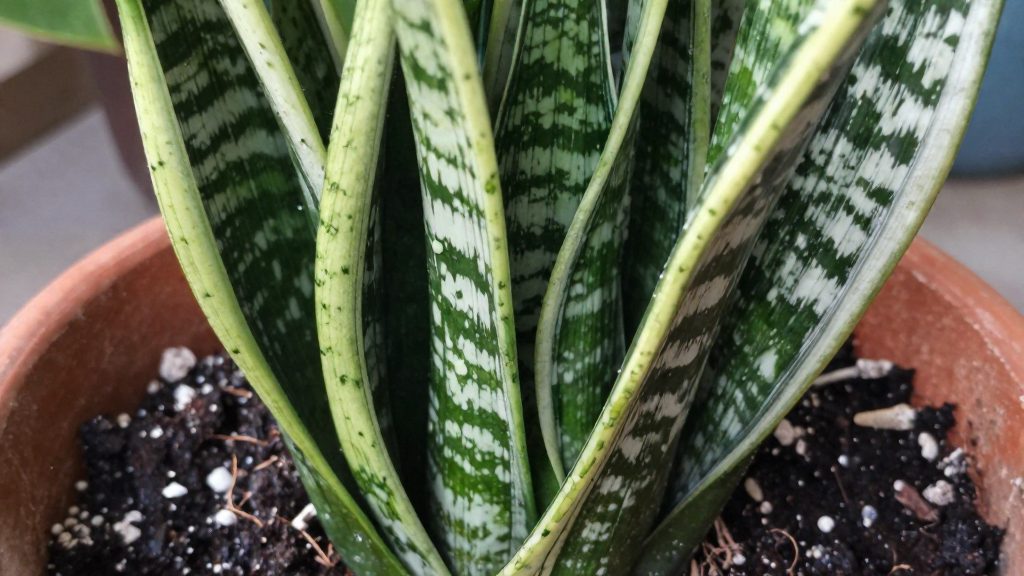
How often to water a snake plant in winter
For a snake plant (Dracaena trifasciata), winter watering happens on a monthly-or-longer cycle rather than on a fixed weekly routine. NC State Extension advises watering only every one to two months in winter, while from spring through autumn the soil should dry between waterings. Hunker (2026-01-23) gives a shorter practical estimate: winter watering may be needed only about once a month or less. The two ranges overlap, so checking the soil about once a month is a sensible starting point, but water only if the soil is completely dry.
| Period | Guidance | Source |
|---|---|---|
| Winter, general interval | Every one to two months | NC State Extension |
| Winter, practical estimate | About once a month or less | Hunker (2026-01-23) |
| Spring to autumn | Let the soil dry between waterings | NC State Extension |
Penn State Extension (2023-09-20) reports that the plant can go about a month without water with no harm, so wait until the soil is dry before watering again. Watering is best adjusted by how the soil behaves, not by the calendar alone. The interval within the one-to-two-month window depends on how quickly the pot loses moisture.
To adjust within the window:
- Temperature: The official sources consulted do not specify how room temperature changes the watering interval.
- Light: Penn State Extension describes bright, indirect light as the best setting and low light as tolerated. The official sources consulted do not specify how light level changes the watering interval.
How to check if the soil is dry enough
For a snake plant, the soil check determines when each watering happens. The wait-until-dry rule applies in every season: the soil should be dry all the way through before any water is added. Hunker (2026-01-23) recommends letting the soil dry completely before watering.
Testing the soil before each watering
Check the soil before every watering rather than watering on a fixed schedule. Push a finger or a wooden skewer into the mix, down to the root zone, and assess the moisture at that depth:
- Dry at depth: the soil feels dry and the skewer comes out clean. Water is needed.
- Damp at depth: the soil feels damp or moist, or soil clings to the skewer. Wait until it is completely dry, then check again.
Why winter changes the check
A mix that dries out during warmer months can stay damp for much longer in cooler weather, so a routine based on the calendar or on past habits can lead to overwatering. The soil check corrects for this because it reflects the actual moisture in the pot.
Adjusting after each check
| Soil condition | Action |
|---|---|
| Dry all the way through | Water the soil directly |
| Still damp at depth | Wait and check again later |
How to water the right way
Water the potting mix directly and keep the centre of the leaf rosette dry. Water sitting in the centre of the rosette raises the risk of crown or root rot. According to House Digest (2025-12-07), watering the soil directly rather than the centre of the rosette helps avoid crown or root rot.
Target the soil, not the rosette
- Bring the watering can spout close to the soil line and pour onto the potting mix.
- If water lands in the leaves, tilt the pot to let it drain off, or dry the leaves with a soft cloth.
- Keep the plant’s centre free of standing water, which is the area most exposed to crown rot.
Avoid water pooling in the crown
- Water that collects between the upright leaves can stay wet for a long time, which raises the risk of rot in the crown.
- Pour slowly so the water soaks into the mix rather than running over the surface and into the rosette.
Pour evenly around the base
- Move the spout around the perimeter of the pot, close to the base of the leaves, instead of pouring in one spot.
- Stop once the mix is moistened throughout, rather than flooding it.
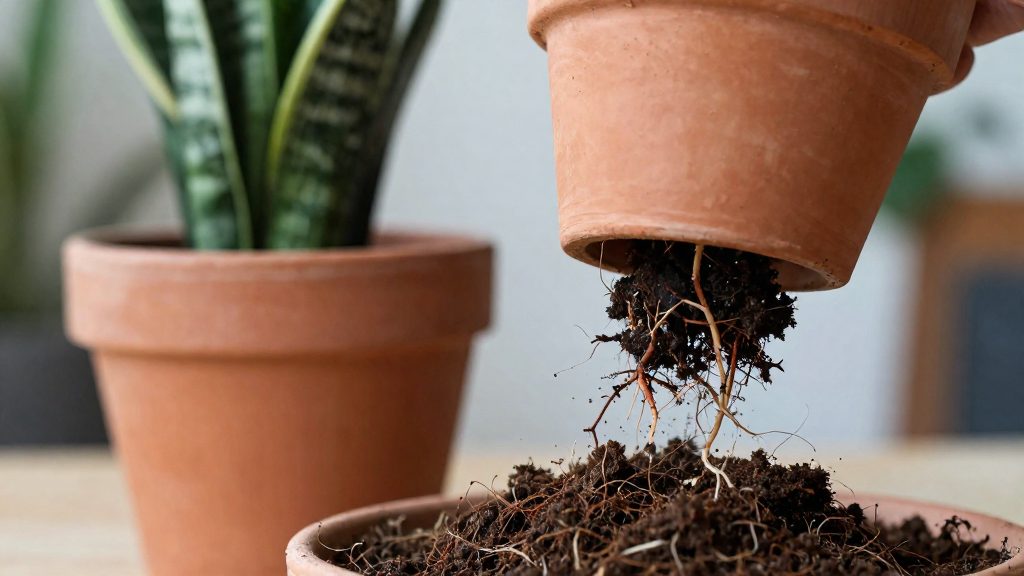
Pot, soil and drainage for winter
In winter, a snake plant (Dracaena trifasciata) needs less water, so the growing medium and container determine whether excess moisture drains away or stays around the roots. Penn State Extension (2023-09-20) recommends a cactus mix or a perlite-amended mix in a pot with drainage holes, so the setup should let surplus water leave the root zone quickly.
Growing medium
The two media named for this plant are a cactus mix and a mix amended with perlite. Both are described as well-draining options, and the choice between them depends on what is available locally. The official sources consulted do not specify other media for this plant, so a heavy, water-retentive potting soil is not among the options they recommend.
Pot with drainage holes
Penn State Extension (2023-09-20) specifies that the pot must have drainage holes. Without an opening at the base, water that moves through the soil has nowhere to go and collects around the roots. Without drainage holes, water collects around the roots, so use a pot that has them. Hunker (2026-01-23) also warns against letting the pot sit in standing water in the saucer, since this defeats the purpose of the drainage holes.
Pot material
According to House Digest (2025-12-07), clay and ceramic pots dry faster than plastic.
| Container or medium | Behaviour in winter | Source |
|---|---|---|
| Cactus mix | Named as a suitable well-draining medium | Penn State Extension (2023-09-20) |
| Perlite-amended mix | Named as a suitable well-draining medium | Penn State Extension (2023-09-20) |
| Pot with drainage holes | Required so excess water can leave the container | Penn State Extension (2023-09-20) |
| Clay or ceramic pot | Dries faster than plastic | House Digest (2025-12-07) |
| Plastic pot | Dries more slowly than clay or ceramic | House Digest (2025-12-07) |
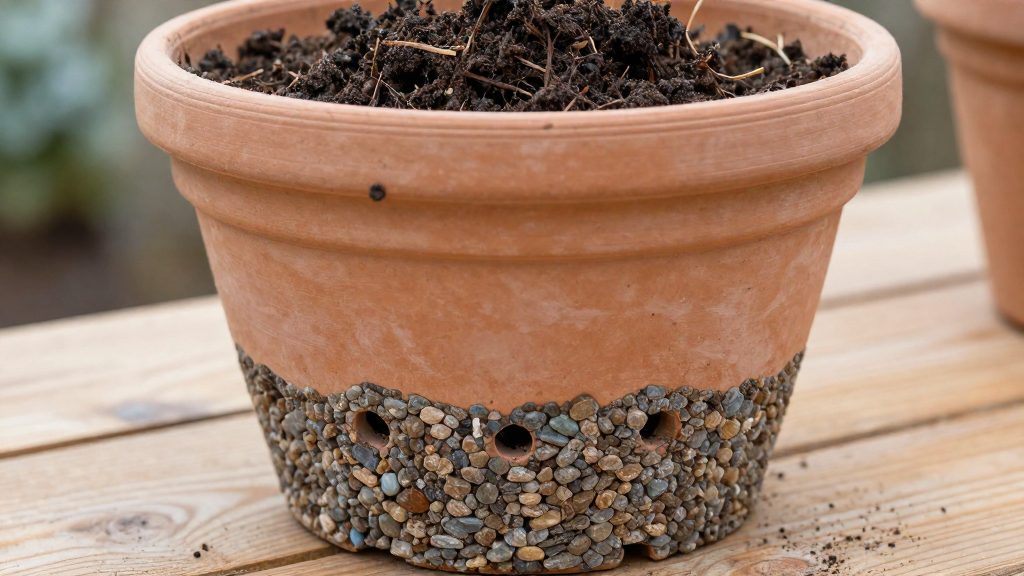
What affects winter watering needs?
Winter watering depends on how quickly the soil dries, not on the calendar. According to NC State Extension, snake plant (Dracaena trifasciata) should be watered only every one to two months in winter, while the soil should dry between waterings from spring through autumn. Indoor conditions and the size of the pot and plant can push that interval shorter or longer, so the soil itself is the most reliable guide.
Indoor heating and dry air
Winter conditions inside a home are uneven. A plant near a radiator, heater, or warm window may dry at a different rate than one in a cooler corner, so each plant should be checked separately. A plant in a cool room can stay damp for extended periods.
Pot size relative to root mass
Soil in an oversized pot holds more water than the root system can use in a short period, so it stays wet longer. A snake plant in a pot much wider than its root ball is more likely to remain soggy between waterings. Choose a pot only slightly larger than the root system, and confirm that it has drainage holes.
Plant size and total soil volume
Pot size and plant size can change how quickly the soil dries, so check the soil in each pot before watering.
| Factor | Effect on watering interval | Practical check |
|---|---|---|
| Heat source or warm window | Drying pattern can change from other spots | Test soil in each location |
| Oversized pot | Soil stays damp longer | Use a pot close to root size |
| Large plant in a large soil volume | Soil dries more slowly | Wait until fully dry before watering |
| Small plant in a small pot | Soil dries faster than in larger volumes | Check soil before each watering |
Signs of overwatering and how to fix it
Overwatering is the main risk for a snake plant, according to Penn State Extension (2023-09-20). The plant tolerates neglect better than excess water, and its most common serious problem is root rot.
Root rot develops when the roots sit in wet soil for extended periods and begin to decay. Because the roots cannot take up water or air properly, the plant weakens even though it appears to have plenty of moisture. The official sources consulted do not describe a complete symptom list, so the most reliable check is physical: lift the plant from its pot, then inspect the roots and the base of the leaves. Healthy roots are firm, while rotted roots feel soft and mushy.
Winter makes this risk higher because soil takes longer to dry in winter. Hunker (2026-01-23) notes that winter watering may be needed only about once a month or less.
Correction rule for damp soil:
- If the soil still feels wet when it should be drying, skip the next watering rather than adding water on a fixed schedule.
- If the soil stays damp for a long time, use less water at the next watering, as House Digest (2025-12-07) advises.
- If you see soft, mushy tissue at the base, the plant has root rot. Cut away the affected roots and repot it in fresh cactus or perlite-amended mix in a pot with drainage holes.
Winter light and temperature tips
Winter light and temperature determine whether a snake plant (Dracaena trifasciata) stays healthy through the cold months. According to Penn State Extension (2023), the plant does best in bright indirect light. It tolerates low light, but it should be kept out of direct sun, which can scorch the leaves. For temperature, NC State Extension notes that the plant tolerates cool conditions of around 50°F and lists it for USDA zones 10a–12b, so it is suited to frost-free climates.
| Condition | Guidance | Source |
|---|---|---|
| Light level | Bright indirect light; tolerates low light | Penn State Extension (2023) |
| Direct sun | Avoid; can scorch the leaves | Penn State Extension (2023) |
| Cool tolerance | Around 50°F | NC State Extension |
| USDA hardiness zones | 10a–12b, frost-free climates | NC State Extension |
Choosing a winter position
Place the pot where it receives bright light without direct sun falling on the leaves. A spot a short distance back from a sunny window is often a practical choice, since it keeps the leaves out of direct rays while still providing bright, indirect light. Because the plant tolerates low light, a dimmer room is acceptable, but the sources consulted do not specify a minimum light level in measurable terms.
Temperature range
The plant tolerates cool temperatures of around 50°F, which allows it to handle the cooler rooms common in winter homes. This is a tolerance figure, not an ideal growing temperature, and the sources consulted do not give a recommended range for active growth.
Climate suitability
The plant is listed for USDA zones 10a–12b, which describe frost-free climates. Outside those zones, the sources consulted do not describe overwintering the plant outdoors, so it should be treated as a plant that depends on protection from frost.
Frequently asked questions
How often should I water a snake plant in winter?
According to NC State Extension, a snake plant (Dracaena trifasciata) needs watering only every one to two months during winter. That gap is much longer than the routine used from spring through autumn, when the soil should dry between waterings.
How can I tell when the soil is dry enough to water?
Check the soil moisture before every watering, in winter as well as in other seasons. Hunker (2026) notes that soil takes longer to dry in cool months, so wait until the mix is fully dry instead of watering on a fixed calendar date.
What happens if I water my snake plant too often in winter?
Penn State Extension (2023-09-20) identifies overwatering as the main risk, and root rot is a common problem in this plant. House Digest (2025-12-07) advises watering the soil directly rather than the center of the leaf rosette, which helps prevent crown and root rot.