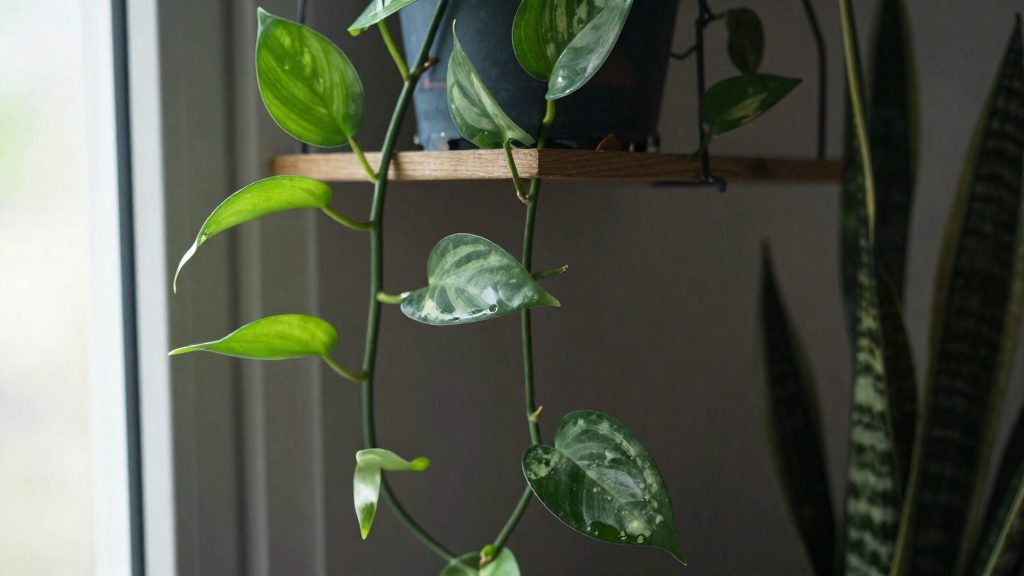
In plant care, low light describes a placement where the light is too weak for a plant to grow well, and the usual examples are a dim corner of a room or a window facing north. The Old Farmer’s Almanac (2026) describes low light this way. Judging a real spot, rather than relying on the label “low light” alone, shows whether a houseplant can stay healthy there.
What does low light really mean?
Typical low-light locations
Most low-light placements fall into two categories:
- A dim corner, away from windows, where daylight reaches the plant only indirectly.
- A north-facing window, which receives less direct sun than east-, south- or west-facing windows. The Old Farmer’s Almanac (2026) lists both a dim corner and a north window as examples of low light.
These are general descriptions. The exact light level depends on the room, the season, and any obstructions such as buildings or trees outside. Before placing a plant, observe the spot at different times of the day and compare it with the plant’s needs.
Why every plant needs some light
Plants make their food through photosynthesis, which requires light. The Old Farmer’s Almanac (2026) states that all plants need light. A plant that tolerates low light is therefore one that can survive with less light, not one that needs none.
The University of Maryland Extension (2017-10-25) recommends several plants for low light, including snake plant, philodendron, pothos, peace lily, Chinese evergreen and Dracaena fragrans ‘Warneckei’. These species tolerate dimmer conditions better than most, but they still depend on a minimum amount of light.
How plants signal insufficient light
A plant that is not getting enough light shows stress, and one visible sign is leaning toward the light source. The Old Farmer’s Almanac (2026) notes that stressed plants lean toward their light source. If a houseplant bends consistently toward a window or a lamp, the spot is likely too dim for that species.
To check this, look at the plant’s shape regularly and compare it with its earlier growth. Stretched or leaning growth is a signal to reassess the placement rather than a sign that the plant is adapting.
Easiest low-light houseplants
Several common houseplants are recommended for low light by university and almanac sources. The table lists each species with the source that names it and the low-light note that source gives.
| Plant | Listed by | Low-light note |
|---|---|---|
| Snake plant | The Old Farmer’s Almanac (2026); University of Maryland Extension (2017) | Recommended for low light by both sources |
| Philodendron | University of Maryland Extension (2017) | Recommended for low light |
| Pothos | University of Maryland Extension (2017) | Recommended for low light |
| Chinese evergreen | The Old Farmer’s Almanac (2026); University of Maryland Extension (2017) | Recommended for low light by both sources |
| Dracaena fragrans ‘Warneckei’ | University of Maryland Extension (2017) | Recommended for low light |
| Peace lily | The Old Farmer’s Almanac (2026); University of Maryland Extension (2017) | Recommended for low light by both sources |
| Spider plant | The Old Farmer’s Almanac (2026) | Listed as an option for low light |
Pothos and variegation
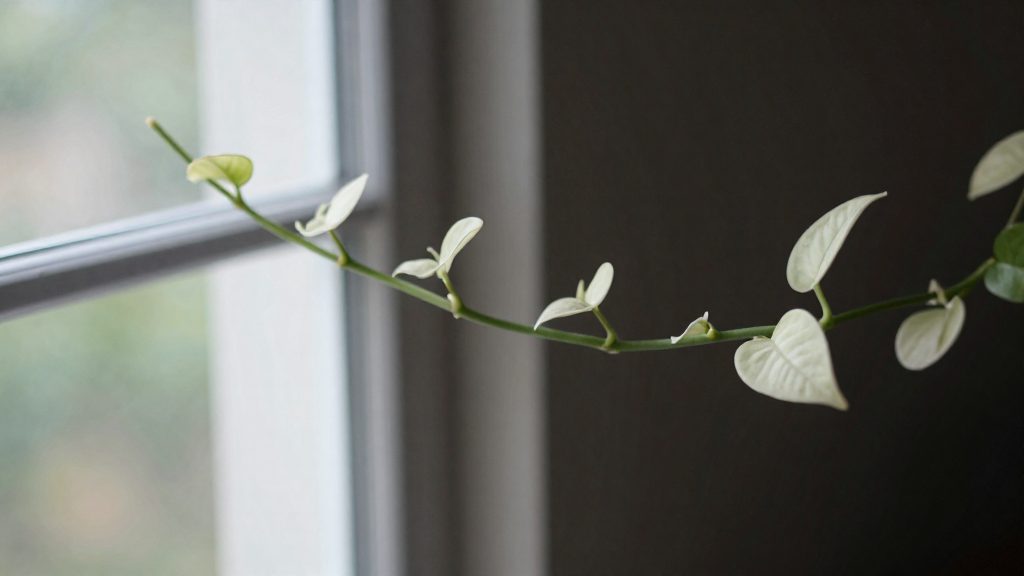
Pothos is the species where the sources describe a visible change in appearance. According to University of Maryland Extension (2017), the yellow variegation of pothos fades to green in very low light. If the yellow markings matter to the look of the plant, choose a brighter spot than the darkest corner of the room.
Watering in low light
Check that the soil is dry before watering a plant in a dim spot, because plants in low light need less water (University of Maryland Extension, 2017).
Choosing the spot
Which low-light plants are toxic to pets, and which are safe?
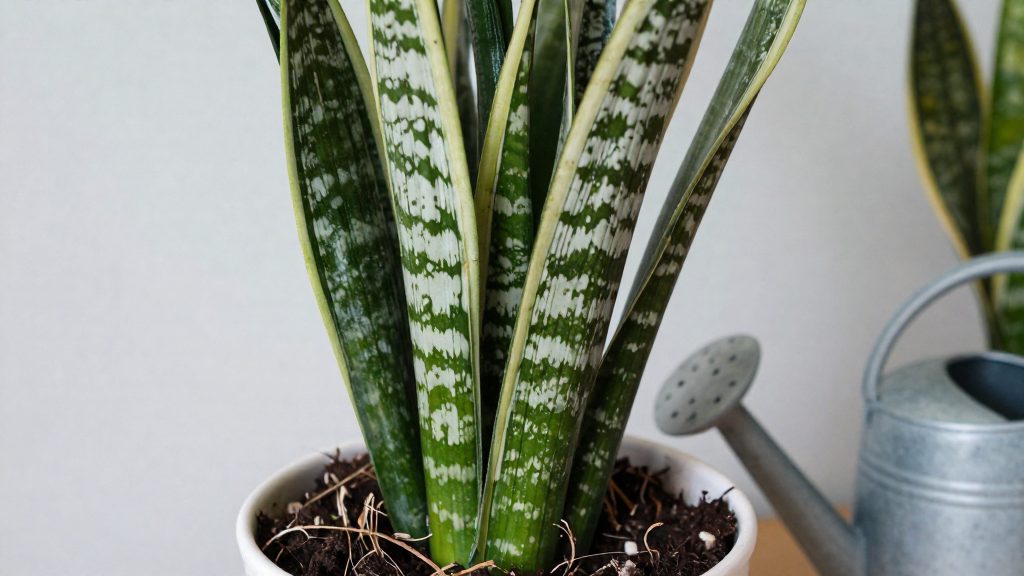
The ASPCA (2026) lists the snake plant (Sansevieria trifasciata) as toxic to dogs and cats. It also lists several other low-light plants in this article as toxic to dogs and cats, including peace lily, pothos, philodendron, Chinese evergreen and Dracaena fragrans. The ASPCA (2026) lists it as toxic to both dogs and cats. Peace lily, pothos and Chinese evergreen are also listed by the ASPCA as toxic to dogs and cats. Spider plant, cast iron plant and ponytail palm are listed by the ASPCA as non-toxic to both. Check each species in the ASPCA database before placing it in a home with pets. Do not treat them as pet-safe on that basis. Check each species against a veterinary or animal poison reference before placing it in a home with pets.
Snake plant: the documented toxic species
According to the ASPCA (2026), the toxic principle of the snake plant is saponins. The same source lists the clinical signs as:
- Nausea
- Vomiting
- Diarrhea
Recognising symptoms
The signs listed for the snake plant are gastrointestinal: nausea, vomiting and diarrhea. The official sources consulted do not specify onset time, severity or treatment, so those details are not given here. If a pet chews a houseplant and shows any of these signs, contact a veterinarian promptly and bring a sample of the plant so it can be identified.
Practical precautions
- Identify every houseplant by its botanical name before bringing it into a room used by pets.
- Place plants on high shelves, in hanging containers, or in rooms closed to animals.
- Verify toxicity in a veterinary or poison-control reference for each species rather than assuming a plant is safe.
Do low-light plants need less water?
Yes. According to the University of Maryland Extension (2017), plants in low light need less water, and their needs drop further in winter. Watering a dim-corner plant on the same schedule as a plant in a bright window is the most likely way to overwater it. The official sources consulted do not specify the physiological mechanism behind this reduced demand, so the practical rule is to base watering on the state of the soil and the season, not on a fixed calendar.
Reduced water needs in low light
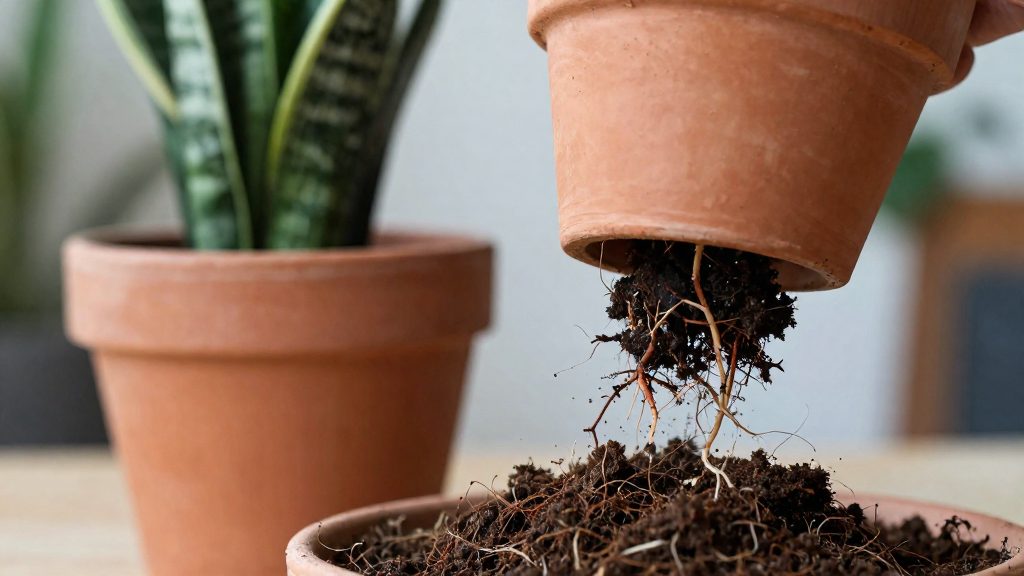
Low light lowers the water requirement of most houseplants, so the soil in a north window or dim corner stays wet for longer than the soil of the same plant in a sunny spot. Check the soil before each watering, and water only when it is dry. Water thoroughly until it drains from the pot, then empty the saucer so the roots do not sit in standing water.
Winter water cuts and overwatering risk
Water needs fall further in winter (University of Maryland Extension, 2017). Overwatering is therefore a risk during the cold months, and it is more likely when a plant is kept on its summer schedule. Reduce watering frequency as the season changes, and confirm that the pot has drainage holes.
Cast iron plant tolerates irregular watering
The cast iron plant is a useful example of a low-light plant that copes with variable watering. The Old Farmer’s Almanac (2026) says it handles low light, low humidity and inconsistent watering. This tolerance does not mean the plant needs no water. It means that occasional gaps or uneven watering are less likely to cause harm than in plants that need steady moisture.
| Factor | Effect on water need | Source |
|---|---|---|
| Low light | Lower than in bright light | University of Maryland Extension (2017) |
| Winter, in low light | Drops further | University of Maryland Extension (2017) |
| Cast iron plant | Tolerates inconsistent watering | The Old Farmer’s Almanac (2026) |
Can any plant live with no light?
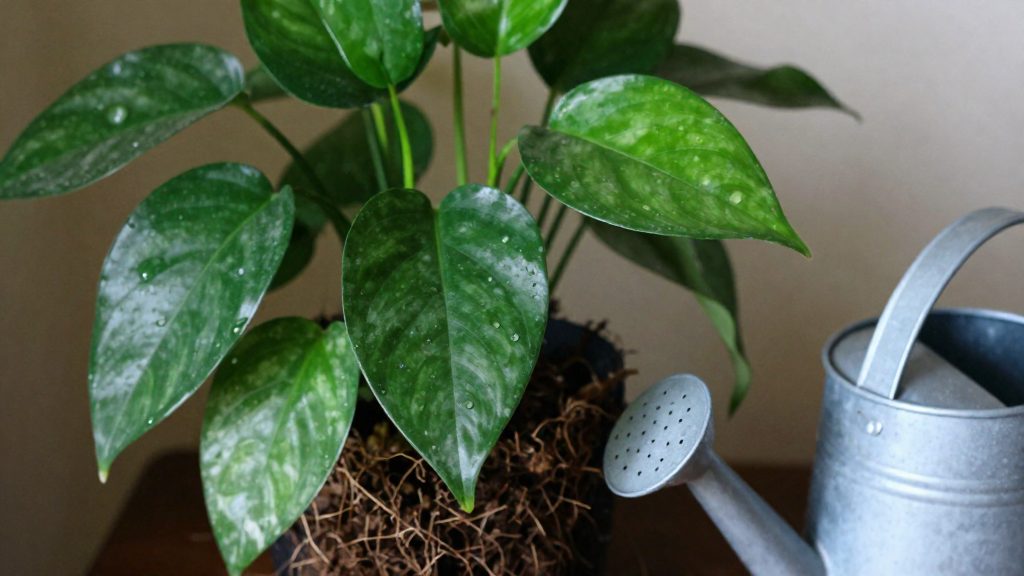
No plant in the official sources consulted is documented as surviving in complete darkness, so the direct answer is no. Plants listed for low light tolerate dim conditions, but none is shown to grow without any light. The official sources consulted do not specify how long any plant can survive in complete darkness, so this section does not give a duration.
Light requirement across species
Dim tolerance versus full darkness
Dim tolerance means a plant can persist and sometimes grow in weak, indirect light. Full darkness is a different condition, and none of the sources treats it as a survivable environment for a houseplant.
The sources name these plants as suited to low light:
| Plant | What the sources say about low light | Source |
|---|---|---|
| Snake plant | Listed as an option for low light | The Old Farmer’s Almanac (2026); University of Maryland Extension (2017) |
| Peace lily | Listed for low light | The Old Farmer’s Almanac (2026); University of Maryland Extension (2017) |
| Cast iron plant | Handles low light | The Old Farmer’s Almanac (2026) |
| Pothos | Recommended for low light | University of Maryland Extension (2017) |
| Chinese evergreen | Listed for low light | The Old Farmer’s Almanac (2026); University of Maryland Extension (2017) |
Choosing a location
When selecting a spot, look for a dim but daylit position such as a north-facing window or a dim corner near a window. A location with no daylight at all is outside what the sources describe as low light.
Low-light plants that bloom
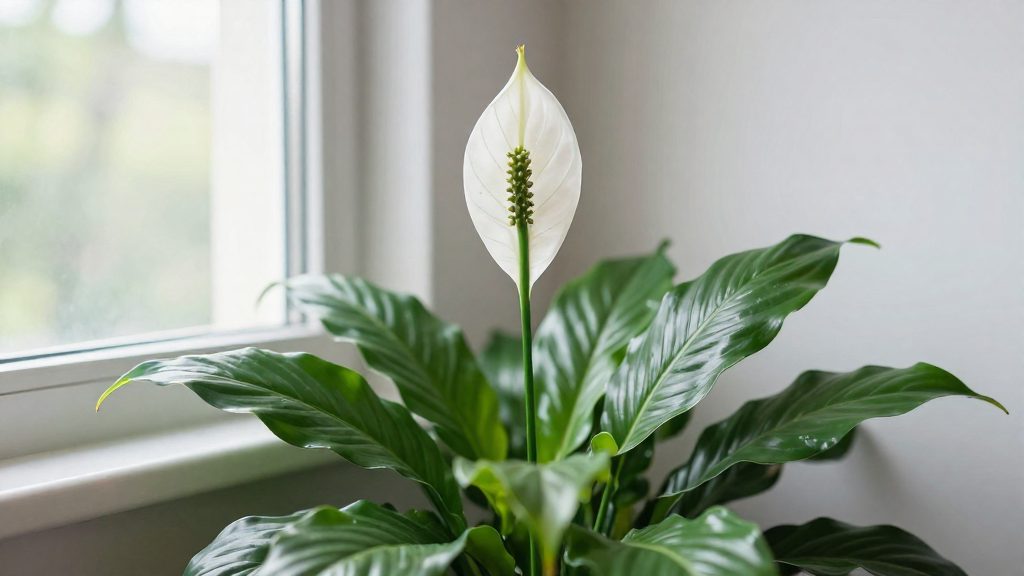
Few houseplants flower in low light. According to University of Maryland Extension (2017), the peace lily is one of the few houseplants that flowers in low light, which makes it the clearest flowering example among the sources consulted. The Old Farmer’s Almanac (2026) also lists the peace lily as an option for low light, but it does not mention flowering.
Peace lily as the reference flowering species
The peace lily is the only flowering species that the consulted sources tie explicitly to low light. University of Maryland Extension (2017) recommends it for low-light interiors and notes its ability to flower there. The Old Farmer’s Almanac (2026) names it among its low-light options. Together, these sources make the peace lily a practical starting point for a flowering plant in a dim room.
Other flowering species in low light
The official sources consulted do not specify other flowering species that bloom in low light. The lists they provide for low light, including snake plant, philodendron, pothos, Chinese evergreen, cast iron plant, lucky bamboo, spider plant, ponytail palm and air plants, do not state that these species flower in those conditions.
Light and bloom compared with brighter conditions
The official sources consulted do not specify how bloom requirements change between low light and brighter conditions.
Simple care tips for dim rooms
Low-light species are chosen for dim rooms, but the sources do not say how long they can stay in a dim spot. The University of Maryland Extension (2017) describes one option: keep a plant in bright light most of the time and move it to a low-light spot for no more than a couple of weeks. According to University of Maryland Extension (2017), a plant can be kept in bright light most of the time and moved to a low-light spot for no more than a couple of weeks. This rhythm is the main rule for plants in dim rooms, and it gives a simple framework for placing any low-light species.
Bright light most of the time is the baseline. Choose the brightest spot the plant can occupy for most of its life, and treat the dim corner as a temporary location rather than a permanent one.
Limit the dim-spot stay is the second rule. Keep the time in a low-light spot to a couple of weeks at most, then move the plant back to brighter light. Setting a date for the move makes the limit easier to respect.
Practical steps:
- Choose the brightest available spot as the plant’s main location.
- Move the plant to a dim area only for a short period, no longer than a couple of weeks.
- Note the date of each move so the duration is easy to track.
- Return the plant to its brighter location once the period ends.
Repotting under low light: the official sources consulted do not specify repotting guidance for plants kept in low light, so no timing or method is given here.
Frequently asked questions
Which low-light houseplants are safe for cats and dogs?
The ASPCA (2026) lists spider plant, cast iron plant and ponytail palm as non-toxic to dogs and cats. It lists snake plant, peace lily, pothos, philodendron, Chinese evergreen and Dracaena fragrans as toxic to both, so check each species in the ASPCA database before bringing one into a home with pets.
How much water do low-light houseplants need?
The University of Maryland Extension (2017) notes that plants in low light need less water, and that their needs drop further in winter. Because of this, overwatering is a risk for these plants.
Can a low-light plant stay in a dim room permanently?
The University of Maryland Extension (2017) describes one option: keep the plant in bright light most of the time and rotate it to a low-light spot for no more than a couple of weeks. The official sources consulted do not specify how long the recommended low-light species can remain in a dim spot on a permanent basis.