When is the best time to plant spring bulbs in zone 6?
For US zone 6, the best time to plant spring bulbs is in fall, typically in October. Epic Gardening (2025) gives a mid-to-late October window. According to Epic Gardening (2025), the zone 6 window runs from mid-to-late October, and Farmers’ Almanac (2025) sets planting at about six weeks before the first hard freeze. The timing is tied to frost rather than a fixed calendar date, so the exact planting day depends on when cold weather arrives in your area.
The frost-based timing rule
The planting window is set by counting back from the first hard frost. The Old Farmer’s Almanac (2026) describes the best time to plant spring bulbs as about six weeks before the first hard frost, and Farmers’ Almanac (2025) applies the same six-week reference to zone 6. Because the first hard freeze varies from one location to another, this rule produces a window that shifts with local weather instead of a single date.
| Reference point | Timing for zone 6 | Source |
|---|---|---|
| Planting window | Mid-to-late October | Epic Gardening (2025) |
| Frost anchor | About six weeks before the first hard freeze | Farmers’ Almanac (2025) |
How to apply the six-week count
- Find your first hard freeze date. Use local frost records or a regional weather service to estimate when temperatures first drop to a hard freeze in autumn.
- Count back about six weeks. Subtract roughly six weeks from that date to find the target planting day.
- Cross-check with the zone 6 window and soil temperature. Compare the target day with the typical mid-to-late October window, and confirm that the soil at planting depth is below 60°F before you plant.
- Plant in a sunny spot. Choose a location that receives full sun for the spring display, and water the bed after planting without leaving the soil waterlogged.
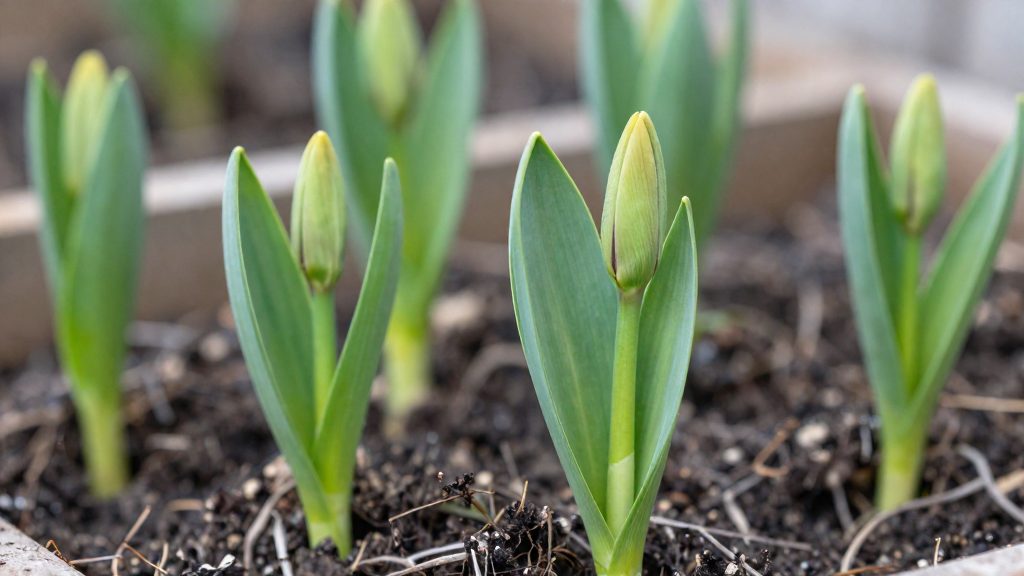
Soil temperature or calendar date?
Soil temperature is the more reliable signal for deciding when spring bulbs go into the ground. The Old Farmer’s Almanac (2026) gives the threshold as soil below 60°F, which it places about six weeks before the first hard frost. A calendar date only approximates that threshold, because it cannot register a cold snap or an unusually warm autumn.
The calendar gives only a rough guide for zone 6.
Nightly temperatures serve as a backup cue. Farmers’ Almanac (2025) associates the zone 6 planting period with nightly lows of roughly 40–50°F. Use this as confirmation when soil readings are not available, not as a replacement for them.
Timing also matters because of the cold requirement. Epic Gardening (2025) states that fall-planted bulbs need ten weeks of cold at 35–45°F to develop. Epic Gardening (2025) says fall-planted bulbs need about ten weeks of cold at 35–45°F, and The Old Farmer’s Almanac (2026) ties planting to soil below 60°F. The sources consulted do not specify how soil temperature affects root development.
| Cue | Value | Source | Role |
|---|---|---|---|
| Soil temperature | Below 60°F | The Old Farmer’s Almanac (2026) | Primary signal |
| Calendar window, zone 6 | Mid-to-late October | Epic Gardening (2025) | Rough guide |
| Nightly lows | Roughly 40–50°F | Farmers’ Almanac (2025) | Backup cue |
| Cold requirement | About ten weeks at 35–45°F | Epic Gardening (2025) | Post-planting need |
To apply the soil cue, take readings at the depth where the bulbs will sit, over several days, rather than relying on one measurement. A single reading on a warm afternoon can mislead.
How deep should spring bulbs go?
The standard planting depth for spring bulbs is about three times the bulb’s width, according to The Old Farmer’s Almanac (2026). Measure the bulb across its widest point, multiply that figure by three, and dig the hole to the result, measured from the soil surface down to the base of the bulb. Because bulb sizes differ between species, the final depth varies. The same publisher gives specific targets for three common spring bulbs.
Depth formula
Planting depth ≈ bulb width × 3
This formula is a guideline. Use it to check the species targets below, especially when you are planting a bulb that is not listed.
Species depth targets
| Bulb | Target planting depth |
|---|---|
| Crocus | 3 inches |
| Daffodil | 6 inches |
| Tulip | 4 to 6 inches |
Tulips have a range rather than a single figure, so use the deeper end of the range in sandy soil and the shallower end in clay. The Old Farmer’s Almanac (2026) lists these targets.
Adjusting depth for soil texture
Soil texture changes the depth you should use:
- Sandy soil: plant deeper than the species target.
- Clay: plant shallower than the species target.
To prepare the planting hole, loosen the soil to the full depth of the hole before setting the bulb. This gives the base of the bulb firm, undisturbed ground to rest on and makes the hole easier to fill evenly. Check the depth with a ruler or a marked stick before you backfill, so that each bulb in a bed or row ends up at the same level.
Can you plant bulbs in November in zone 6?
Planting in November can still work in zone 6 for tulips, which can wait until November, and for other bulbs only while the ground is workable but cold. Late-planted bulbs may give smaller or fewer blooms, or none at all. According to Epic Gardening (2025), the zone 6 planting window is mid-to-late October. Planting after that window is possible when the ground is still workable, but the results are less predictable and the bloom outcome is reduced.
The key condition is cold, workable ground. Farmers’ Almanac (2025) states that if the ground is still workable but cold, bulbs can still be planted late, though first-year blooms may be smaller.
Bloom loss is the main trade-off. Epic Gardening (2025) notes that late-planted bulbs may give smaller or fewer blooms, and some may produce no blooms at all. The sources consulted do not specify how this loss varies between bulb types.
| Reference point | Guidance | Source |
|---|---|---|
| Zone 6 planting window | Mid-to-late October | Epic Gardening (2025) |
| Nightly lows at planting | Roughly 40–50°F | Farmers’ Almanac (2025) |
| Soil temperature threshold | Below 60°F | The Old Farmer’s Almanac (2026) |
| Cold period bulbs need | About ten weeks at 35–45°F | Epic Gardening (2025) |
What if the ground freezes first?
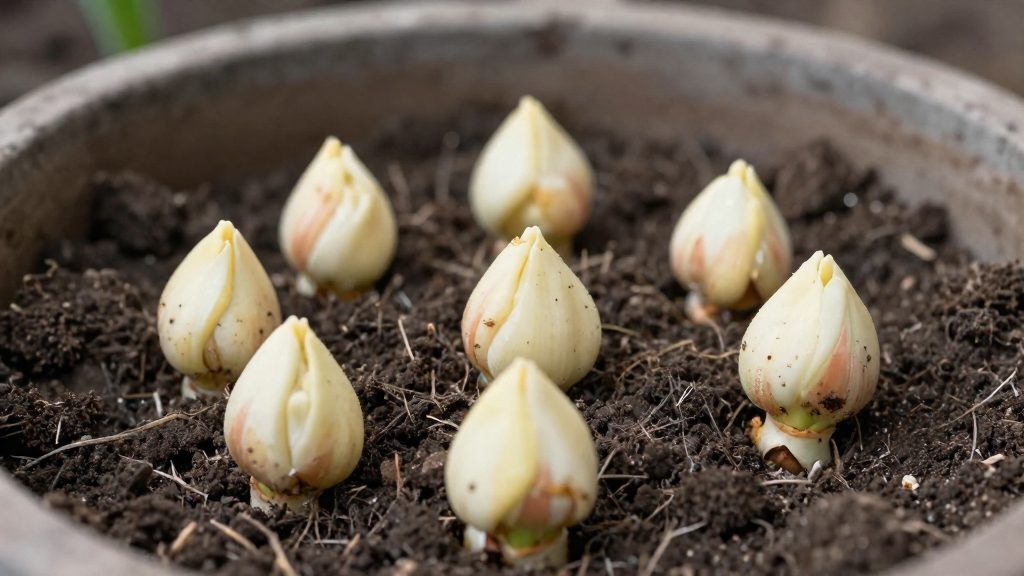
When the ground freezes solid before planting is finished, the bulbs should wait. According to Farmers’ Almanac (2025), if the ground is fully frozen, keep the bulbs in pots in an unheated garage or shed and plant them once the ground thaws. This holding step keeps the bulbs usable when outdoor planting is blocked, so there is no need to force them into frozen soil.
| Stage | Ground condition | Action |
|---|---|---|
| Holding | Fully frozen | Keep bulbs in pots in an unheated garage or shed |
| Planting | Thawed | Plant outdoors at the correct depth |
Holding bulbs in containers works best with pots you can move easily. Keep the bulbs in their pots rather than loose in a bag, so each pot can be carried outside as soon as the ground softens. Label the pots by variety if you are planting more than one type, since the depth varies from one bulb to another.
Storing pots in an unheated space means choosing a garage or shed that stays unheated. Farmers’ Almanac (2025) gives this as the holding location, but the sources consulted do not specify a storage temperature range. Check the space now and then, and avoid placing the pots where they would be exposed to direct sun or heating vents.
Bulb timing by type
For spring bulbs in zone 6, the only type-specific window in the consulted sources is for tulips. According to Epic Gardening (2025), the zone 6 planting window runs from mid-to-late October, and tulips can wait until November. Tulips are therefore the bulb with the later acceptable planting date, and the October window remains the reference point for the other types.
The official sources consulted do not specify separate planting windows for other spring bulbs. Crocus and daffodil appear in the same sources only in relation to planting depth, so no earlier or later planting date can be attributed to them from these references. Gardeners planting them should use the October window as their working reference and check a regional extension service for local adjustments.
Planting later carries a trade-off that applies across bulb types: late-planted bulbs may give smaller or fewer blooms, or none at all (Epic Gardening, 2025). Tulips are the bulb the sources explicitly allow to wait until November.
Simple fall planting checklist
Planting spring bulbs in one fall session comes down to three things: confirm the ground can be dug, set each bulb correctly, and settle the soil with a single watering. The steps below cover the planting day. Timing and depth are covered in their own sections.
-
Test whether the ground is workable. Take a handful of soil from the planting spot and squeeze it. If it crumbles when you open your hand, it can be dug. If it forms a sticky, muddy ball, or the spade cannot break the surface, wait. Fully frozen ground cannot be dug.
-
Prepare the planting area. Dig the holes or a trench in the workable soil, and remove stones and old roots from earlier plantings. Clearing the spot first means you do not have to dig again once the bulbs are in hand.
-
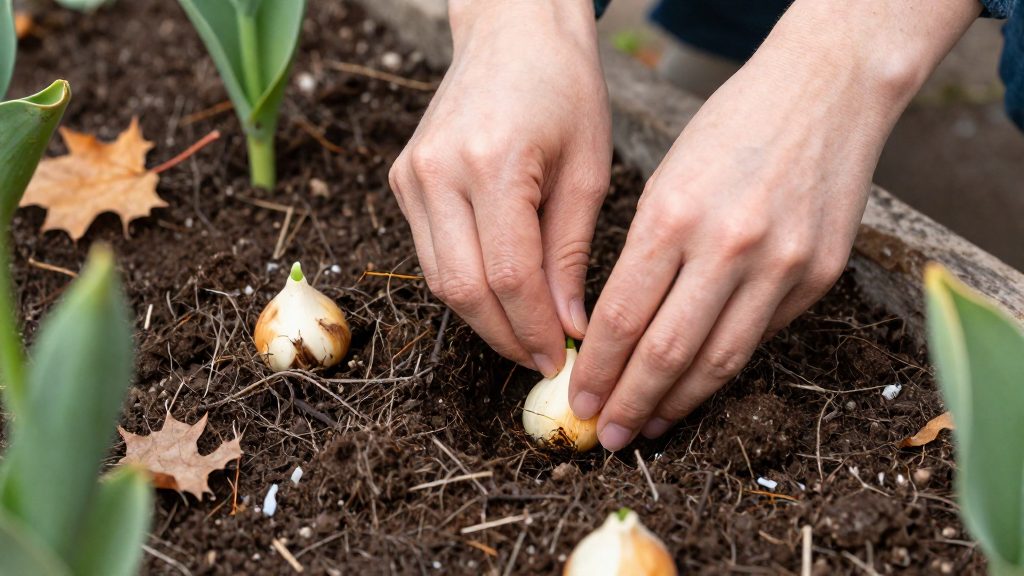
Set each bulb with the growing tip up. The growing tip is the pointed end, where the shoot will emerge. The flat base, which has the roots, faces down. Check each bulb before you place it, because a bulb set upside down may emerge late or grow weakly, because the shoot has to turn and push its way up to the surface.
-
Backfill and firm the soil lightly. Return the soil to the hole and press it gently with your hands. Avoid packing it hard, because compacted soil slows root growth and makes the planted area difficult to read later.
-
Water once to settle the soil. Give the planted area one thorough watering. This closes air pockets around the bulbs and brings the soil into contact with them. The goal is moist soil, not waterlogged soil, so do not keep watering the bed after this first session.
Frequently asked questions
What should I do if I miss the October planting window?
If the ground is still workable but cold, you can plant late, though first-year blooms may be smaller. If the ground is fully frozen, keep the bulbs in pots in an unheated garage or shed and plant them once the ground thaws, according to Farmers’ Almanac (2025).
How do I know when the soil is cool enough to plant?
Plant when the soil temperature falls below 60°F, which The Old Farmer’s Almanac (2026) gives as the planting threshold, typically about six weeks before the first hard frost. Measure the temperature at planting depth, since the threshold refers to the soil rather than the air.
How deep should I plant spring bulbs, and does soil type change that?
Plant bulbs at a depth of about three times the bulb’s width. The Old Farmer’s Almanac (2026) lists typical depths of 3 inches for crocus, 6 inches for daffodil, and 4–6 inches for tulip, and recommends planting deeper in sandy soil and shallower in clay.