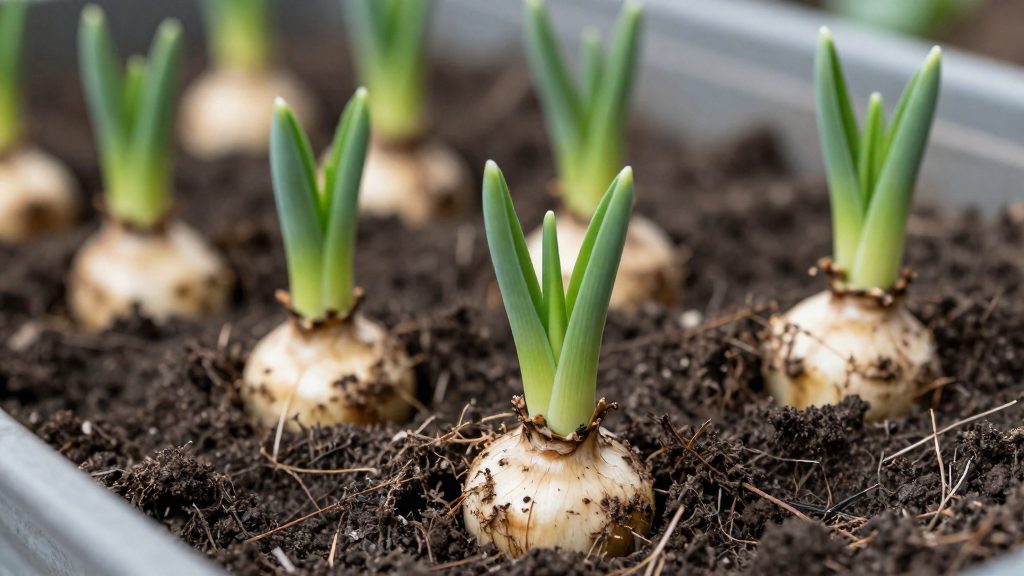
In Georgia, dahlia tubers are often planted in April in the south and May in the north, according to University of Georgia Extension (2022). Gardeners in other states should check the dates with their local Extension office. June planting is also an option, and the same source notes that June plantings often give the best fall flowers. The right planting month therefore depends on your location within Georgia and on whether you want the best fall flowers, which June plantings often give.
When should you plant dahlia tubers?
Planting time depends on regional climate and on when you want the plants to flower. The University of Georgia Extension (2022) gives a planting window for each part of the state, summarized below.
| Planting window | Typical timing in Georgia | Note from the source |
|---|---|---|
| Southern Georgia | April | Tubers are often planted this month |
| Northern Georgia | May | Tubers are often planted this month |
| June | June | Often gives the best fall flowers |
Regional planting windows
In southern Georgia, April is the usual month to plant. In northern Georgia, planting is usually pushed back to May. These dates describe typical practice, so check them against your own spring conditions rather than relying on the calendar alone.
June planting and fall flowers
Planting in June is a practical choice when the goal is flowers in autumn rather than early summer. Gardeners who want a strong late-season display can use this window in either part of the state.
Avoiding cold, wet spring soil
The official sources consulted do not specify a soil temperature threshold for planting, so the timing advice here is regional and general. Holding off until the planned month for your area helps you avoid putting tubers into cold, saturated ground.
Choosing a sunny, well-drained site
Dahlias need a sunny spot that receives at least half a day of direct sun, and the soil must drain well, according to University of Georgia Extension (2022). Light determines how well the plants grow and flower, and drainage determines whether the tubers survive the period between planting and emergence. A site that meets both requirements gives the tubers the best chance of developing into strong plants.
Light
- Choose a location that receives at least half a day of direct sun.
- Avoid spots shaded by buildings, fences, or large trees for most of the day.
- Keep the planting area clear of tree roots, which compete for water and nutrients.
Soil texture and drainage
The official sources consulted do not specify a particular soil texture for dahlias. The stated requirement is well-drained soil. To check drainage, dig a test hole, fill it with water, and observe how quickly the water disappears. Water that stays standing in the hole after a long period indicates poor drainage, and the site should be improved or a different location chosen. Heavy, waterlogged ground keeps the tubers wet, which increases the risk of rot.
Planting hole dimensions and organic matter ratio
University of Georgia Extension (2022) suggests preparing the planting area with a hole of the following size and backfill mix:
| Element | Recommendation |
|---|---|
| Hole width | About 24 in. |
| Hole depth | About 18 in. |
| Backfill mix | 1/3 organic matter |
| Native soil in backfill | 2/3 soil |
Mix the organic matter thoroughly with the removed soil before refilling the hole. This improves the structure of the planting zone so that water moves through it instead of collecting around the tubers.
How deep do you plant dahlia tubers?
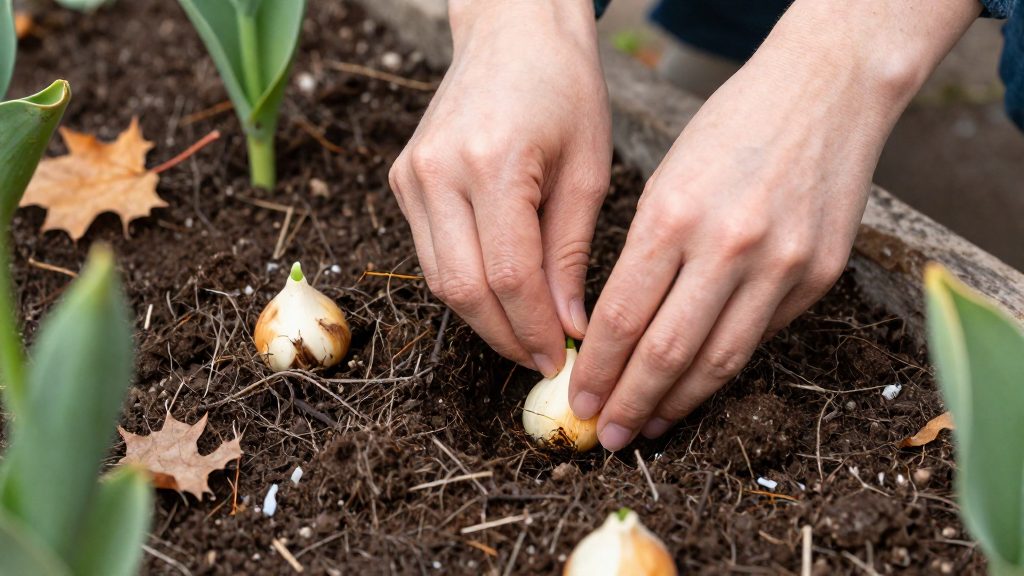
Dahlia tubers should be planted 4 to 6 inches deep, according to the University of Georgia Extension (2022). At this depth the tuber is anchored and protected, and the sprouting buds stay close enough to the surface to reach light once shoots begin to grow. The consulted guidance gives this range as the target, so aim for the middle of it when the soil is uniform.
Positioning the tuber
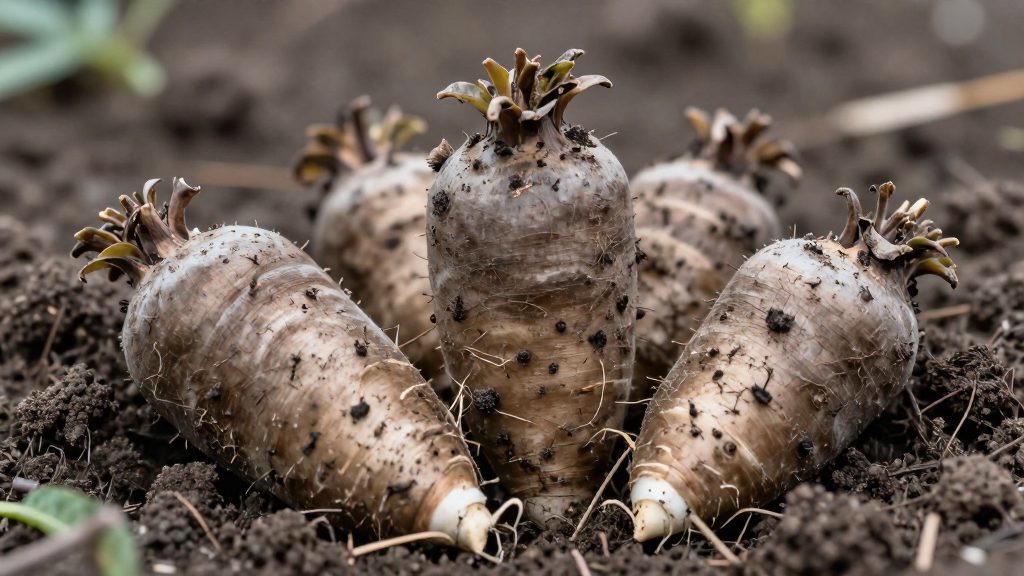
Place each tuber in the planting hole with the eyes facing upward. The eyes are the small buds on the crown, the thickened neck where the old stem attached, and they produce the new shoots. The University of Georgia guidance consulted does not specify tuber orientation, so this step reflects general horticultural practice: an upward-facing bud has a direct route to the surface. Handle each tuber gently so the eyes and the neck are not broken off during placement.
Backfilling and emergence
Fill the hole gradually with soil, pressing lightly to remove large air pockets around the tuber, then water thoroughly.
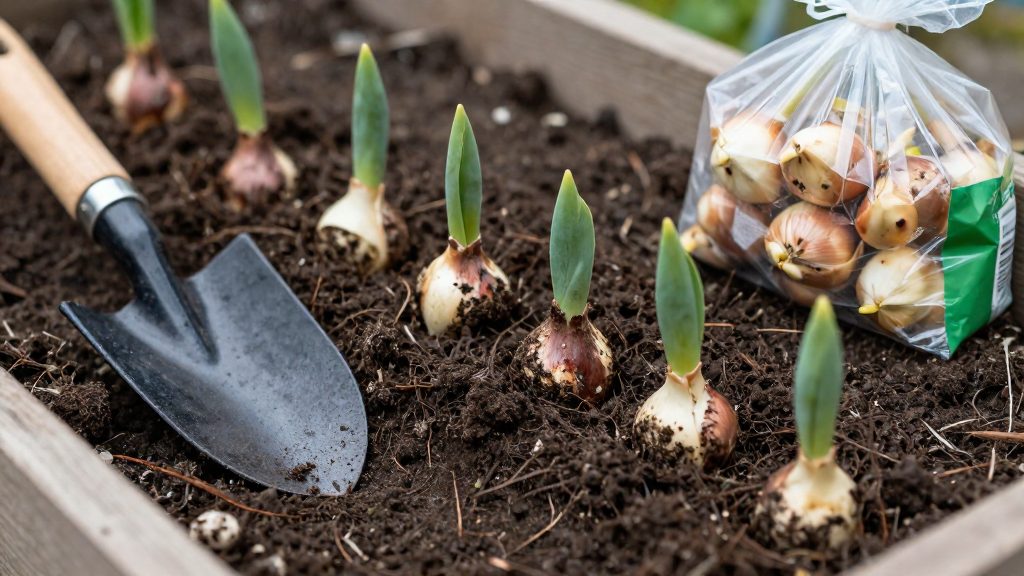
The official sources consulted do not specify how many days shoots take to appear. Emergence depends on soil temperature and local weather, so check the bed for shoots rather than counting to a fixed date.
Spacing, staking and early watering
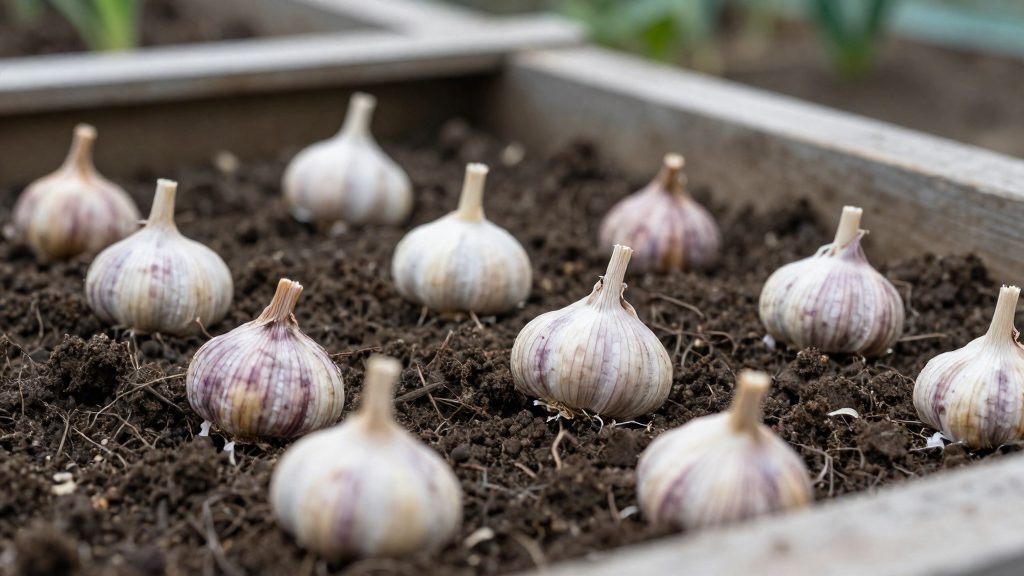
Most dahlia varieties need at least 3 to 4 ft between plants, according to University of Georgia Extension (2022). This spacing gives each plant room for its foliage and stems to develop without crowding its neighbors. The official sources consulted do not specify spacing for compact or dwarf types, so check the label or catalogue description for those cultivars.
Staking is the main support step. Dahlia stems can become heavy with flowers, and a stake keeps them upright. According to UGA Extension (2022):
- Use stakes at least 6 ft long.
- Drive each stake about 1 ft deep into the soil.
- Install the stake at planting, ideally, so it is in place before the tuber sprouts.
Once driven 1 ft deep, a 6 ft stake leaves about 5 ft above ground.
| Stage | Action | Detail |
|---|---|---|
| At planting | Drive the stake | About 1 ft deep, ideally at planting |
| Plant about 1 ft tall | First tie | Tie the stem loosely to the stake |
| Each month after | Repeat the tie | Keep the stem supported as it grows |
Tie the stems loosely with soft material so the stem can move in the wind without chafing.
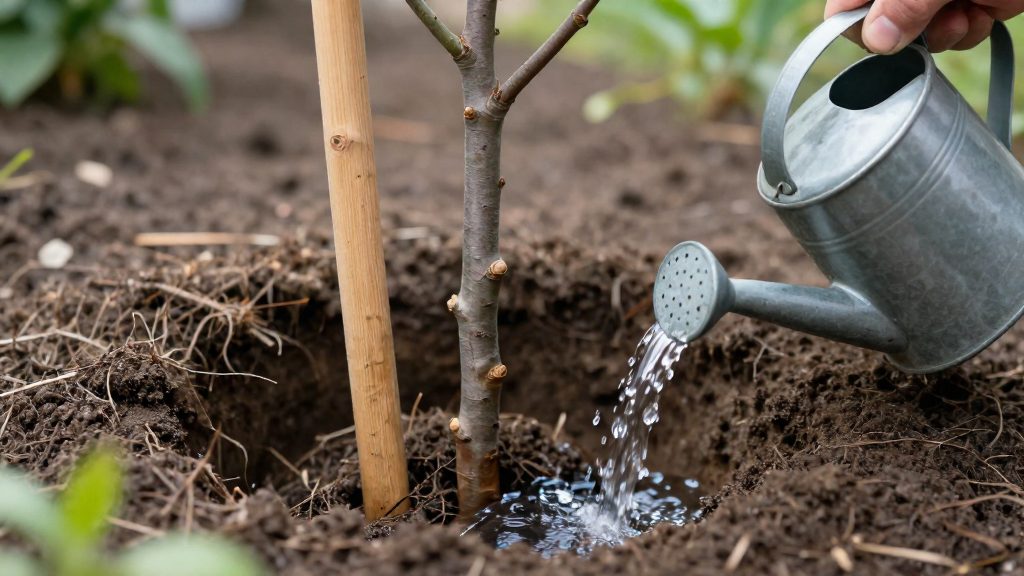
Early watering begins after planting. Water the planted tuber thoroughly to settle the soil around it, then keep the soil moist, not saturated, until the first shoots appear above ground. The official sources consulted do not give a specific volume or interval for the period before shoots emerge, so adjust by checking the top layer of soil with a finger rather than following a fixed schedule.
Feeding and caring for growing plants
Once dahlias are established, regular feeding and watering drive steady growth. The University of Georgia Extension (2022) recommends a balanced fertilizer with a 1-1-1 ratio, such as 8-8-8, which contains equal proportions of the three main nutrients. The fertilizer amounts below apply per plant, and the watering frequencies apply to dry periods.
Fertilizer schedule
| Timing | Amount per plant |
|---|---|
| At soil preparation | About 1/4 cup |
| Monthly after planting | 1/8 to 1/4 cup |
To apply:
- Scatter the granules evenly around the plant, away from the stem.
- Work the fertilizer lightly into the topsoil and water it in.
- Keep to the monthly interval rather than adding extra doses between applications.
Watering schedule
Watering frequency depends on whether the bed is covered with mulch:
| Condition (dry period) | Frequency |
|---|---|
| Mulched | Water thoroughly once a week |
| Unmulched | Water thoroughly twice a week |
Water deeply at each session rather than applying small, frequent amounts. Adjust the schedule to rainfall, so the soil stays moist without being waterlogged.
Digging and storing tubers for winter
In Georgia, dahlia tubers are dug up after the first frost, dried for about a day, and kept in cool storage over winter. According to the University of Georgia Extension (2022), overwintering tubers in the ground is risky in Georgia, so lifting them is the safer option there. Careful handling during digging matters as much as timing, because the tubers must keep their eyes attached to survive storage and produce shoots the following spring.
Lifting the tubers
- Wait for the first frost before digging, as the UGA guidance specifies.
- Insert a digging fork well outside the stems so the tubers are not pierced.
- Lift the clump gently and loosen the soil by hand. Do not pull on the stems, which can tear tubers away from the crown.
- Handle each tuber carefully so the eyes, the small buds at the base of the stem, stay attached.
Drying the tubers
Let the tubers dry for one day after digging. Place them in a sheltered spot with good air movement. Drying before storage is part of the method the UGA source describes.
Storage conditions
| Stage | Guideline (UGA, 2022) |
|---|---|
| Lifting | After the first frost |
| Drying | One day |
| Storage temperature | 35–50 °F |
| Overwintering in ground | Risky in Georgia |
Store the dried tubers at a temperature between 35 and 50 °F for the winter. Temperatures in this range keep tubers cool without letting them freeze.
Common problems
Dahlias grown from tubers usually fail for one of three reasons: waterlogged soil, pests attacking emerging shoots, or healthy foliage with few flowers.
Tuber rot from waterlogged soil
Waterlogged soil is the main cause of rot in planted tubers. When water collects around the tuber, the tissue can soften and decay before a shoot emerges. The official sources consulted do not describe detailed rot symptoms, so the signs below are practical field checks.
- A soft or mushy tuber when dug or gently probed
- No shoot emergence, or weak shoots that stop growing
- Standing water or compacted, sticky soil after rain
Corrective action: Dig up a suspect tuber, cut away any soft tissue, and let it dry before replanting. Prepare a new site with good drainage. UGA recommends digging a hole about 24 in. wide and 18 in. deep and mixing 1/3 organic matter with 2/3 soil.
Slugs and earwigs damaging emerging shoots
Slugs and earwigs chew new shoots and leaves, leaving ragged edges or missing shoot tips. The official sources consulted do not specify pest control products or thresholds, so the following are general methods.
- Inspect shoots early in the morning or after dark, when these pests are active.
- Hand-pick pests and drop them into soapy water or remove them from the bed.
- Remove boards, debris, and other hiding places close to the emerging plants.
Few blooms despite healthy foliage
Plants can grow vigorous, green foliage and still produce few flowers. Check these factors:
- Sun exposure: The site must receive at least half a day of direct sun. Shaded plants often produce fewer blooms.
- Planting date: Plants set in the wrong window for your region may bloom later or less.
- Spacing: Most varieties need at least 3 to 4 ft between plants. Crowded plants compete for light and space.
- Fertilizer: UGA suggests a balanced 1-1-1 fertilizer, such as 8-8-8, at about 1/4 cup per plant at soil preparation, then 1/8 to 1/4 cup monthly. Follow this schedule rather than adding extra doses, since the official sources consulted do not specify what happens with heavier feeding.
Corrective action: Move the plant to a sunnier spot if it receives less than half a day of direct sun, and avoid crowding in future plantings.
Frequently asked questions
How deep should I plant dahlia tubers?
The University of Georgia Extension (2022) recommends a planting depth of 4 to 6 inches. Most varieties need at least 3 to 4 feet between plants, so leave that room when you lay out the bed.
How often should I water dahlias?
In dry periods, water thoroughly once a week if the bed is mulched, or twice a week if it is not. These figures come from the University of Georgia Extension (2022) and apply to Georgia conditions, so adjust them if your rainfall differs.
Can dahlia tubers stay in the ground over winter in Georgia?
The University of Georgia Extension (2022) describes overwintering in the ground as risky in Georgia. Dig the tubers after the first frost, handle them so the eyes stay attached, let them dry for a day, then store them at 35–50 °F. This guidance applies to Georgia and is not a national US rule.