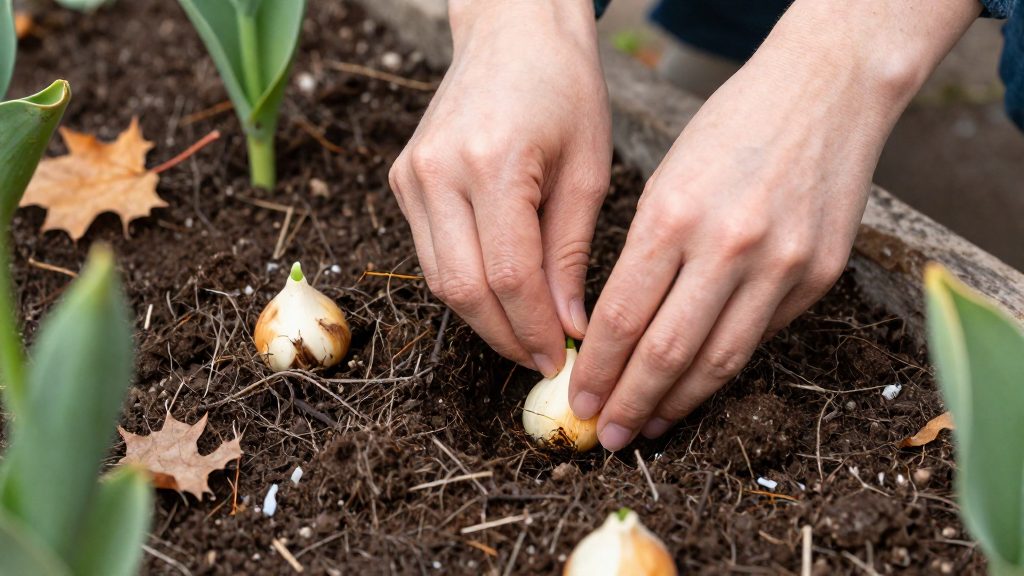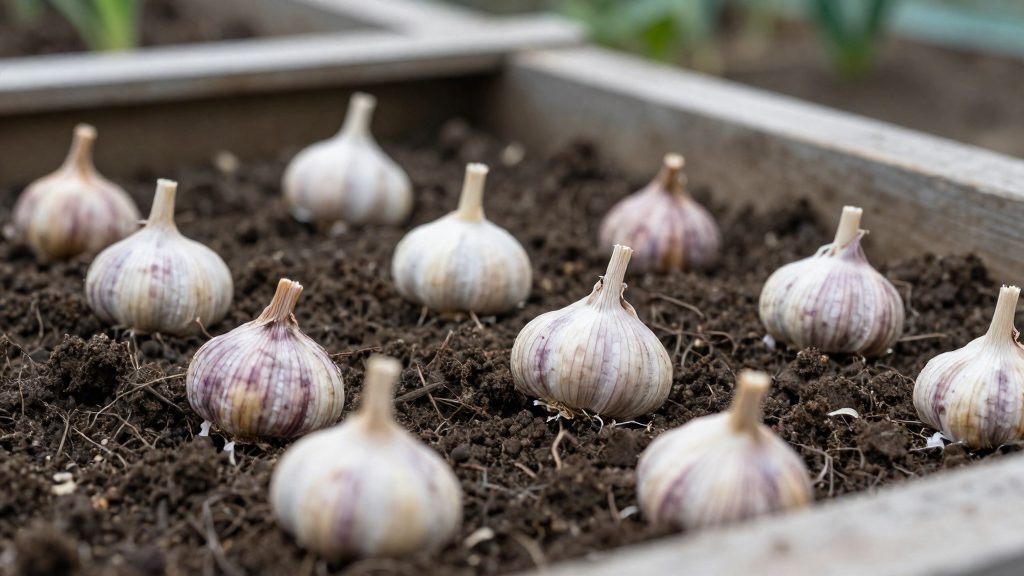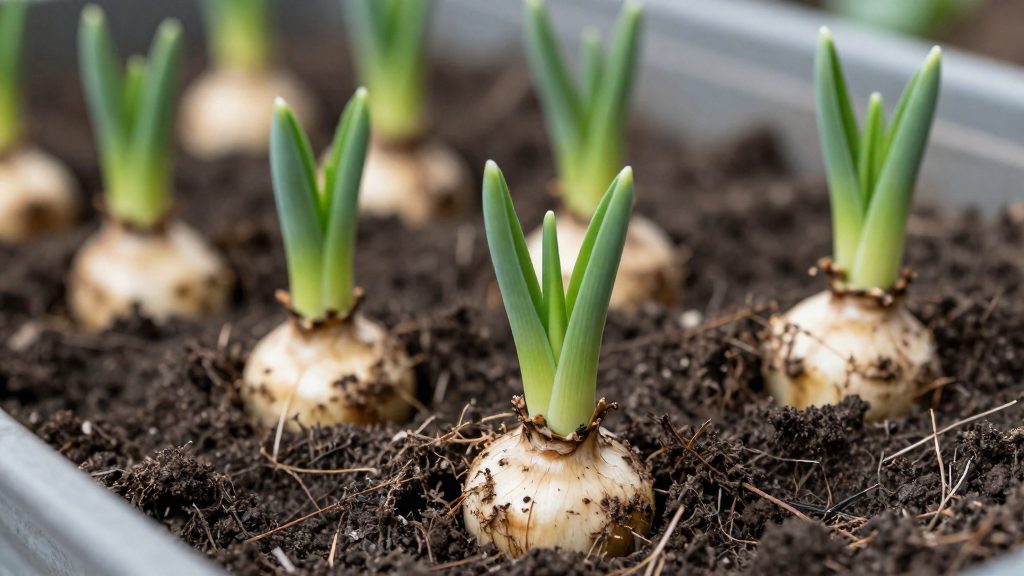
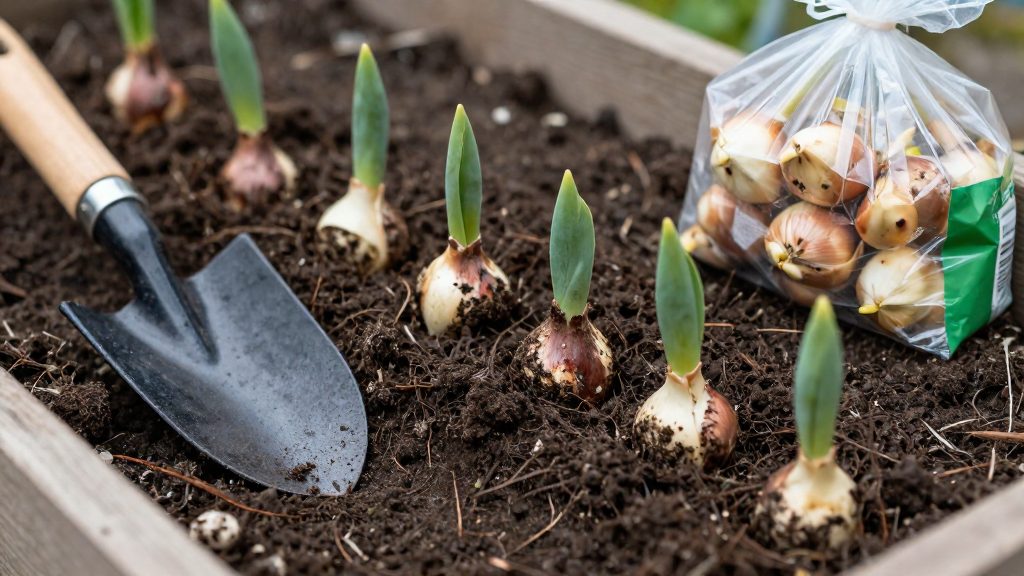
For northern gardens, the reference window for spring-flowering bulbs is September or October, according to The Old Farmer’s Almanac (2026). Halloween is the fallback deadline the same source gives when timing is uncertain. Soil temperature is the main planting signal: the Almanac advises planting once soil drops below 60°F, which typically falls about six weeks before the first hard frost. Only tulips are reported to tolerate later planting, sometimes into winter, as long as the soil can still be dug.
Planting window for spring-flowering bulbs
Timing is the first decision in fall planting. Spring-flowering bulbs need to be in the ground before winter so they can experience the cold season that follows. The planting window and the deadline below are the reference points for northern regions.
September to October as the reference window
According to The Old Farmer’s Almanac (2026), spring-flowering bulbs should go into the ground in September or October in northern regions. Planting in this period gives bulbs time to settle into the soil before the cold arrives. Choose a site with good sun exposure, since most spring bloomers need sun to flower well.
| Timing | Guidance | Source |
|---|---|---|
| September to October | Reference planting window for spring-flowering bulbs in northern regions | The Old Farmer’s Almanac (2026) |
| Halloween | Fallback deadline if timing is uncertain | The Old Farmer’s Almanac (2026) |
| Late autumn | Tulips only, while the soil can still be dug | The Old Farmer’s Almanac (2026) |
Halloween as the fallback deadline
If you are not sure you have reached the right point in the window, aim to have bulbs planted by Halloween. The Almanac gives this date as a safety margin. After Halloween, its guidance no longer covers most spring-flowering bulbs. The exception is tulips, which the same source reports can be planted later, sometimes into winter. Even for tulips, the working test is whether the soil can still be dug, not the date on the calendar.
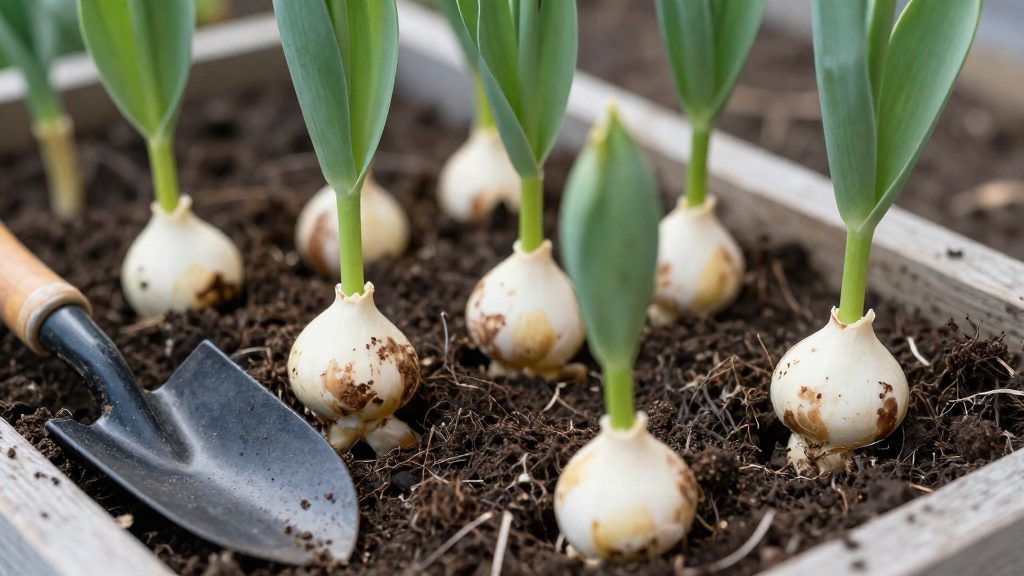
Soil temperature and frost dates
Soil temperature and the first hard frost date are the two indicators to read together when deciding whether bulbs can go into the ground. The Almanac gives soil temperature as the primary guide and places the best planting time about six weeks before the first hard frost. Using both gives a more reliable answer than either one alone, because soil reflects conditions at root depth and the frost date anchors the timing to your region.
Soil below 60°F as the planting signal
According to The Old Farmer’s Almanac (2026), the best time to plant is when soil temperatures drop below 60°F. Air temperature can swing sharply through autumn, so a single warm or cold day says little about the ground. Soil cools more slowly and gives a steadier reading, which makes it the better guide for bulbs that will spend the winter underground.
Counting back about six weeks from the first hard frost
The second check is calendar-based. Find the first hard frost date for your area, then count back about six weeks. The result is the approximate point when soil typically drops below 60°F. The official sources consulted do not give a single frost date that applies across northern regions, so use local weather records or your regional extension service for this date. Frost dates vary with elevation, distance from large bodies of water, and local microclimates, which is why the calendar estimate is a starting point and not a final answer.
| Step | Action | Result |
|---|---|---|
| 1 | Find the first hard frost date for your area | Reference date from local records |
| 2 | Count back about six weeks | Approximate soil-cooling date |
| 3 | Measure soil temperature with a probe thermometer | Confirms whether soil is below 60°F |
Measuring soil temperature with a probe thermometer
Measure the soil rather than estimating by touch. Push the probe to the depth where the bulbs will sit, not just into the surface layer. Take readings at the same time of day over several days, since afternoon sun can warm the top layer and give a misleading result. When readings consistently stay below 60°F, the soil meets the planting signal. If readings hover near the threshold, wait for a few more cool days to confirm the trend before planting.
Fall bulb planting calendar by month
For northern gardens, the planting window is September to October, with Halloween as the fallback deadline. The official sources consulted do not give fixed calendar dates for each phase, so the timing below describes a sequence of steps rather than exact days.
Early September: preparation
This phase is for preparation. Order bulbs early enough to have them on hand before the main planting period. Clear beds of old plant material and weeds, then loosen the soil so it can be dug to the depth each bulb needs.
October: main planting
Most planting happens in October. Timing depends on your region, so check local first-frost timing and plant with enough lead time before the ground hardens. Use the depths and spacings from The Old Farmer’s Almanac (2026) as the planting reference:
| Bulb | Planting depth | Example spacing |
|---|---|---|
| Crocus | 3 in | 4 in |
| Snowdrop | 3 in | 3 in |
| Bearded iris | 4 in | 4 in |
| Tulip | 4–6 in | 3–6 in |
| Daffodil | 6 in | 6 in |
November: late planting, tulips only
November falls outside the standard window. According to The Old Farmer’s Almanac (2026), tulips are the only spring-flowering bulbs reported to tolerate later planting, sometimes into winter. Plant tulips in November only if the soil is still cool and can still be dug. For the other bulbs in the table, plan planting for the autumn window.
Planting depth and spacing
For spring-flowering bulbs, The Old Farmer’s Almanac (2026) gives the planting depth as about three times the bulb’s width. The Almanac’s species figures are the reference in the table below. The University of Illinois Extension (2021) gives a related rule: plant at 2–3 times the bulb’s diameter. The two rules are close but not identical (about 3 times versus 2–3 times the bulb’s width or diameter), so use the species figures in the table as the starting point and check them against the size of the bulb you are planting.
| Species | Planting depth | Example spacing |
|---|---|---|
| Crocus | 3 in | 4 in |
| Snowdrop | 3 in | 3 in |
| Bearded iris | 4 in | 4 in |
| Tulip | 4–6 in | 3–6 in |
| Daffodil | 6 in | 6 in |
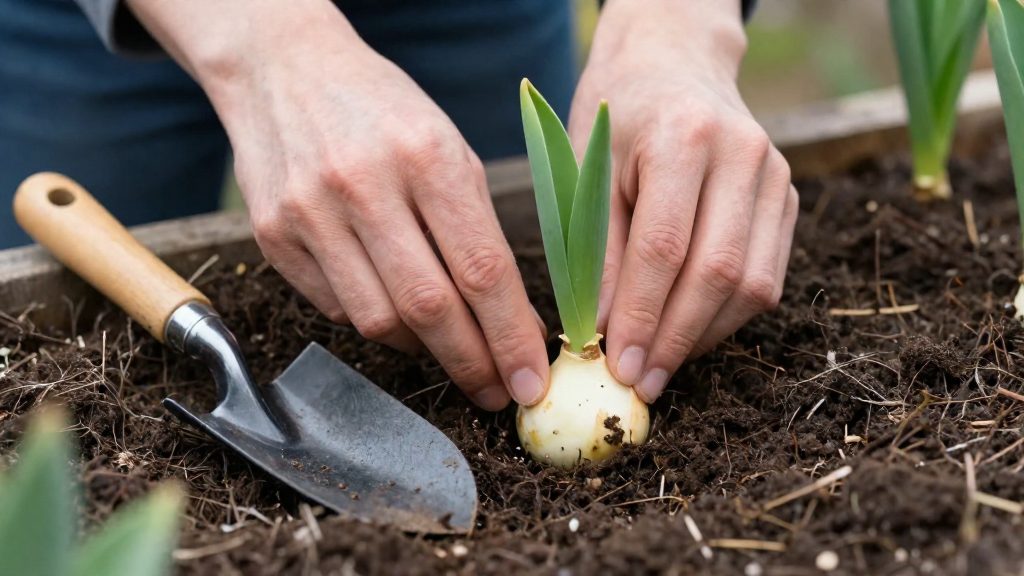
To apply the depth rule, dig to the required depth for each bulb, or excavate a bed to a uniform depth, then set the bulbs and backfill with soil. Measure depth from the soil surface to the base of the planting hole, and check the result against the bulb’s width as the Almanac describes.
Spacing depends on the species and the look you want. The Almanac recommends planting in clusters or drifts rather than single rows, which gives a more natural effect in beds and borders. Treat the example spacings above as a minimum guide, and allow more room for larger bulbs such as daffodils.
Soil texture changes depth slightly. The Almanac advises planting a little deeper in sandy soil and a little shallower in clay. Sandy soil drains quickly, so bulbs can settle or dry out, while clay holds moisture, and planting too deep can keep bulbs wet and cold for longer.
Late planting: tulips and diggable soil
Late planting is possible within limits. According to The Old Farmer’s Almanac (2026), tulips can be planted later than most fall bulbs, sometimes even into winter. The cutoff is set by the ground rather than the calendar, so late planting depends on whether the soil is still cool enough and workable.
Which bulbs tolerate late planting
| Bulb | Late-planting tolerance |
|---|---|
| Tulip | Can be planted later than most fall bulbs, sometimes into winter, while the soil can still be dug |
| Crocus | Plant in the standard autumn window |
| Snowdrop | Plant in the standard autumn window |
| Daffodil | Plant in the standard autumn window |
| Bearded iris | Plant in the standard autumn window |
The official sources consulted do not specify a late-planting cutoff for crocus, snowdrop, daffodil, or bearded iris. Plan those bulbs for the September to October window.
Diggable soil as the limit
Diggable soil is the working limit for any late planting. Push a trowel into the bed:
- If it penetrates and turns the soil, you can still plant.
- If the soil is frozen, or too hard to break into a planting hole, stop planting.
Tulips should still go in at 4–6 inches deep, as the Almanac gives. A tulip planted late in autumn still receives winter cold, provided it is in the ground before the soil freezes.
Storing bulbs that are not yet planted
If planting is delayed, hold bulbs in cool, dry storage until the ground is ready. Keep them out of direct sun and use a ventilated container rather than a sealed bag, since trapped moisture encourages rot. Before planting, discard any bulb that is soft, moldy, or damaged, because it is unlikely to bloom well.
Mulch and watering before freeze-up
Watering and mulching protect newly planted bulbs from frost heave in northern gardens. Frost heave occurs when moisture in the upper soil freezes and expands, lifting shallow bulbs out of position. According to The Old Farmer’s Almanac (2026), gardeners should water deeply before the ground freezes and apply 2–3 inches of mulch to help prevent frost heave.
Step 1: Water deeply before the ground freezes
Soak the planting area thoroughly after planting, so moisture reaches the root zone where bulbs are settling. Water that soaks in before the ground hardens gives bulbs a moist base for root development during the cold months. Avoid light surface sprinkling, which wets only the top layer. Water slowly and stop once the soil is saturated without standing water.
Step 2: Apply 2–3 inches of mulch
Spread 2–3 inches of mulch over the planted bed once watering is finished. Organic materials such as straw or shredded leaves are common choices. The mulch layer keeps soil temperature more even near the surface, which limits the repeated freezing and thawing that drives frost heave. Keep the layer even across the whole bed, with no bare patches above the bulbs.
How mulch and watering limit frost heave
| Factor | Effect on planted bulbs |
|---|---|
| Repeated freeze-thaw cycles | Lift and loosen shallow bulbs |
| Mulch layer | Moderates swings in soil temperature near the surface |
| Deep watering beforehand | Gives the root zone moisture before freezing |
Practical checklist
- Plant the bulbs, then water the bed deeply.
- Spread 2–3 inches of mulch over the full planted area.
- Check the bed in late winter and spring for bulbs that have been pushed upward, and reset them at the correct depth.
Why the cold season matters
Spring-flowering bulbs are winter hardy. According to University of Illinois Extension (2021), they need cold winter soil to trigger sprouting and blooming. This is why the planting date matters: bulbs placed in the ground during the autumn window experience the winter cold that prompts spring growth.
Gardeners in milder climates should check regional guidance, because the timing in this article applies to northern regions. Planting too late in autumn can leave bulbs without enough time in the ground before winter, which is why the Almanac’s deadline is set at Halloween.
Spring-flowering bulbs in the Almanac’s guidance
The Old Farmer’s Almanac (2026) gives planting depth and spacing for crocus, snowdrop, bearded iris, tulip, and daffodil. The Almanac’s guidance covers all of these in the same autumn planting process, and the depth and spacing figures are the only species-specific details the official sources consulted provide.
- Crocus: planted 3 inches deep and 4 inches apart.
- Snowdrop: planted 3 inches deep and 3 inches apart.
- Bearded iris: planted 4 inches deep and 4 inches apart. The official sources consulted do not give a separate planting window for it, so it follows the standard autumn timing.
- Tulip: planted 4–6 inches deep and 3–6 inches apart. It is the only bulb in this group reported to tolerate late planting.
- Daffodil: planted 6 inches deep and 6 inches apart.
For naturalizing in lawns and borders, the Almanac recommends clusters or drifts rather than single rows. Use the depth and spacing figures above as the reference for each group.
Conclusion
For northern gardens, plant spring-flowering bulbs in September or October and use Halloween as the fallback deadline, according to The Old Farmer’s Almanac (2026). Read soil temperature, which the Almanac puts below 60°F, alongside the first hard frost date for your area. Tulips are the only bulbs reported to tolerate later planting, and only while the soil can still be dug. Water deeply and apply 2–3 inches of mulch before freeze-up to limit frost heave.
Frequently asked questions
When should I plant spring-flowering bulbs in a northern garden?
According to The Old Farmer’s Almanac (2026), the reference window for northern regions is September to October. If you are unsure of the timing, aim to have bulbs in the ground by Halloween, which the same source gives as the fallback deadline.
How can I tell if the soil is ready for planting?
The Old Farmer’s Almanac (2026) advises planting once soil temperature drops below 60°F, which typically happens about six weeks before the first hard frost. If readings hover near that threshold, waiting a few more cool days is a sensible precaution, though this is general practice rather than a figure from the Almanac.
How deep should I plant bulbs, and does soil type change the depth?
The Almanac recommends planting at roughly three times the bulb’s width, giving about 3 in for crocus and snowdrop, 4–6 in for tulip, and 6 in for daffodil. Plant slightly deeper in sandy soil and slightly shallower in clay. University of Illinois Extension (2021) gives a similar guideline of 2–3 times the bulb’s diameter, so use the species figures as a starting point and adjust to the size of the bulb you are planting.