Winter dormancy is the pruning window for crape myrtle, from late February into early March according to NC State Extension (Wayne County). Mississippi State University Extension gives a slightly broader window of late January to early March. In both cases the cuts are made before the plant starts its spring growth, so the main pruning work is finished while the plant is still dormant.
When to prune crape myrtle
Crape myrtle is pruned in the resting period before the plant resumes growth. The two extension sources consulted give these windows:
| Source | Recommended window |
|---|---|
| NC State Extension (Wayne County) | Late February into early March |
| Mississippi State University Extension | Late January to early March |
Both ranges work on the same principle: the cuts are finished before spring growth begins. The NC State range ends in early March, so pruning that runs later than that falls closer to the start of spring growth than the guidance recommends.
Keeping cuts within the window
Schedule the main structural cuts for late winter, while the plant is still dormant.
Limiting how often heavy pruning happens
The window sets when to prune, not how much. Mississippi State University Extension advises against drastically reducing crape myrtles every year. Choosing a cultivar that suits the available space reduces the need for major cuts in the first place.
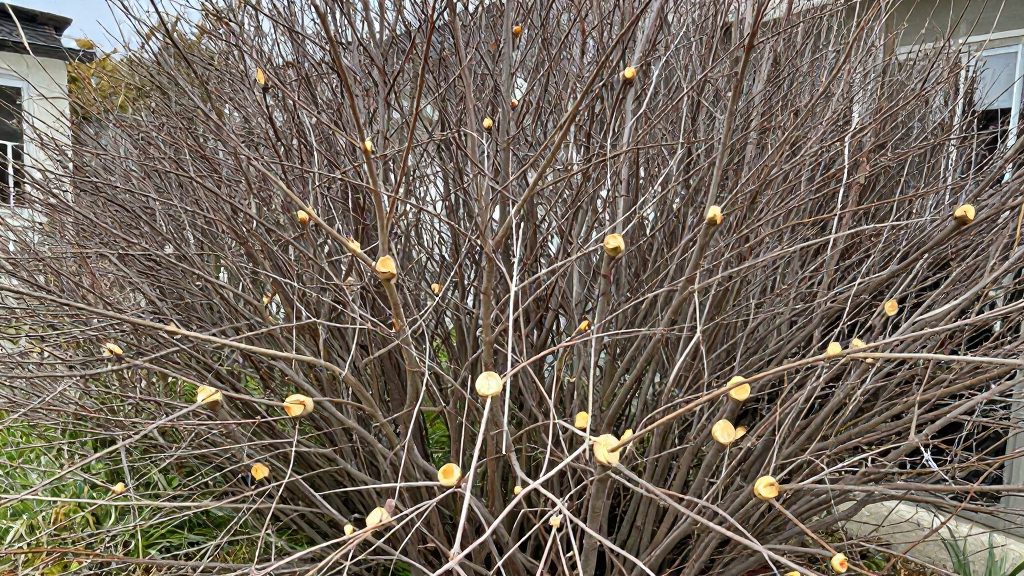
Why is late winter the best time?
Crape myrtles flower on new wood. Flower buds form on new growth, not on last year’s branches, so the summer blooms appear on shoots that emerge after pruning, according to NC State Extension (Wayne County). Because buds form on new growth that appears after pruning, late-winter cuts do not remove the buds that open in summer.
Dormant pruning also gives the plant a clean restart. Growth resumes in spring from the cut points, and new shoots that carry the summer flowers emerge after pruning.
Can you prune in summer or fall?
Summer and fall cuts can handle small, targeted jobs, but they cannot replace the main pruning. Outside the winter window, keep cuts small.
Summer: removing spent flower heads
The official sources consulted do not say whether removing spent flower heads encourages a second bloom. The sources consulted do not cover this task, so treat it as optional tidying.
Fall: why late cuts carry risk
The official sources consulted do not give a fall pruning date or a frost-risk threshold for crape myrtle. The sources consulted do not address fall pruning, so keep the main pruning in the winter window.
What summer and fall cuts can and cannot do
| Task | Timing stated in the sources | What it accomplishes |
|---|---|---|
| Removing spent flower heads | Not specified by the sources consulted | Tidies the plant after blooming |
Major structural work belongs in the winter window.
How to prune without topping
Pruning a crape myrtle without topping means shaping the plant around three to five strong trunks and cutting each branch back to a junction, so the natural structure stays intact. The method has three parts: keep a permanent framework, make each cut at a junction, and choose a plant size that suits the site.
Build a permanent framework
Select three to five strong trunks as the permanent framework of the plant. NC State Extension (Wayne County) recommends keeping this number of trunks. Choose the strongest, best-spaced stems and keep them as the main structure over the years.
Cut each branch back to a junction
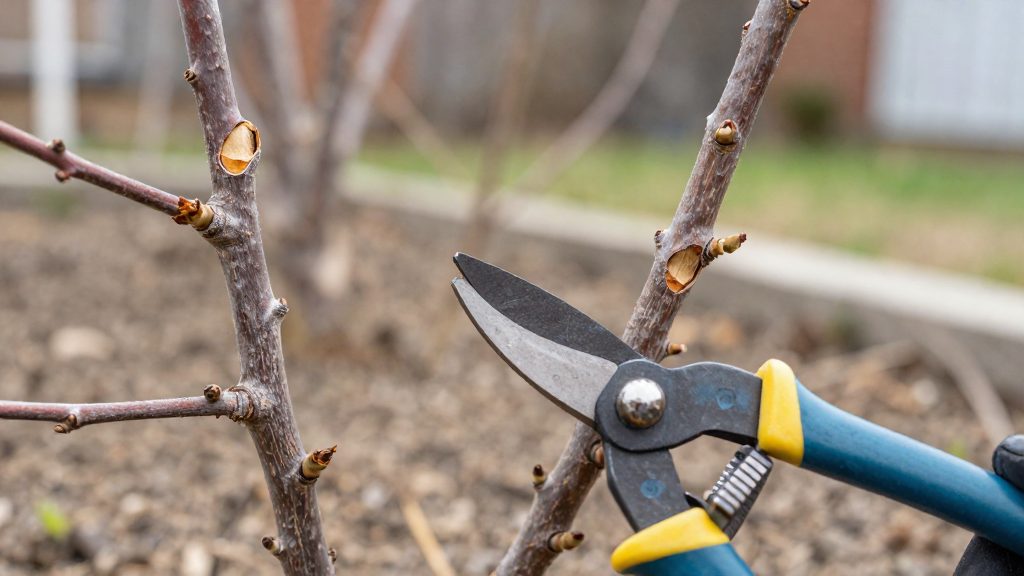
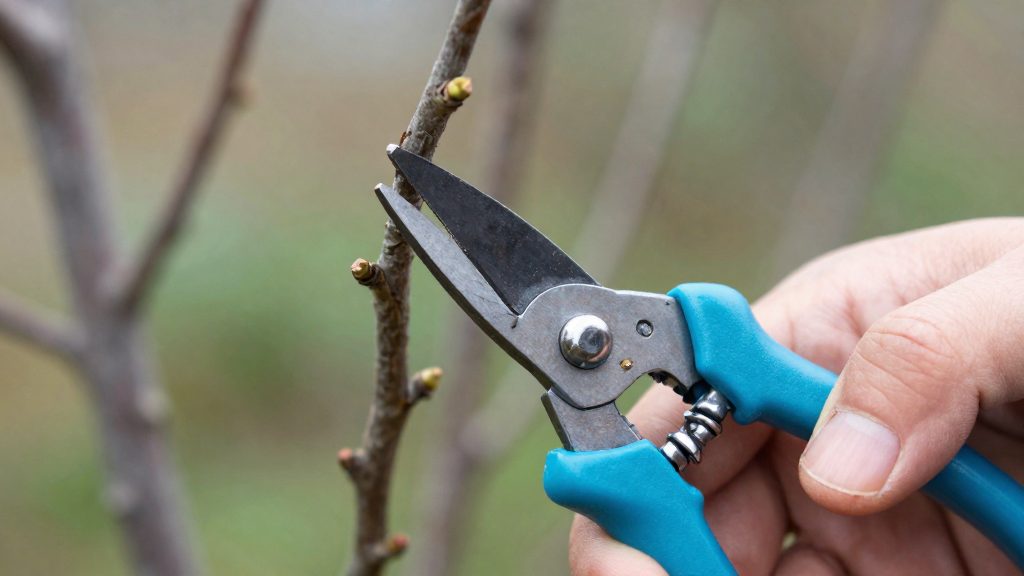
Make each cut at a junction, the point where a branch splits into a smaller stem or joins a larger limb. Cutting at a junction keeps the branch attached to a sound point on the framework. NC State Extension (Wayne County) advises against leaving stubs, which is the main difference between this method and topping.
| Cut situation | Action |
|---|---|
| Branch that splits into a smaller stem | Cut back to the junction |
| Branch that would leave a stub | Cut back to a junction instead |
| Water sprout at the base | Remove at any time of year |
Match the cultivar to the space
Pruning should be a light, routine task rather than a yearly reduction. Choosing a cultivar that fits the space avoids the need for major pruning. Before planting, measure the width and height the site allows, including distance from walls, walkways and overhead lines, and select a cultivar that will reach a mature size within that space.
What is crape murder?
Topping, commonly called “crape murder,” means cutting the main limbs of a crape myrtle back to stubs, short remnants of wood left on the trunk. Growers often use it to shrink a plant that has outgrown its space, but the cuts create problems the plant carries for years. According to NC State Extension (Wayne County), topping produces weak, poorly attached branches, and cutting large limbs leaves stubs that sprout dense clusters of shoots.
How topping damages the wood
When a large limb is removed and no branch junction remains to take over its growth, the plant responds at the cut point instead of following its natural branching pattern. Each stub sends up many new shoots in a tight cluster. These shoots join the stub loosely, so the new growth forms a crowded mass of thin, weakly connected wood.
| Topping effect | What happens to the plant |
|---|---|
| Dense shoot clusters | Stubs sprout many shoots at each cut point |
| Weak attachment | New shoots join the stub without a strong union |
| Breakage | Poorly attached limbs snap in wind or ice (NC State Extension, Wayne County) |
| Sagging | Weak limbs droop under the weight of flowers (NC State Extension, Wayne County) |
Long-term effects on the plant
Repeated topping compounds the damage. Each cycle adds more stubs, more dense shoot clusters, and more weak joints.
What to remove at any time of year
According to NC State Extension (Wayne County), water sprouts can be removed from the base at any time of year. Removing dead, diseased or crossing wood and thinning crowded branches are part of pruning, but the sources consulted do not say they can be done in every season. Only water sprout removal is stated as possible at any time of year.
Water sprouts
Water sprouts are shoots that emerge from the base of the plant. NC State Extension (Wayne County) states that they can be removed from the base at any time of year, which makes them the simplest cut to schedule. Remove them at their point of origin rather than leaving short stubs above the soil.
Dead, diseased and crossing wood
Pruning should remove dead, diseased or crossing wood, according to NC State Extension (Wayne County). Prune out dead, diseased or crossing wood, as NC State Extension (Wayne County) advises.
Thinning crowded branches
Thinning crowded branches improves airflow through the canopy. NC State Extension (Wayne County) reports that better airflow can reduce powdery mildew. Select branches that grow inward or that crowd neighbouring limbs, and remove them in small numbers rather than cutting the whole canopy at once.
| Removal | Reason given | Source |
|---|---|---|
| Water sprouts from the base | Can be removed at any time of year | NC State Extension (Wayne County) |
| Dead wood | Removed during pruning | NC State Extension (Wayne County) |
| Diseased wood | Removed during pruning | NC State Extension (Wayne County) |
| Crossing wood | Removed during pruning | NC State Extension (Wayne County) |
| Crowded branches | Improves airflow, which can reduce powdery mildew | NC State Extension (Wayne County) |
Adjusting timing for your climate zone
The pruning window for crape myrtle is set by the start of spring growth, so its exact dates vary by region.
| Source | Stated window | Region |
|---|---|---|
| Mississippi State University Extension | Late January to early March | Mississippi |
| NC State Extension (Wayne County) | Late February into early March | Wayne County, North Carolina |
Warmer regions
The Mississippi range starts in late January, but the sources do not say which climates suit the earlier dates. Watch the plant and prune while it is still dormant. Watch the plant itself: prune while it is still dormant, before new shoots appear.
Colder regions
In areas with cold winters, the last frost date matters more than the calendar. The sources tie timing to dormancy and the start of spring growth, so finish cuts before new shoots appear.
Checking your local dates
- Find the average last frost date for your area from a local source, such as a county extension office.
- Compare that date with the window in the table above.
- Prune within the window, while the plant is still dormant.
- Finish before spring growth starts.
Frequently asked questions
When is the best time for a beginner to prune crape myrtle?
Late winter, while the shrub is still dormant and before new leaves appear. NC State Extension (Wayne County) gives late February into early March, and Mississippi State University Extension gives late January to early March.
Will pruning in late winter stop my crape myrtle from flowering in summer?
No. According to NC State Extension (Wayne County), the flower buds form on new wood, the shoots that grow after pruning, so the summer blooms still appear.
Should I cut my crape myrtle back hard every year?
No. Mississippi State University Extension advises against drastic yearly cutting, because topping can shorten the plant’s life and reduce flowering. Choosing a cultivar sized for the space avoids the need for heavy cuts.