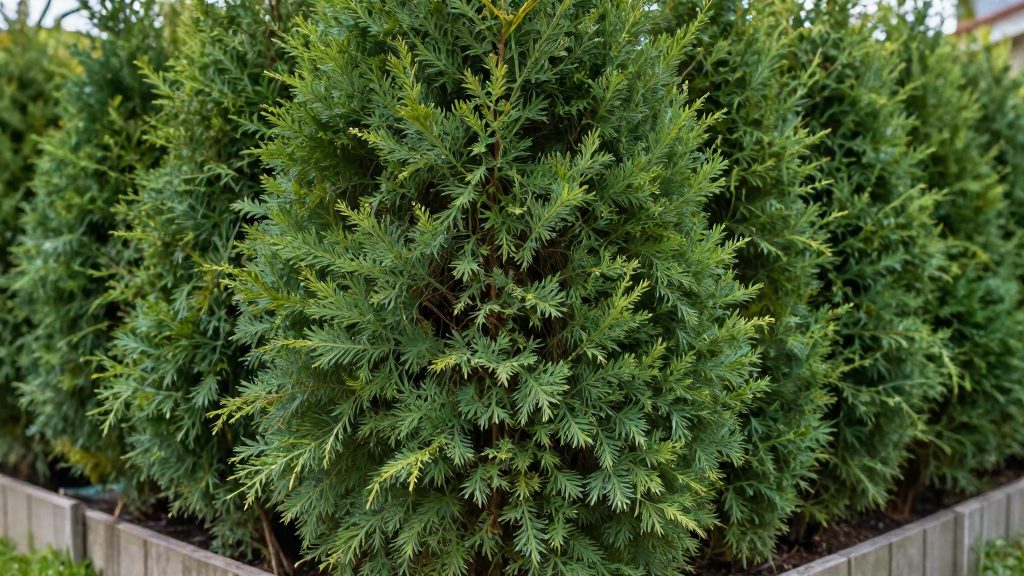
Choosing a privacy shrub comes down to four checks: the plant’s mature height and width against your available space, its hardiness zone, the light it receives, and whether its height blocks the sightline you want to hide. According to The Old Farmer’s Almanac (2026), forsythia reaches about 8–10 ft in zones 5–8, and rose of sharon reaches 8–12 ft in zones 5–9. A screen meant to block a view from an upper floor may need more height than the shrubs with listed heights here reach (up to 15 ft for the narrow evergreens, 12 ft for rose of sharon). Check the mature height of the tall evergreens on the plant label or with local extension, and measure the sightline on site before choosing. Work through the checks below before buying any plant.
How to choose shrubs for a privacy hedge
Compare mature size with the planting space
Size figures on labels and in reference sources describe the shrub after years of growth, not at purchase. Measure the strip along the boundary, including clearance from fences, walls, paths and overhead lines, then compare it with the mature width. If the listed width exceeds the strip, the shrub will need regular pruning to stay in place, which gradually changes the screen’s shape.
Match the height to the sightline
A screen works by blocking the line of sight between a viewer and the area to protect. Stand at the point the view comes from, such as a ground-floor window, a deck or a street edge, and note the height of that eye level. The sightline height is the minimum the screen must reach. Choose a species whose mature height covers that line rather than a shorter one expected to grow into it later. The consulted sources do not give a privacy distance figure, so judge this on site.
Check hardiness zone and sun exposure
Each species is listed for a range of hardiness zones. The Old Farmer’s Almanac (2026) gives the following ranges:
| Shrub | Listed mature height | Listed hardiness zones |
|---|---|---|
| Forsythia | 8–10 ft | 5–8 |
| Lilac (‘Miss Kim’ and ‘Palibin’) | 5–8 ft | 3–7 |
| Rose of sharon | 8–12 ft | 5–9 |
Compare your local zone with the listed range before buying. Light needs also vary. NC State Extension notes that junipers need more sun, while hollies tolerate shade. Observe how many hours of direct sun the planting strip receives at different times of the year, and match the species to that light.
Best evergreen shrubs for year-round privacy
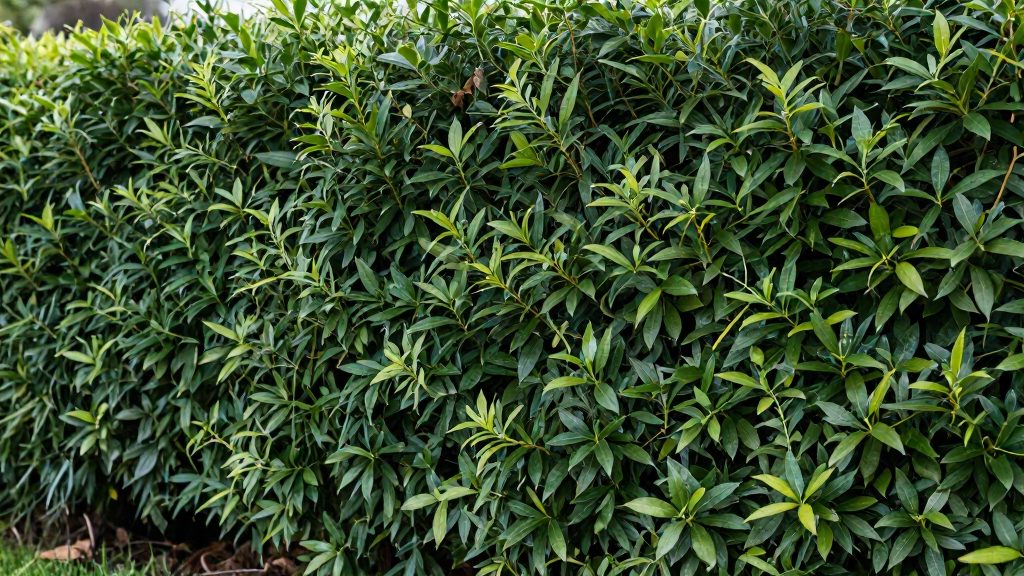
Evergreen screens keep their foliage through winter. NC State Extension lists tall evergreen screens including Canadian hemlock, Deodar cedar, Southern magnolia, Eastern red cedar and ‘Nellie R. Stevens’ holly for year-round privacy (NC State Extension, Polk County, 2019). For lower screens, the same extension names ‘Burford’ holly, yaupon holly, wax myrtle, English laurel and Hollywood junipers. Narrow forms such as ‘Emerald Green’ arborvitae and ‘Blue Arrow’ juniper suit tight spaces.
| Group | Examples named | Relevant detail |
|---|---|---|
| Tall screens | Canadian hemlock, Deodar cedar, Southern magnolia, Eastern red cedar, ‘Nellie R. Stevens’ holly | Listed by NC State Extension for year-round privacy (2019) |
| Shorter screens | ’Burford’ holly, yaupon holly, wax myrtle | Listed by NC State Extension as shorter evergreen screens |
| Narrow forms | ’Emerald Green’ arborvitae | About 15 ft tall and 4 ft wide, zones 4–9 (The Old Farmer’s Almanac, 2026) |
| Narrow forms | ’Blue Arrow’ juniper | About 15 ft tall and 2 ft wide, zones 4–9 (The Old Farmer’s Almanac, 2026) |
Tall screens suit boundaries where height matters most. The sources consulted list these species for year-round privacy but give no mature height, hardiness zone or sun requirement for each one. Confirm these on the plant label or with your local extension office before choosing.
Shorter evergreens fill the lower layer of a screen. Wax myrtle is also listed in this group.
Narrow forms give a dense wall in limited width. ‘Emerald Green’ arborvitae is the wider of the two at about 4 ft, while ‘Blue Arrow’ juniper reaches about 2 ft across. Both are rated for zones 4–9.
Which deciduous shrubs make a good screen?
Deciduous shrubs lose their leaves each year. The Old Farmer’s Almanac (2026) lists four deciduous options for hedges: forsythia, ‘Miss Kim’ lilac, ‘Palibin’ lilac and rose of sharon. Their mature height and hardiness zones differ, so the right choice depends on the height you need and on your climate.
Mature heights and hardiness zones
| Shrub | Mature height | Hardiness zones |
|---|---|---|
| Forsythia | 8–10 ft (about 2.4–3 m) | 5–8 |
| ’Miss Kim’ lilac | 5–8 ft (about 1.5–2.4 m) | 3–7 |
| ’Palibin’ lilac | 5–8 ft (about 1.5–2.4 m) | 3–7 |
| Rose of sharon | 8–12 ft (about 2.4–3.7 m) | 5–9 |
- Rose of sharon is the tallest option in this list and the only one listed for zone 9, so it suits taller screens in warmer areas.
- Forsythia reaches a similar height to the lower end of rose of sharon’s range, with a narrower zone range of 5–8.
- ‘Miss Kim’ and ‘Palibin’ lilacs are the shortest options, at 5–8 ft, and share the same zone range of 3–7. They are the better choice where the screen must stay low or where colder winters are expected.
Seasonal leaf loss and reduced winter privacy
Because these shrubs are deciduous, their branches become visible once the leaves fall, and the screen opens up for the winter months. The four deciduous shrubs above are therefore best suited to blocking views during the leafed season, not to providing cover all year.
Plan the layout with this gap in mind. Place the shrubs where a seasonal screen is enough, such as a garden bed or a view that matters mainly in warm months. If a fence or a neighbour’s sightline must stay blocked in winter, the official sources consulted do not suggest deciduous shrubs as a replacement for evergreen cover.
Can you grow an edible privacy hedge?
Yes. According to The Old Farmer’s Almanac (2026), highbush blueberry and gooseberry and currant both appear among its edible hedge shrubs. Highbush blueberry grows to about 6 ft and is hardy in zones 3 to 7. Gooseberry and currant grow 4 to 6 ft and are hardy in zones 2 to 7. Because these shrubs bear fruit, choosing one for a screen means weighing the required height and climate range against the work of harvesting.
Fruiting shrubs suited to a screen
| Shrub | Height in a hedge | Hardiness zones |
|---|---|---|
| Highbush blueberry | About 6 ft | 3 to 7 |
| Gooseberry and currant | 4 to 6 ft | 2 to 7 |
Matching height to the screen
Highbush blueberry, at about 6 ft, gives the taller option of the two and can block views at a lower sightline. Gooseberry and currant, at 4 to 6 ft, produce a lower screen. If you need to block a view from a window or a seated position, the blueberry’s height is closer to that need. If you want a lower boundary that still separates areas, the gooseberry and currant range may be enough.
Harvest access
Harvest access should be planned before the hedge is established. Lay out the row so you can reach fruiting branches from both sides, or keep a path wide enough for a ladder or a basket. A hedge that is too dense to enter will be hard to pick, even if it screens well. The official sources consulted do not specify harvest timing, yields or the fruiting schedule for these shrubs.
Bird netting
The official sources consulted do not specify netting methods, materials or timing for these shrubs. In practice, plan the netting so it can be lifted or opened for picking without tearing it. Fix it in a way that lets you reach the branches underneath, so the screen and the harvest can both be managed from the same row.
How far apart should you plant hedge shrubs?
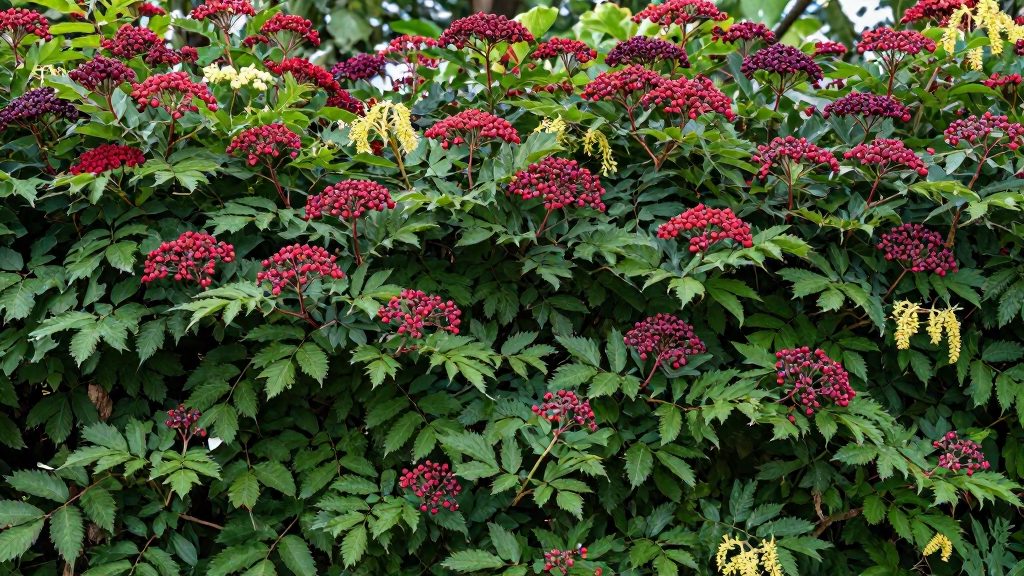
Hedge spacing depends on how wide each species grows, not on how it looks at planting. NC State Extension suggests planting tall evergreen screens 10 to 12 feet apart, but warns that this may be too tight as the plants mature. The Old Farmer’s Almanac (2026) recommends 2 to 3 feet apart in a double row for rose of sharon, and gives 3 feet for highbush blueberry. Because the spacing varies by species, one interval cannot be applied to every hedge.
Tall evergreen screens
Tall evergreen screens widen considerably over time. A gap that looks generous at planting can close within a few years, causing crowding, competition for light and water, and thinner growth on the inside of the row. Before buying, check the expected mature width of the specific species or cultivar and compare it with the 10 to 12 foot range.
Rose of sharon
According to The Old Farmer’s Almanac (2026), rose of sharon grows 8 to 12 feet tall and is hardy in zones 5 to 9. It is planted 2 to 3 feet apart in a double row, which produces a dense screen faster than a single line. The consulted sources do not give a mature width for this shrub, so the 2 to 3 foot figure is the spacing to follow.
Highbush blueberry
Highbush blueberry grows about 6 feet tall and is hardy in zones 3 to 7. The Old Farmer’s Almanac (2026) lists it at 3 feet apart. The same reference gives 2 to 4 feet apart for gooseberry and currant.
| Shrub | Recommended spacing | Key details |
|---|---|---|
| Tall evergreen screens | 10 to 12 ft | May be too tight as plants mature (NC State Extension, Polk County) |
| Rose of sharon | 2 to 3 ft, double row | 8 to 12 ft tall, zones 5 to 9 (The Old Farmer’s Almanac, 2026) |
| Highbush blueberry | 3 ft | About 6 ft tall, zones 3 to 7 (The Old Farmer’s Almanac, 2026) |
Shrubs to avoid because of pests
Leyland cypress and photinia are heavily overplanted, and NC State Extension (Polk County) notes that both have a high chance of pest problems. Planted as a single-species screen, either shrub places the same risk along the full length of a boundary, so a problem that affects one plant can spread to the whole privacy line.
Why single-species screens are hard to repair
A screen made of one shrub type is uniform, which makes gaps and dead plants more visible. Replacing a lost plant also means finding a match in size and form, which is difficult once the existing row is established.
Mixed planting as the alternative
NC State Extension describes a mixed planting as more natural and easier to repair than a single-species screen. Choose several species that suit the site:
- Hollies such as ‘Burford’ holly and yaupon holly.
- Junipers, including Hollywood junipers.
- Other shorter evergreen options named by NC State Extension include wax myrtle and English laurel.
Dense planting, then thinning
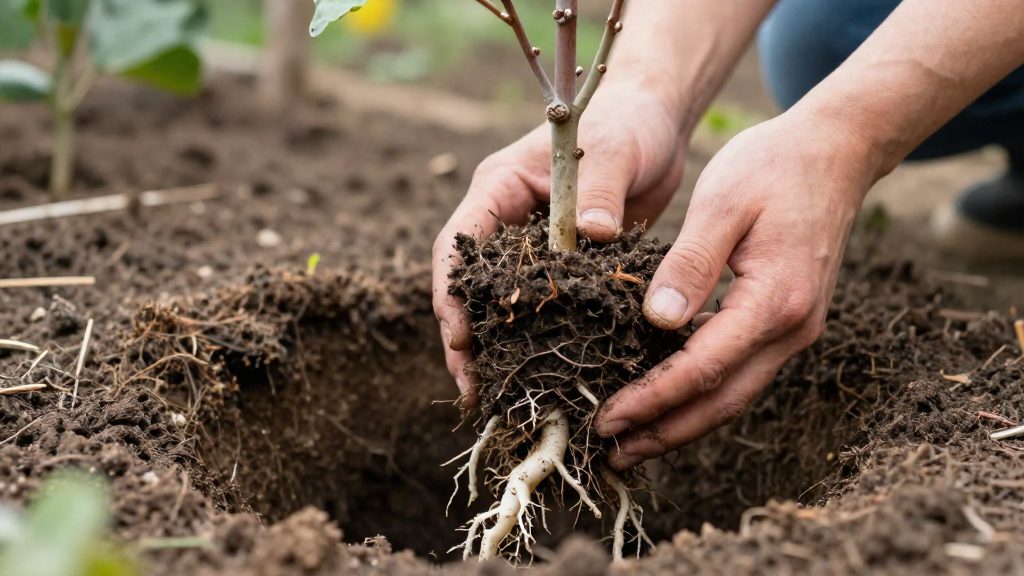
NC State Extension suggests planting densely and removing every other plant after about 5 years. The method works as follows:
- Plant the screen at a density higher than the final mature spacing.
- At about year five, assess which plants have room to grow and which are crowding their neighbours.
- Remove every other plant, leaving the remaining shrubs with space to develop into the screen.
The official sources consulted do not specify the exact method for choosing which plants to remove.
Pruning and maintaining a hedge
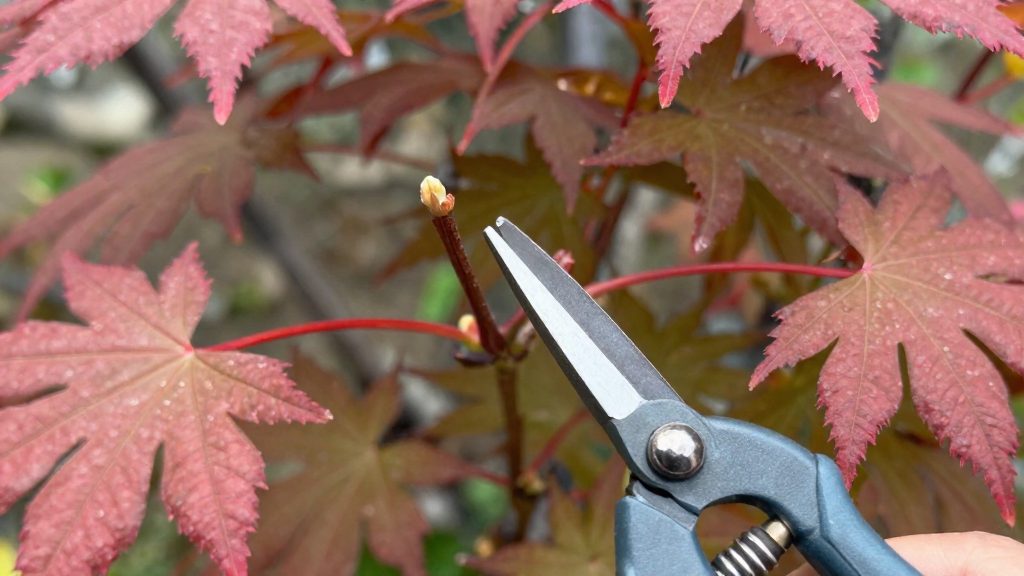
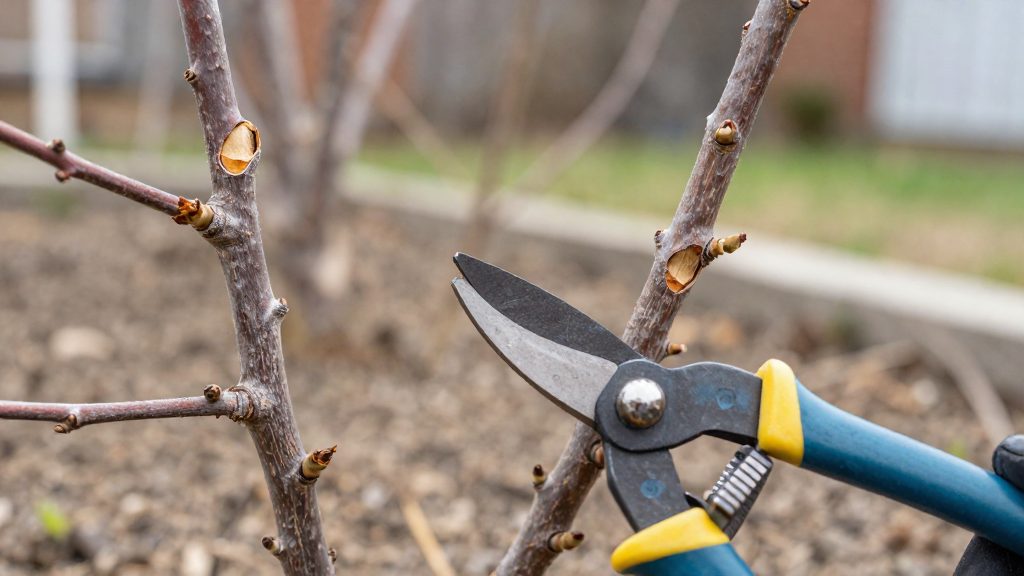
Pruning determines whether a privacy hedge stays dense from base to top. The official sources consulted do not specify exact pruning dates for these species, so timing should follow the plant’s growth cycle and your regional climate. The first step is to identify the type of hedge. Evergreen screens such as Canadian hemlock, Deodar cedar, English laurel and ‘Burford’ holly keep their foliage all year, so any gap at the base shows in every season.
Timing the cuts
- Confirm the plant’s growth habit before the first cut.
- Plan cuts around the plant’s growth cycle, using the plant label or local extension guidance for the specific species.
- Avoid heavy cutting on a single occasion. Spread removal of old growth over several visits so the plant can adjust.
Shaping for density
Shape the hedge with a wider base than top. Light must reach the lower stems for them to keep their leaves. When the top is wider than the bottom, it shades the lower branches, which then thin out over time. A gentle taper on both sides lets light reach every face of the hedge.
Renovating thinned lower branches
When the base has already thinned, gradual renovation works better than a single hard cut. Remove a portion of the top growth each season and shape the sides progressively to widen the base. Renovation of a sparse hedge takes several seasons, and results depend on the species and its condition.
Frequently asked questions
Which shrub gives privacy from an upstairs window?
The official sources consulted do not show any listed shrub blocking an upstairs sightline. The tallest deciduous option is rose of sharon, at 8 to 12 ft according to The Old Farmer’s Almanac (2026). Tall evergreens such as Canadian hemlock or Deodar cedar are named by NC State Extension (Polk County, 2019), but their mature heights are not given there, so check the plant label or your local extension office before choosing.
How far apart should I plant a privacy hedge?
The Old Farmer’s Almanac (2026) advises planting rose of sharon 2 to 3 feet apart in a double row, and gives 2 to 4 feet for gooseberry and currant. NC State Extension (Polk County, 2019) suggests spacing tall evergreens 10 to 12 feet apart, and warns that this may be too tight once they mature.
Why would a single-species screen be a risk?
NC State Extension (Polk County, 2019) says Leyland cypress and photinia are heavily overplanted and have a high chance of pest problems. It recommends a mixed planting, which it describes as more natural and easier to repair. You can plant densely and remove every other plant after about 5 years.