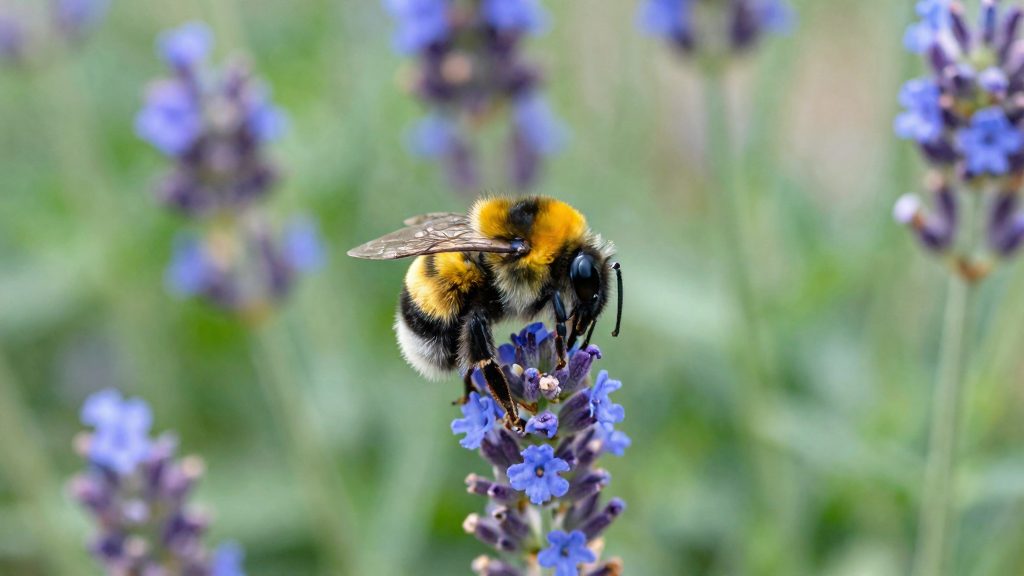
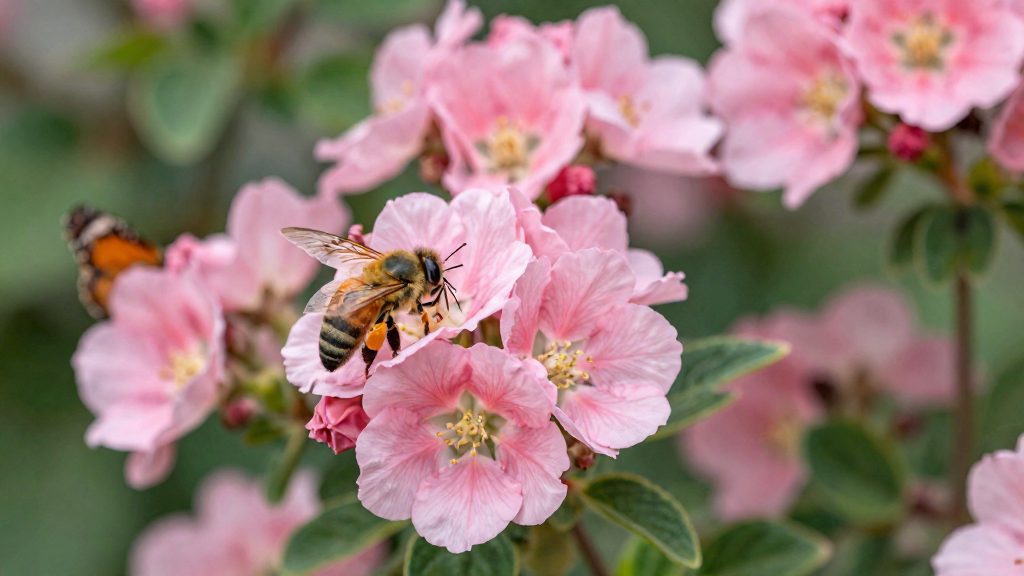
Several flowering shrubs supply nectar and pollen to bees, butterflies and other pollinators. According to University of New Hampshire Extension, shrubs and trees can provide these resources when other flowers are scarce, particularly in early spring and late fall. The species below are grouped by flower form and by the visitors named in regional guidance. No single shrub is ranked above the others.
Which Flowering Shrubs Support Pollinators?
Nectar and Pollen for Bees and Butterflies
Flowering shrubs are valuable when they provide nectar and pollen during periods with few other blooms. Selecting species that flower at different times extends this supply through the season.
- Summersweet (Clethra alnifolia), native to eastern North America, has fragrant white or pink flowers in July and August that attract bees and butterflies (Iowa State University Extension and Outreach, 2026).
- Carolina allspice (Calycanthus floridus) has late-spring flowers that attract butterflies and beetles (North Carolina Wildlife Federation).
- Inkberry (Ilex glabra) supplies nectar and pollen to pollinators. Female plants need a male plant nearby for berry production (North Carolina Wildlife Federation).
- Buttonbush (Cephalanthus occidentalis) attracts bees, butterflies and hummingbirds (University of Florida IFAS).
Flower Form and Visitation Patterns
The shape of a flower cluster affects which pollinators can reach the nectar and pollen. Sources describe the following patterns:
- Rounded flower clusters on buttonbush attract bees, butterflies and hummingbirds.
- Flower clusters on American elderberry (Sambucus canadensis) attract a diverse range of pollinators.
- Yellow flowers on bushy St. John’s wort (Hypericum densiflorum) attract pollinators and bloom from June through September (North Carolina Wildlife Federation).
- Fragrant white or pink flowers on summersweet attract bees and butterflies.
Single Versus Double Flowers
The available guidance does not compare single-flowered and double-flowered forms of these shrubs. Before buying, read the flower description on the plant label or the manufacturer’s instructions to confirm the flower form, and compare it with the species named in this section.
Flowering Periods and Visitors at a Glance
| Shrub | Flower form | Pollinators named | Flowering period |
|---|---|---|---|
| Summersweet | Fragrant white or pink flowers | Bees, butterflies | July–August |
| Buttonbush | Rounded flower clusters | Bees, butterflies, hummingbirds | Varies by region: March–August in Florida (UF/IFAS); June–August (North Carolina Wildlife Federation) |
| Carolina allspice | Late-spring flowers | Butterflies, beetles | Late spring |
| Bushy St. John’s wort | Yellow flowers | Pollinators (general) | June–September |
| American elderberry | Flower clusters | Diverse pollinators | May–July (North Carolina Wildlife Federation; confirm timing locally) |
| Inkberry | Nectar- and pollen-producing flowers | Pollinators (general) | Not specified in regional guidance |
Pollinator visitors for New Jersey tea (Ceanothus americanus), which has white flowers in May and June according to Iowa State University Extension and Outreach (2026), are not confirmed in the guidance reviewed here. Check your regional extension service for local pollinator records.
How Do You Choose Locally?
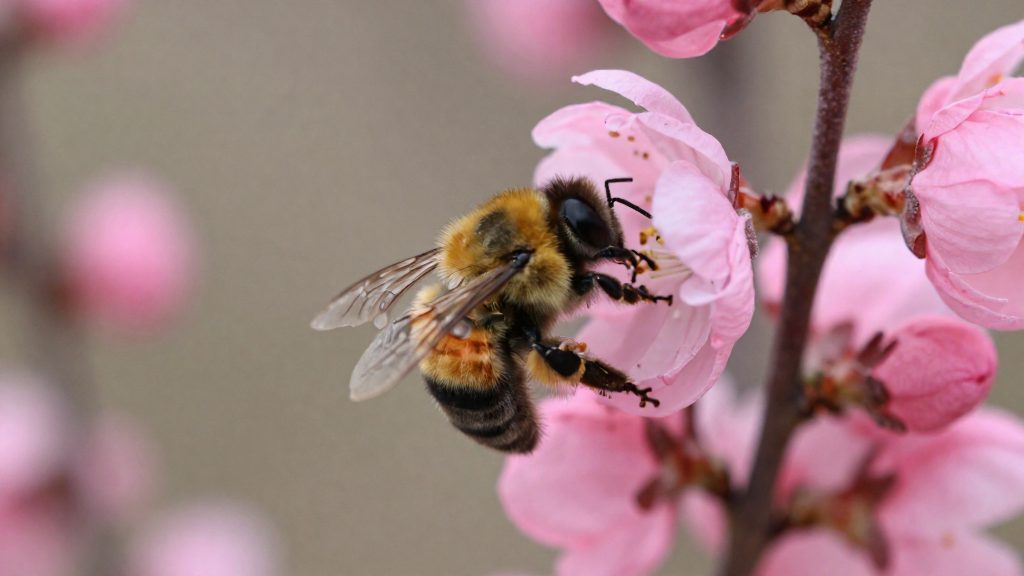
Choose a shrub by matching it to three site conditions: its USDA hardiness zone, its native range within your region, and the light and soil moisture at the planting spot. Pollinator value depends on whether the shrub establishes and flowers reliably, so a species that suits your climate and site will usually perform better than a more widely promoted one planted outside its conditions. No single shrub is established as the best choice nationally.
Match the USDA hardiness zone
Find your USDA hardiness zone, then confirm that the shrub’s listed range includes it. Zone ranges for the same plant can differ between publishers. Buttonbush (Cephalanthus occidentalis) illustrates this:
| Shrub | USDA zones | Publisher |
|---|---|---|
| Buttonbush | 5–10 | University of Florida IFAS |
| Buttonbush | 5–9 | Iowa State University Extension and Outreach (2026) |
| New Jersey tea (Ceanothus americanus) | 4–8 | Iowa State University Extension and Outreach (2026) |
Where publishers disagree, use the narrower range as the safer guide for your garden.
Check native range and regional suitability
Native shrubs are adapted to regional rainfall, temperatures and soils. Summersweet (Clethra alnifolia) and New Jersey tea are both native to eastern North America, according to Iowa State University Extension and Outreach (2026). For northern New England, the University of New Hampshire Extension lists pussy willow and serviceberry as early-spring pollinator plants, and highbush blueberry, common ninebark and arrowwood viburnum among spring-to-summer choices.
Use your regional extension service’s plant lists as a starting point. A recommendation for one region does not automatically transfer to another.
Assess light, moisture and exposure
Before buying, observe the site for several days and record:
- Direct sun hours: Full sun, partial shade or dappled shade.
- Soil moisture: Whether the soil stays damp, drains quickly, or floods.
- Exposure: Wind and reflected heat from walls or paving.
Compare these observations with the shrub’s documented needs. Buttonbush prefers moderately moist to wet soil and full sun to partial shade, according to University of Florida IFAS. Carolina allspice (Calycanthus floridus) performs best in dappled sun or partial shade, according to the North Carolina Wildlife Federation.
Early Flowers: Willow, Serviceberry, and Blueberry
Early-spring shrubs matter most when few other plants are blooming. For northern New England gardens, UNH names pussy willow and serviceberry as early-spring pollinator plants, and lists highbush blueberry among its spring-to-summer choices.
| Shrub | Listed by UNH as | Role in the early season |
|---|---|---|
| Pussy willow | Early-spring pollinator plant | Early pollen source |
| Serviceberry | Early-spring pollinator plant | Early pollen and nectar source |
| Highbush blueberry | Spring-to-summer choice | Blooms from spring into summer |
Pussy willow
Pussy willow is one of the early-spring pollinator plants UNH lists for northern New England gardens. It gives early pollinators a food source when few other shrubs have opened. Choose a site that suits local growing conditions, as the U.S. Fish & Wildlife Service recommends for all shrubs.
Serviceberry
UNH also lists serviceberry as an early-spring pollinator plant for northern New England. For the exact flowering window in your area, consult your local extension service, since bloom timing varies by region.
Highbush blueberry
UNH includes highbush blueberry among its spring-to-summer choices for northern New England, alongside common ninebark and arrowwood viburnum. It extends the bloom period past the earliest weeks of spring.
Buttonbush for Wet Garden Sites
Buttonbush (Cephalanthus occidentalis) is a pollinator shrub suited to moist planting sites, including bog gardens and wet borders. According to University of Florida IFAS, its rounded flower clusters attract bees, butterflies and hummingbirds. It prefers moderately moist to wet soil and grows in full sun to partial shade, which makes it a fit for planting areas that stay damp for much of the season.
Flower and pollinator value
- Rounded flower clusters attract bees, butterflies and hummingbirds (University of Florida IFAS).
- Treat buttonbush as one option among several rather than a ranked choice. Compare it with other shrubs suited to your site before selecting it for pollinator value.
Site requirements
- Soil: moderately moist to wet. Plant it where the ground stays damp rather than in well-drained, dry beds.
- Light: full sun to partial shade.
- Use: bog gardens and wet planting sites (University of Florida IFAS).
Hardiness and flowering periods differ by source
The published references do not agree on all details:
- Hardiness zones: University of Florida IFAS lists zones 5–10, while Iowa State University Extension and Outreach lists zones 5–9.
- Flowering period: University of Florida IFAS describes March to August in Florida. The North Carolina Wildlife Federation describes June to August. The University of New Hampshire Extension groups buttonbush under late summer and fall.
Summersweet for Fragrant Summer Flowers
Summersweet (Clethra alnifolia) is a shrub native to eastern North America. According to Iowa State University Extension and Outreach (2026), it produces fragrant white or pink flowers in July and August, and these flowers attract bees and butterflies. Its bloom falls in the middle of the summer season, when many gardens have fewer flowering shrubs, which makes it a useful choice for a pollinator planting aimed at the summer months.
Key Characteristics
| Feature | Detail |
|---|---|
| Native range | Eastern North America |
| Flower colour | White or pink |
| Bloom period | July and August |
| Scent | Fragrant flowers |
| Pollinator visitors | Bees and butterflies |
Why It Fits a Summer Pollinator Garden
The July and August bloom is the main reason to include summersweet in a pollinator planting. Its fragrant flowers draw bees and butterflies during peak summer, so the plant can be placed where these visitors can easily reach the blooms and where the scent can be noticed from a path or seating area.
- Check the native range for your area before planting, since summersweet is native to eastern North America.
- Plan placement so the flowers are visible during July and August, when the plant is in bloom.
Ninebark, Inkberry, and Other Native Options
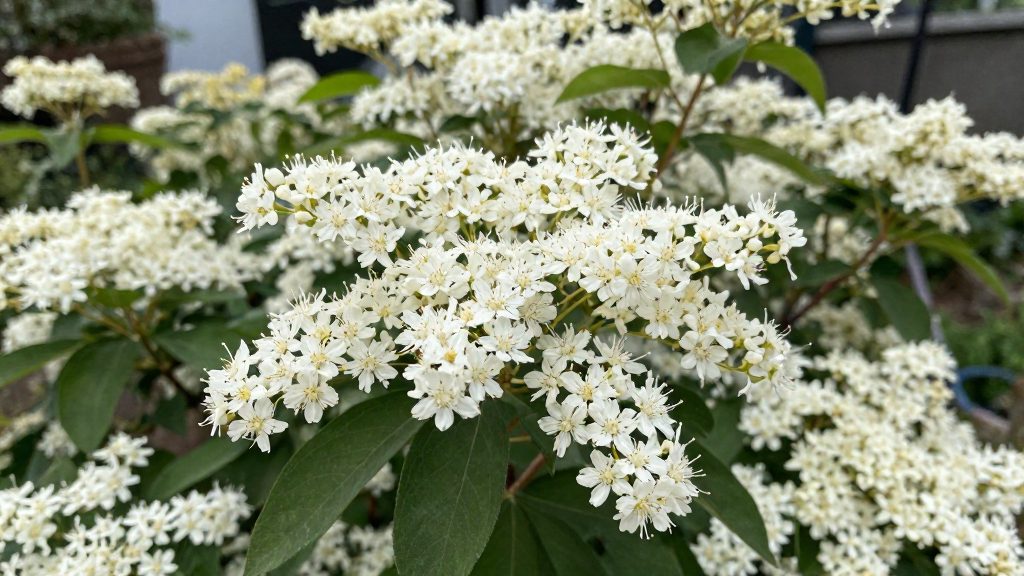
Several native shrubs beyond the core choices add pollinator value, and their documented flowering periods help extend nectar and pollen across the season. The University of New Hampshire Extension lists common ninebark among its spring-to-summer pollinator choices for northern New England gardens, so it fits between early-spring and late-summer bloom.
- Inkberry (Ilex glabra) supplies nectar and pollen to pollinators, according to North Carolina Wildlife Federation. Female plants need a male plant nearby to produce berries, so plant both sexes within pollinating distance if berries are wanted.
- Bushy St. John’s wort (Hypericum densiflorum) produces yellow flowers that attract pollinators. North Carolina Wildlife Federation describes its flowering from June through September, which covers the midsummer gap.
- New Jersey tea (Ceanothus americanus) bears white flowers in May and June, according to Iowa State University Extension and Outreach (2026). That source does not document which pollinators visit the flowers, so confirm observed visitors with a local extension service before relying on it for a specific pollinator goal.
How Can You Extend Bloom?
Continuous bloom depends on pairing shrub species whose flowering periods follow one another, so that some plants are open while others finish. The U.S. Fish & Wildlife Service advises choosing shrubs suited to local growing conditions and combining plants that flower from early spring through late fall. Start with the shrubs that thrive in your site, then fill the gaps in the calendar.
Combining Species for Continuous Bloom
Arrange the shrubs by flowering window and check that each window overlaps the next. The windows below come from the sources named in each row.
| Shrub | Flowering window | Source |
|---|---|---|
| Serviceberry and pussy willow | Early spring | University of New Hampshire Extension |
| New Jersey tea (Ceanothus americanus) | May to June | Iowa State University Extension and Outreach (2026) |
| Carolina allspice (Calycanthus floridus) | Late spring | North Carolina Wildlife Federation |
| Bushy St. John’s wort (Hypericum densiflorum) | June to September | North Carolina Wildlife Federation |
| Summersweet (Clethra alnifolia) | July to August | Iowa State University Extension and Outreach (2026) |
| Buttonbush (Cephalanthus occidentalis) | Late summer to fall (varies by region) | University of New Hampshire Extension; see reservation below |
Bushy St. John’s wort is useful as a bridge because its listed window spans most of summer. Summersweet and buttonbush then carry bloom into the later part of the season.
Late-Fall Flowering for Final Nectar
Late-season bloom matters most when few other flowers remain. For northern New England, the University of New Hampshire Extension groups both buttonbush and summersweet under late summer/fall. Confirm local flowering dates before relying on either for late-fall nectar. Its bloom timing differs between sources, so confirm the window for your region before relying on it for autumn nectar.
Planting Mix Ratios
No source establishes a specific ratio of early, mid-season and late-flowering shrubs. Plant in groups rather than single specimens, and aim for at least one shrub flowering in each part of the season. Adjust the proportions to the space you have and to the site conditions each species needs.
Limitations
- Buttonbush hardiness is listed as zones 5–10 by University of Florida IFAS and zones 5–9 by Iowa State University. Check your zone before choosing it.
- Buttonbush flowering dates differ: University of Florida IFAS describes March to August in Florida, while the North Carolina Wildlife Federation describes June to August.