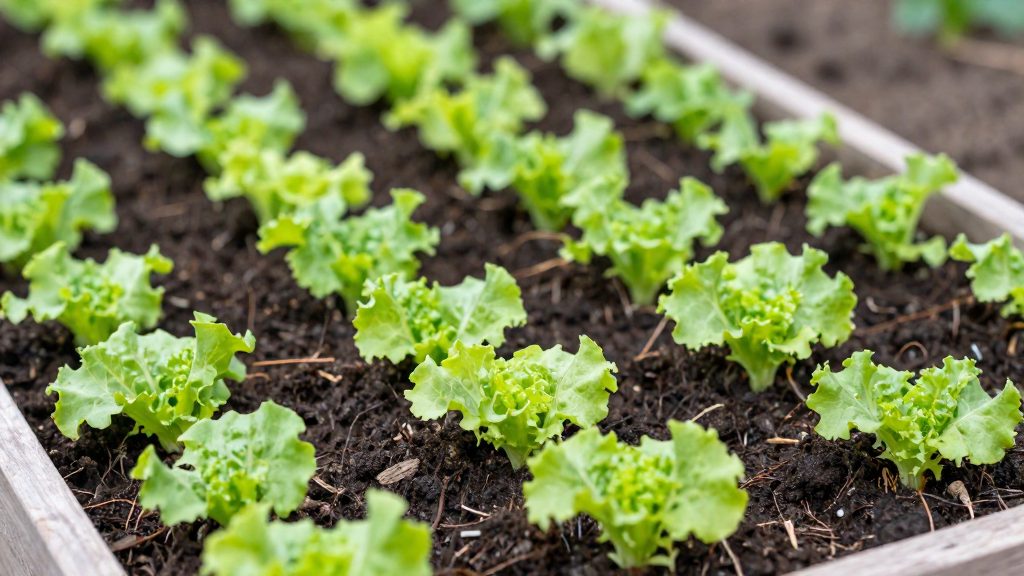
Raised beds warm earlier in spring and drain better than heavy clay ground, so gardeners can usually plant sooner in the season. According to Oregon State University Extension Service, the soil in raised beds warms faster in spring, which allows earlier planting. Their deeper growing medium also gives roots more room, though the official sources consulted do not specify how much this changes root growth beyond depth.
Why Choose Raised Beds for Vegetables?
Faster Spring Warming and Earlier Planting
Raised beds allow earlier planting because the soil in them warms faster in spring than typical ground-level soil. The exact number of days gained depends on your region, and the official sources consulted do not give a fixed figure, so check local frost dates before sowing.
Penn State Extension gives a concrete example from York County, Pennsylvania: a single bed can produce two crops in one season. Cold-weather crops are planted in April and harvested by early July, then followed by a warm-season crop such as summer squash, eggplant, cucumbers or green beans.
Better Drainage Than Heavy Clay Soils
Heavy clay holds water for longer, which keeps the root zone wet and cold. Raised beds drain better, which is why they suit areas with clay ground. Good drainage also supports the earlier planting described above, because wet soil warms more slowly.
Loose Soil Structure for Root Growth
A raised bed is filled with a prepared soil mix rather than the native soil, which lets you control the growing medium from the start. Depth determines how much room roots have to grow. The table below summarizes the depth references from the sources consulted.
| Depth reference | Stated by | What it means for roots |
|---|---|---|
| About 8 inches of soil mix | Oregon State University Extension Service | Typical depth of an unframed bed |
| At least 12 inches | The Old Farmer’s Almanac | Minimum for root crops such as potatoes, carrots and parsnips |
| 18–24 inches | Penn State Extension | More root room, but reduced drainage and a higher risk of rot |
Deeper beds give roots more room, so choose a depth that matches your crops. Root crops need at least 12 inches, while shallower beds are suitable for leafy greens and other crops with shallower roots.
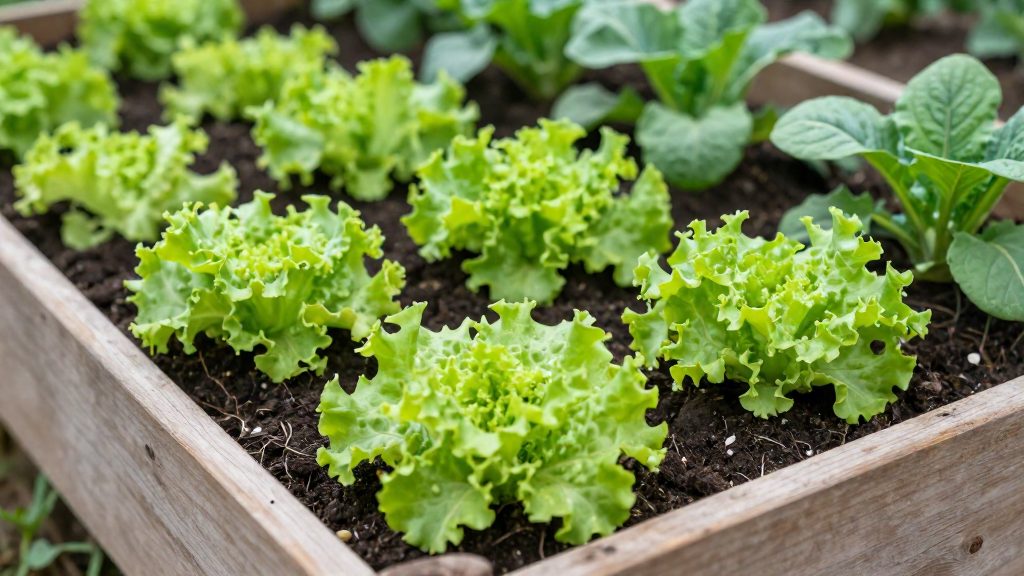
Best Vegetables for Raised Beds
Penn State Extension lists tomatoes, peppers, cucumbers, summer squash, peas, beans, greens, onions and garlic among the vegetables that do well in raised beds. The crops below are grouped by growth habit, since habit determines how much space a plant needs and how long it occupies the bed.
Fruiting crops
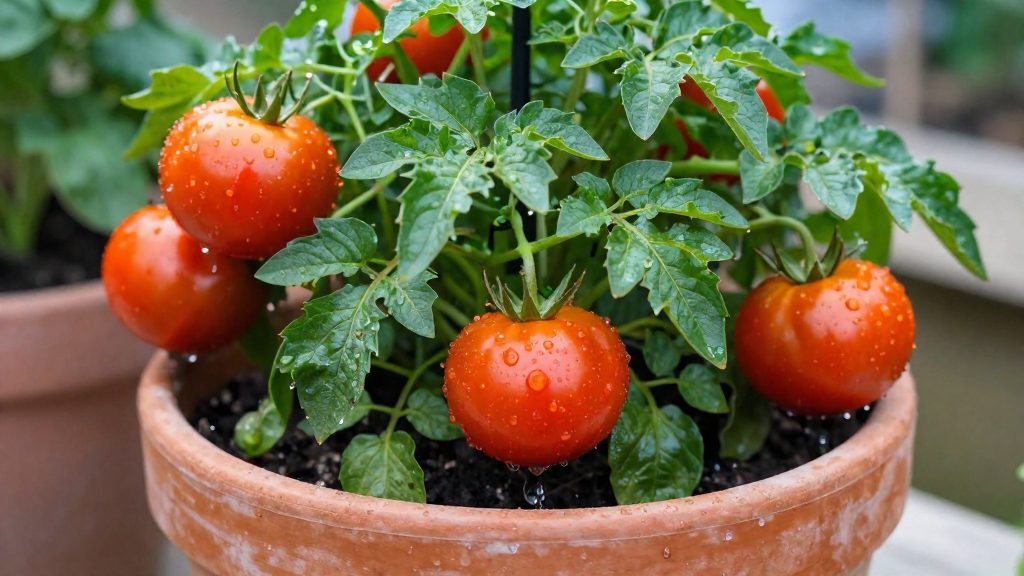
Fruiting vegetables are the largest plants in this group and need the most room. According to The Old Farmer’s Almanac, tomatoes need about 18 in of space in all directions, and 2 ft is better for large indeterminate varieties. Summer squash and zucchini should be planted 2 to 3 ft apart. Peppers and cucumbers are also named by Penn State Extension as suitable for beds, but the sources consulted do not give spacing figures for them, so check the expected mature size of the variety before setting them out.
Peas, beans and leafy greens
Legumes and leafy greens are common choices for beds. Peas, beans and greens are all named by Penn State Extension as suitable for raised beds. Epic Gardening gives these spacing examples for raised beds: bush beans about 2 in apart, full lettuce heads 10 in apart, and Swiss chard transplants 10 to 12 in apart. Oregon State University Extension Service notes that vegetables generally complete a whole plant and crop in 25 to 100 days, so cycle length varies by crop.
Onions and garlic
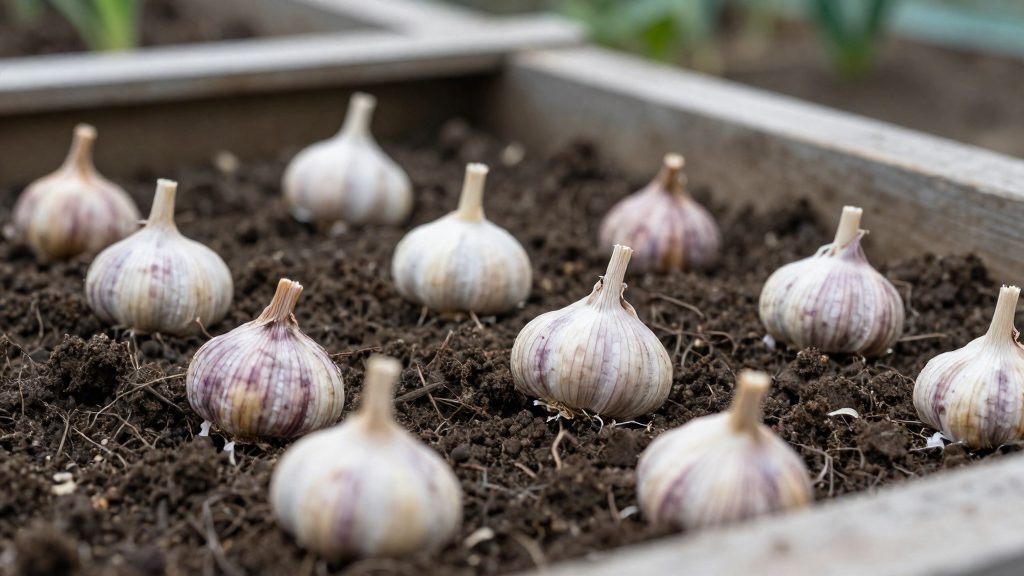
Onions and garlic are named by Penn State Extension among the crops that suit raised beds. Penn State Extension includes both among the crops that suit raised beds. The sources consulted do not give spacing or harvest figures for them.
Spacing summary
| Crop | Group | Spacing in a raised bed | Source |
|---|---|---|---|
| Tomatoes | Fruiting | About 18 in in all directions; 2 ft for large indeterminate varieties | The Old Farmer’s Almanac |
| Summer squash and zucchini | Fruiting | 2 to 3 ft apart | The Old Farmer’s Almanac |
| Bush beans | Legume | About 2 in apart | Epic Gardening |
| Beets | Quick-harvest root | 2 in apart | Epic Gardening |
| Lettuce (full heads) | Leafy green | 10 in apart | Epic Gardening |
| Swiss chard (transplants) | Leafy green | 10 to 12 in apart | Epic Gardening |
How Deep Should a Raised Bed Be?
A common raised bed is 1 ft deep, the size Penn State Extension lists for a 4 by 8 ft bed with 32 sq ft of growing surface. Penn State also notes that some sources recommend 18 to 24 inches. Deeper soil gives roots more room and needs less watering, but it drains less well and can increase the risk of rot. Shallower soil drains better but holds less water for the crop.
Depth options compared
- 1 ft (12 in): The standard size cited by Penn State Extension. The 18 to 24 in range reduces drainage and raises the rot risk compared with this size, according to Penn State Extension.
- 18 to 24 in: Penn State Extension reports that this range needs less watering and gives roots more room, with reduced drainage and a higher risk of rot.
Watering demand and root room
Oregon State University Extension Service states that raised beds drain better than clay soil but also dry out faster, so irrigation needs more attention. A deeper bed holds a larger reserve of moisture, which reduces how often you water, but that same depth slows drainage. The sources do not give a specific watering schedule. Check the soil moisture before each watering rather than following a fixed calendar.
Unframed beds
An unframed bed gives a soil mix about 8 inches deep, according to Oregon State University Extension Service. That is shallower than the 12-inch and 18 to 24-inch options above, so it offers less root room. Unframed beds are a simpler build when a frame is not needed.
When to reinforce the frame
Oregon State University Extension Service advises reinforcing framed beds that are taller than about 18 inches, or longer than 6 ft. If a framed bed is built taller than about 18 inches, it should be reinforced, according to Oregon State University Extension Service.
Which Vegetables Need Deeper Soil?
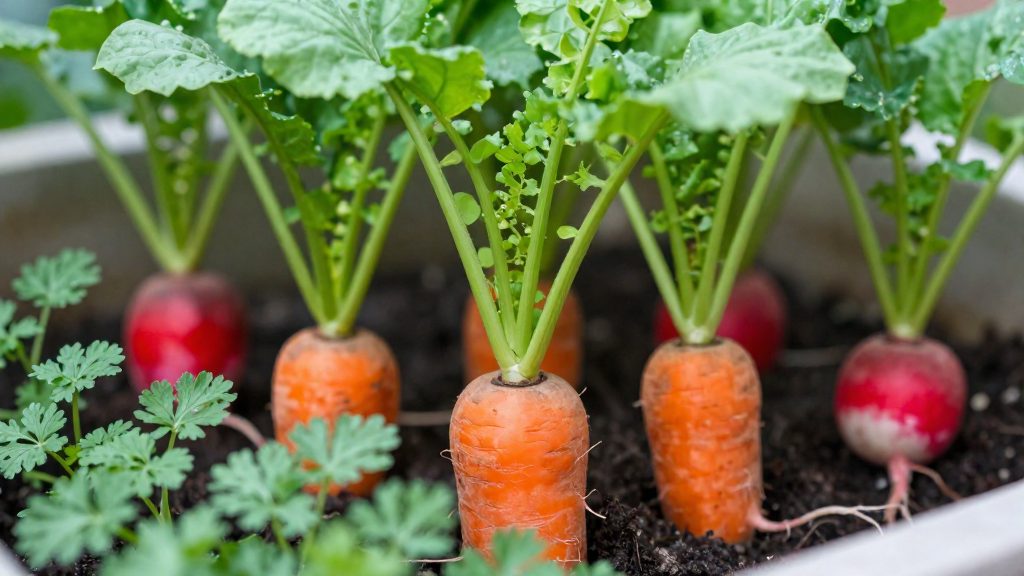
Root crops need the most soil depth in a raised bed. According to The Old Farmer’s Almanac, potatoes, carrots and parsnips need a bed at least 12 inches deep. Gardeners who want these crops should build the bed or frame to at least 12 inches before filling it.
| Crop | Stated requirement |
|---|---|
| Potatoes | Bed at least 12 in deep (The Old Farmer’s Almanac); listed among vegetables that do well in raised beds (Penn State Extension) |
| Carrots | Bed at least 12 in deep (The Old Farmer’s Almanac); thin to 1–2 in (Epic Gardening) |
| Parsnips | Bed at least 12 in deep (The Old Farmer’s Almanac) |
Potatoes
Potatoes form their tubers below the soil surface, so the 12-inch minimum applies to them as a root crop. Penn State Extension lists potatoes among the vegetables that grow well in raised beds, which makes them a common choice for deep frames.
Carrots and Parsnips
Carrots and parsnips are long taproots. Their roots must extend downward, so depth limits their length and shape. Carrots also need thinning in the bed: Epic Gardening gives a final spacing of 1–2 inches. Parsnips share the same 12-inch depth requirement, and the sources consulted do not give a separate spacing figure for them.
Jerusalem Artichokes
The official sources consulted do not specify the depth, spacing or spread of Jerusalem artichoke tubers. Because the spreading habit is not quantified, plan the position of this crop before the bed is filled, so it does not crowd neighbouring plants that need steady spacing.
Soil Management for Deep-Rooted Crops
- Nitrogen: Vegetables are heavy feeders. Pale green leaves can signal nitrogen deficiency, so add nitrogen as needed, and a soil test is recommended (Oregon State University Extension Service).
- Bed construction: Use untreated lumber, since chemical preservatives can leach into the soil (Penn State Extension).
Spacing Crops in a Raised Bed
Spacing in a raised bed depends on two limits: how far you can reach across the bed, and how large each plant gets at maturity. For framed beds, the Oregon State University Extension Service recommends a maximum width of 4 ft so that an adult can reach the center. Within that width, plant spacing follows the mature size of each crop, not the size of the seedling.
Width and Reach
- Keep framed beds at 4 ft wide or less so every plant can be reached from either edge without stepping on the soil.
- The popular bed size cited by Penn State Extension is 4 ft wide by 8 ft long. Beds longer than 6 ft should be reinforced, according to Oregon State University Extension Service.
Spacing by Mature Plant Size
Use the spacing listed for each crop, and give large plants room to spread before filling the gaps.
| Crop | Spacing | Source |
|---|---|---|
| Tomato | About 18 in in all directions | The Old Farmer’s Almanac |
| Large indeterminate tomato | About 2 ft | The Old Farmer’s Almanac |
| Summer squash and zucchini | 2 to 3 ft apart | The Old Farmer’s Almanac |
| Beet | Sown 2 in apart | Epic Gardening |
| Bush bean | About 2 in apart | Epic Gardening |
| Carrot | Thinned to 1 to 2 in | Epic Gardening |
| Lettuce (full heads) | 10 in apart | Epic Gardening |
| Swiss chard (transplants) | 10 to 12 in apart | Epic Gardening |
Winter squash is a poor fit for raised beds because it needs room to sprawl. Corn is also a poor fit because it needs large blocks of plants for pollination.
Grid Layouts for Mixed Plantings
A grid layout places each crop in a block sized to its mature spread, so no plant is squeezed by its neighbors.
- Mark the bed surface with a string grid, using the spacing of the largest crop in each square.
- Place large crops, such as tomatoes or summer squash, in the squares that match their mature size.
- Fill the remaining squares with smaller crops, such as beets, bush beans, carrots, and lettuce, at the spacing listed above.
- Thin seedlings to the final spacing as soon as they are large enough to handle, so the crop reaches its listed spacing.
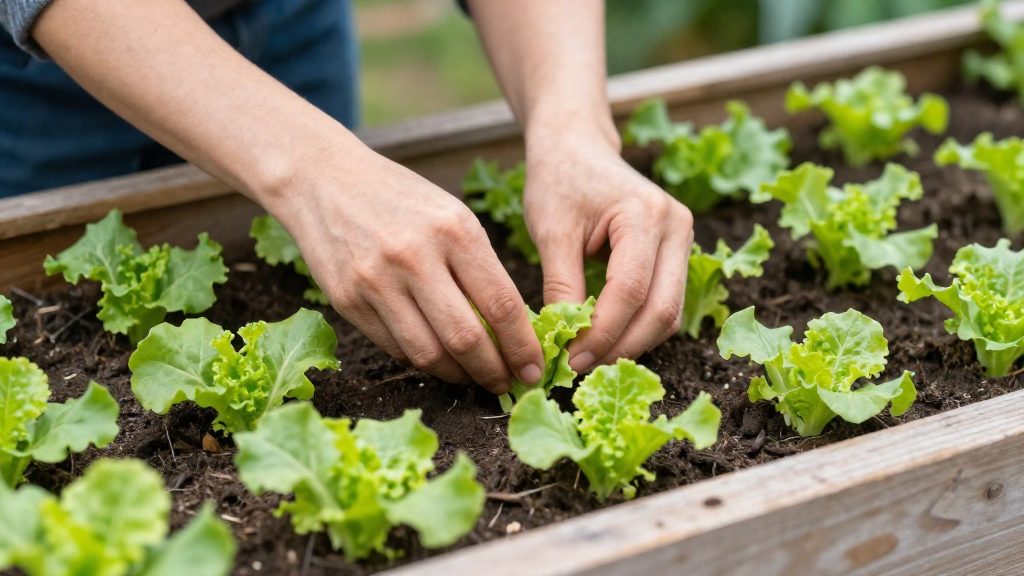
What Soil and Materials Are Safe for Edibles?
The frame and liner of a raised bed sit against the root zone, so material choice affects what reaches the soil. Penn State Extension advises using untreated lumber for edible crops, because chemical preservatives can leach into the soil. The Oregon State University Extension Service advises against railroad ties and older pressure-treated wood for the same reason, since they may contain creosote or other chemicals. The same source lists cedar or redwood, concrete blocks, and rocks as safer options.
| Material | Status for edible crops | Source |
|---|---|---|
| Untreated lumber | Recommended | Penn State Extension |
| Cedar or redwood | Safer option | Oregon State University Extension Service |
| Concrete blocks or rocks | Safer option | Oregon State University Extension Service |
| Railroad ties | Avoid | Oregon State University Extension Service |
| Older pressure-treated wood | Avoid | Oregon State University Extension Service |
| Black plastic sheeting under the bed | Avoid | Penn State Extension |
Checking Reclaimed Materials
Reclaimed boards and timbers can be unsuitable if they were treated. Before cutting, confirm that each piece is untreated, and ask the supplier whether any wood was pressure-treated or came from railroad ties. If the origin is unknown, choose a material from the safer list instead.
Liners Under the Bed
Black plastic sheeting is the liner to avoid. According to Penn State Extension, it is not water permeable, so it can trap water in the bed and cause root rot. A bed sitting on open ground, with no liner, keeps the drainage that the structure is meant to provide.
Vegetables to Avoid in Raised Beds
Two groups of crops fit raised beds poorly: sprawling vines that need wide ground, and corn, which needs large blocks for pollination. The Old Farmer’s Almanac lists winter squash and corn as poor fits for raised beds, for reasons of space and pollination. A common bed of 4 ft wide by 8 ft long by 1 ft deep gives about 32 sq ft of growing surface, according to Penn State Extension, and that fixed footprint limits how these crops can be grown.
Melons and Sprawling Vines
Sprawling vines need more ground than a bed provides. Winter squash is a poor fit because it needs room to spread, according to The Old Farmer’s Almanac. Melons are not covered by the sources consulted, so check the variety’s spread before planting one in a bed. The official sources consulted do not specify melon spacing, so check the spacing on the variety label before planting in a bed.
Corn and Pollination
Corn needs block planting for pollination, according to The Old Farmer’s Almanac. A bed holding a single short row leaves too little area for a block, which is why corn is listed as a poor fit. If corn is grown in a bed at all, the bed should be large enough to hold several rows side by side.
Crops Needing Long Warm Seasons in Cool Climates
Plan around local frost dates and the crop’s own growing time. Vegetables take roughly 25 to 100 days to complete a plant and crop (Oregon State University Extension Service), so compare each crop’s days to maturity with your local frost dates.
How to Get Two Crops a Season?
A single raised bed can produce two harvests in one year when a cool-season crop is cleared early and replaced by a warm-season crop. According to Penn State Extension, in York County, Pennsylvania, cold-weather crops planted in April and harvested by early July can be followed by summer squash, eggplant, cucumbers or green beans. This timing is the clearest worked example of the method in the sources consulted.
| Stage | Timing | Crops |
|---|---|---|
| First crop | Planted in April | Cold-weather crops |
| First harvest | Completed by early July | Cold-weather crops |
| Second crop | Planted after the early harvest | Summer squash, eggplant, cucumbers or green beans |
The official sources consulted do not specify exact transplant dates for the second crop in York County.
Step 1: Start the cool-season crop early
This early warming is what makes an April planting practical.
Step 2: Clear the bed at harvest
Once the cool-season crop is harvested, remove the spent plants so the warm-season crop has open space to establish. Choose a warm-season crop that can mature within the remaining weeks.
Step 3: Replenish nitrogen before the second planting
Plants in raised beds may show nitrogen deficiency, visible as pale green leaves. Oregon State University Extension Service recommends adding nitrogen as needed and taking a soil test. Because one bed now supports two crops in the same year, its nitrogen supply has to cover both.
Step 4: Match the second crop to the season
Penn State Extension names summer squash, eggplant, cucumbers and green beans as the warm-season options for this sequence in York County. Select from that list rather than assuming any vegetable fits, and plan the planting so the warm-season crop goes in as soon as the cool-season harvest is complete.