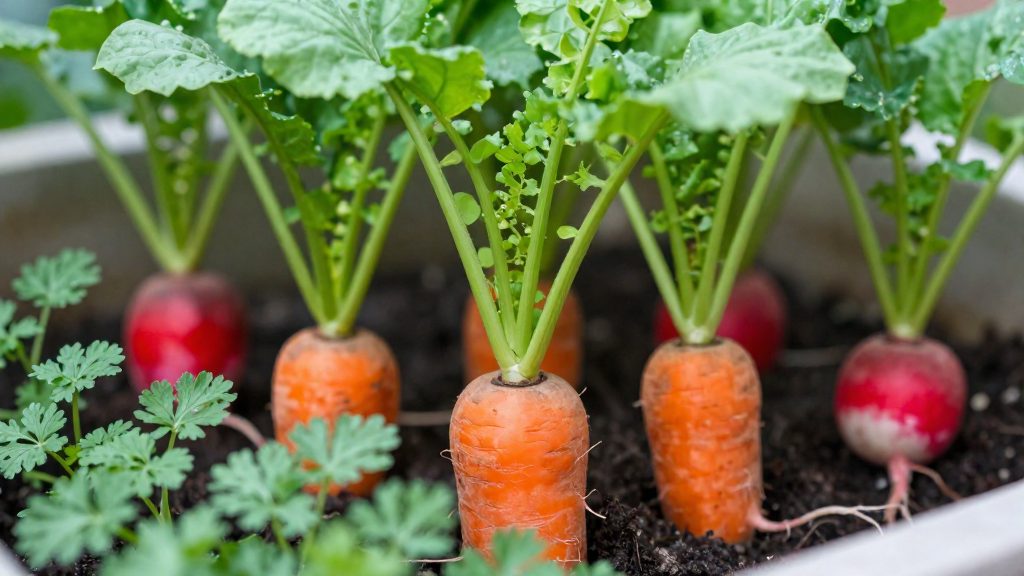
Radishes are an early-sprouting companion for carrots. According to the Old Farmer’s Almanac (2026), radishes sprout early and break up crusty soil, which helps carrot seedlings emerge. Carrot seed is small and slow to germinate, so a companion that opens the surface first can make the difference between a full row and a patchy one.
What grows well with carrots?
Radishes are a useful early partner for carrots because of how they behave at the start of the season. Their seedlings appear quickly and break up crusty surface soil while the carrot seed is still germinating.
How radishes help carrot seedlings
- Early sprouting: Radishes come up before carrots, so they mark the row and show where the slower seed is.
- Breaking crusted soil: After rain or watering, the surface of bare soil can dry into a hard crust. Radish emergence breaks up this crust, which, according to the Old Farmer’s Almanac (2026), helps carrot seedlings emerge.
- Easier emergence: Carrot seedlings are fragile. Loosened soil above them means less force is needed to push through.
Practical approach
- Sow radish seed in the same bed as the carrots so both crops get the same soil conditions.
- Keep the bed evenly moist until seedlings appear, and water gently so the surface does not form a hard crust.
- Follow the seed packet instructions for light and soil conditions for both crops.
The Old Farmer’s Almanac (2026) describes this benefit only in terms of emergence and soil loosening.
Best herbs and flowers beside carrots
Some aromatic herbs and flowers are suggested as carrot companions, mainly for two purposes: deterring the carrot rust fly and drawing in predators of carrot pests. Marigolds and oregano are named for the first purpose, and cilantro for the second. According to Epic Gardening (2026), marigolds and oregano are suggested to deter carrot rust fly, and cilantro left to flower attracts predators of carrot pests.
Marigolds and oregano against carrot rust fly
Epic Gardening (2026) links marigolds and oregano to carrot rust fly, and the Old Farmer’s Almanac (2026) also names alliums as carrot fly deterrents. The sources describe these as suggested deterrents, not guaranteed control.
Cilantro left to flower for predators
Cilantro draws predators of carrot pests when it is allowed to flower. Rather than cutting every plant back for leaves, leave some to bolt so the flower heads form. Epic Gardening (2026) also notes that cilantro is the exception among parsley-family plants, which are generally kept away from carrots.
| Companion | Named purpose | Source |
|---|---|---|
| Marigold | Suggested to deter carrot rust fly | Epic Gardening (2026) |
| Oregano | Suggested to deter carrot rust fly | Epic Gardening (2026) |
| Cilantro (left to flower) | Attracts predators of carrot pests | Epic Gardening (2026) |
Do onions and alliums really deter carrot flies?
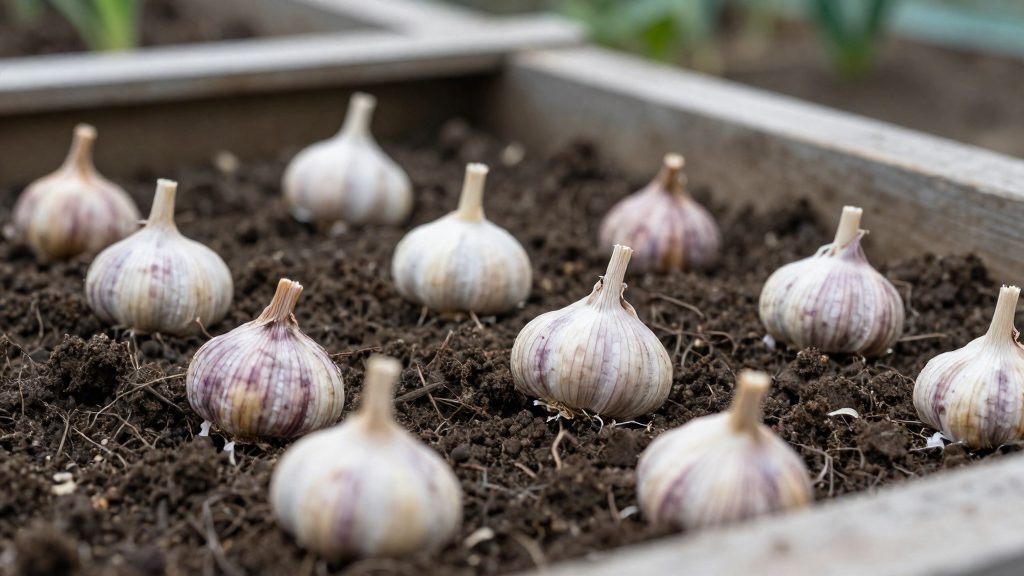
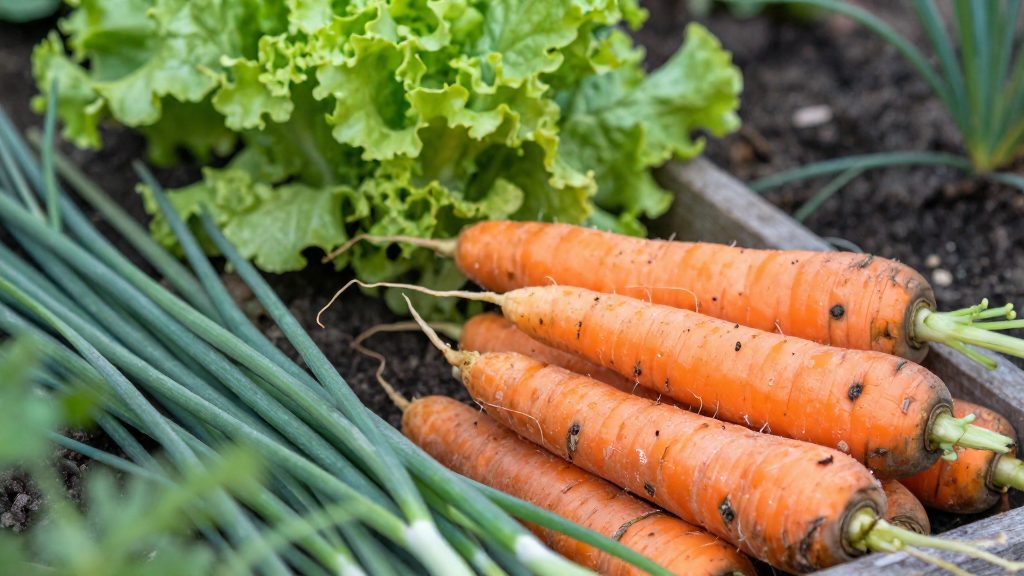
According to the Old Farmer’s Almanac (2026), alliums are a recognised companion for carrots. Onions, chives, leeks, garlic and shallots are said to deter both carrot flies and aphids, and their roots do not compete with carrot roots. The source attributes the carrot fly effect to scent, so the practical question is how to place that scent where carrot foliage grows.
Strong allium scent against carrot flies
The strong allium scent is the mechanism the source gives for deterring carrot flies. Planting alliums in or beside the carrot bed places that odour close to the crop, which is the basis of the companion approach.
To apply this:
- Sow or transplant onions, leeks, garlic, shallots or chives alongside the carrot rows, within the same bed.
- Keep the alliums growing through the carrot season so that the scent is present while the carrots are in the ground.
- Do not treat alliums as a complete barrier. The source presents them as a deterrent, not a guaranteed control.
Aphid deterrence from alliums
The same source states that the strong scent also deters aphids. Aphid deterrence applies to the alliums as a group: the source names onions, chives, leeks, garlic and shallots as deterring both carrot flies and aphids.
Non-competing allium roots beside carrot roots
The non-competing roots of alliums are the second reason the pairing works in a shared bed. The Old Farmer’s Almanac (2026) states that allium roots do not compete with carrot roots, so both crops can share the same soil without competing for root space.
Vegetables that share the bed with carrots
Nitrogen-fixing legumes and shallow-rooted leafy greens are the most compatible companions for carrots. According to the Old Farmer’s Almanac (2026), peas and beans fix nitrogen in the soil, while lettuce and spinach have shallow roots that do not interfere with carrot roots. Peas also suit carrots because both grow well in cool weather, and lettuce and spinach are shallow-rooted.
Peas and beans
Legumes such as peas and beans fix nitrogen in the soil. Legumes fix nitrogen in the soil, but the sources consulted do not state that this benefits carrots directly. Peas are the closer match: the Old Farmer’s Almanac (2026) notes that they suit carrots because both grow well in cool weather. Beans are listed for nitrogen fixation only, so the sources consulted do not establish the same growing conditions for them.
Keep peas and carrots on the same schedule so that both crops develop during the same cool period.
Lettuce and spinach
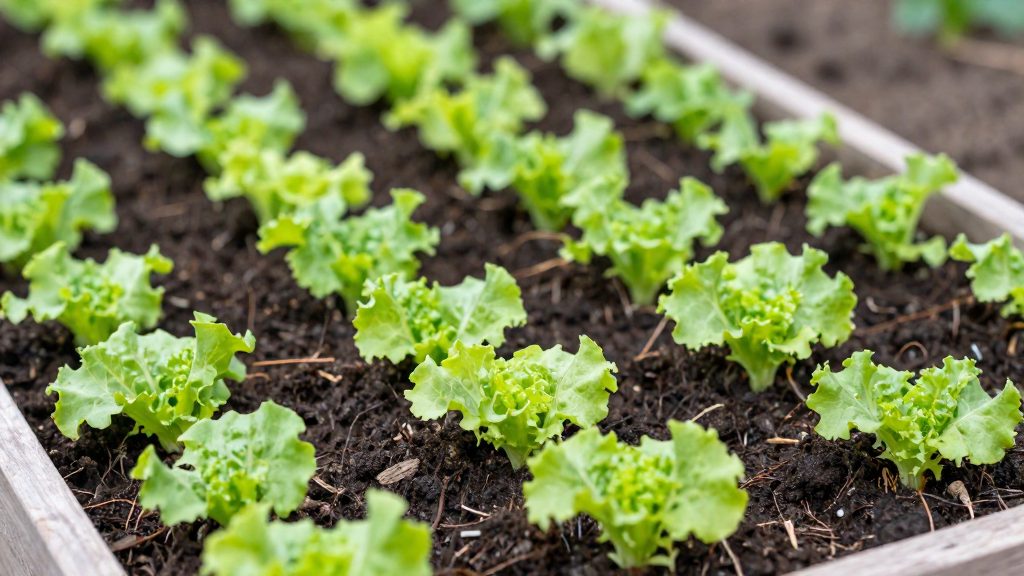
Lettuce and spinach are shallow-rooted, so they do not interfere with carrots growing in the same bed. They also suppress weeds. Their cool-weather needs match those of carrots, which makes them practical partners in the same planting window.
| Companion | Main benefit | Shared requirement with carrots |
|---|---|---|
| Peas | Fix nitrogen in the soil | Both grow well in cool weather |
| Lettuce | Shallow roots, suppresses weeds | Cool-weather growing needs |
| Spinach | Shallow roots, suppresses weeds | Cool-weather growing needs |
What should you never plant with carrots?
Potatoes, celery, parsnips, dill, fennel and cucurbits are the main plants to keep out of a carrot bed. The Old Farmer’s Almanac (2026) advises against potatoes, celery, parsnips and dill. Epic Gardening (2026) also advises keeping fennel and dill away from carrots, and notes that cucurbits can overtake carrots when planted close. The problems fall into two groups: competition for soil resources, and shared pests.
| Plant | Main concern | Source |
|---|---|---|
| Potatoes | Heavy feeders that compete with carrots | Old Farmer’s Almanac (2026) |
| Celery | Carrot relative that shares carrot pests | Old Farmer’s Almanac (2026) |
| Parsnips | Carrot relative that shares carrot pests | Old Farmer’s Almanac (2026) |
| Dill | Carrot relative that shares carrot pests; keep away from carrots | Old Farmer’s Almanac (2026); Epic Gardening (2026) |
| Fennel | Keep away from carrots | Epic Gardening (2026) |
| Cucurbits (squash, cucumbers, melons) | Can overtake carrots if planted close | Epic Gardening (2026) |
Heavy feeders compete for nutrients
Heavy feeders draw large amounts of nutrients from the soil. Potatoes fall into this group and compete with carrots for the same resources. Planting them in the same bed reduces what the carrot roots can use, so potatoes should be grown in a separate bed. Potatoes are heavy feeders that compete with carrots, so they should be kept apart from them.
Carrot relatives share pests
Celery, parsnips and dill are carrot relatives. According to the Old Farmer’s Almanac (2026), they share pests with carrots. Planting them close together concentrates pest pressure across all of these crops. Keeping them in different parts of the garden limits the spread from one crop to the next. The sources consulted do not specify which pests are shared, so check the specific pests in your region before planting.
Vigorous growers overtake carrots
Cucurbits can overtake carrots when planted close together, according to Epic Gardening (2026). Give squash, cucumbers and melons their own space at the edge of the plot, away from the carrot rows.
Fennel and dill need separation
Epic Gardening (2026) recommends keeping fennel and dill away from carrots. The advice is to separate them rather than interplant them. The sources consulted do not specify the mechanism behind this recommendation.
How tall crops and roots affect companion plantings
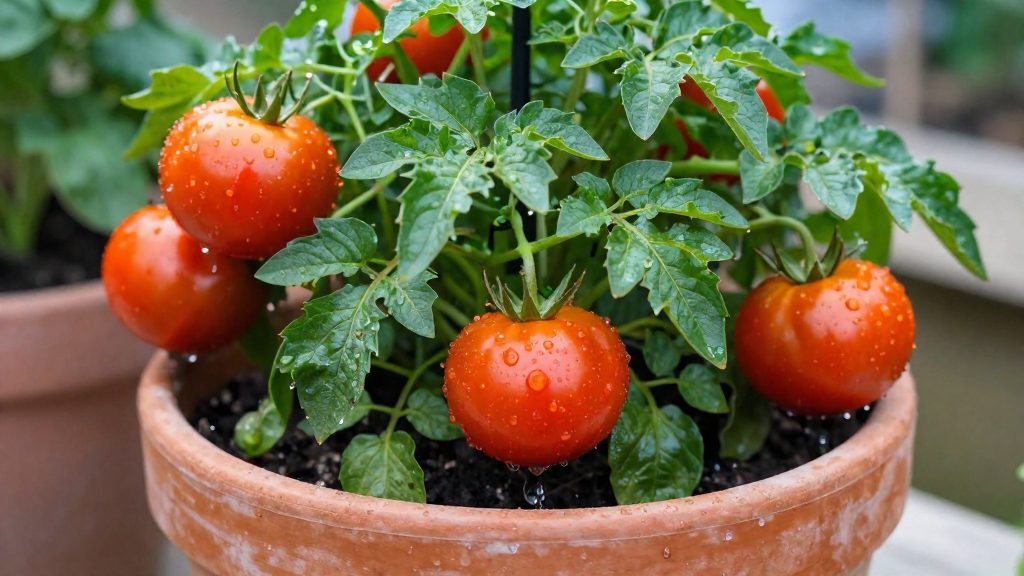
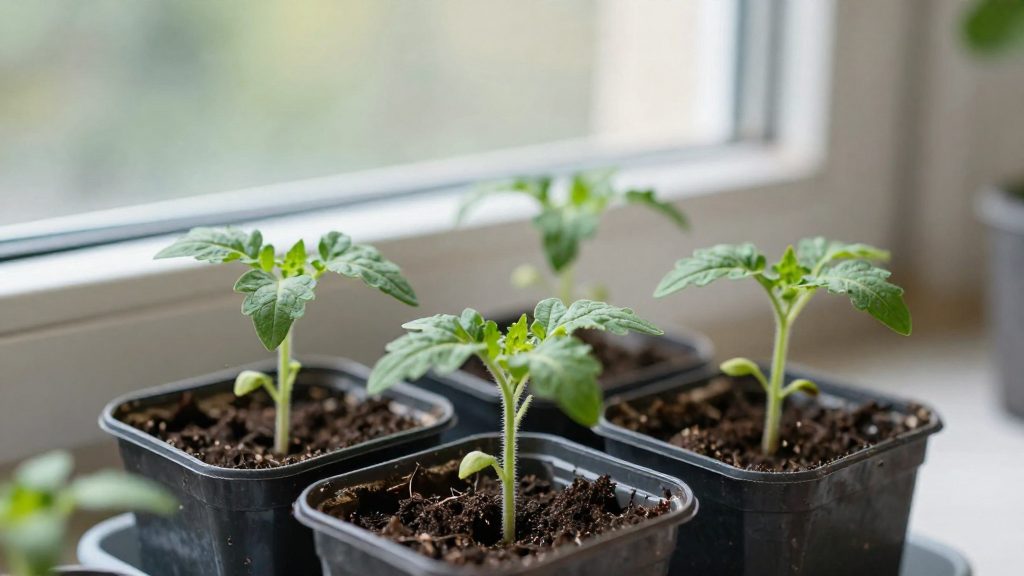
Tall crops and carrots interact mainly through shade from tall crops and root competition. Tomatoes are the tall companion covered by the Oregon State University Extension Service (2026), which notes that tomatoes can shade carrots, and carrots dislike heat. Because carrots dislike heat, some shade from tomatoes may be useful in hot weather, though the source does not quantify this. The same source describes a benefit running the other way: carrot roots loosen packed soil, which helps water and air reach tomato roots. The source describes a benefit for the tomatoes from loosened soil, and notes that tomatoes can shade carrots, which dislike heat.
Root competition depends on the companion’s root habit and feeding demand. Alliums such as onions, chives, leeks, garlic and shallots have roots that do not compete with carrot roots, according to the Old Farmer’s Almanac (2026). Leafy greens such as lettuce and spinach are shallow-rooted and do not interfere with carrots, according to the same source.
| Companion | Interaction with carrots | Source |
|---|---|---|
| Tomatoes (tall) | May shade carrots, which dislike heat; carrot roots loosen soil for tomato roots | Oregon State University Extension Service (2026) |
| Alliums | Roots do not compete with carrot roots | Old Farmer’s Almanac (2026) |
| Lettuce and spinach | Shallow roots; do not interfere with carrots | Old Farmer’s Almanac (2026) |
Neighbour spacing should be planned around the tall crop’s position relative to the carrot rows. The sources consulted do not specify a spacing distance between tomatoes and carrots, so the spacing printed on the seed packet and the local climate should set the actual distances. Place the tall plants so their shadow falls on the carrot rows only where some afternoon shade is useful, and keep carrot rows free of overhang where the summer is hot.
Frequently asked questions
Which companion should I sow with carrots as a beginner?
Radishes are a practical first companion because they sprout early and break up crusty soil, which the Old Farmer’s Almanac (2026) credits with helping carrot seedlings emerge. Carrot seed is small and slow to germinate, so a fast-emerging partner that opens the surface first can help the row come up more evenly.
Which plants should I keep away from carrots?
According to the Old Farmer’s Almanac (2026), potatoes are heavy feeders that compete with carrots, and celery, parsnips and dill are carrot relatives that share carrot pests. Epic Gardening (2026) also advises keeping fennel and dill away from carrots and warns that cucurbits can overtake carrots if planted close.
Do alliums or herbs help protect carrots from pests?
The Old Farmer’s Almanac (2026) credits alliums such as onions, chives, leeks, garlic and shallots with deterring carrot flies and aphids through their scent, and notes that their roots do not compete with carrot roots. Epic Gardening (2026) suggests marigolds and oregano against carrot rust fly and says cilantro left to flower attracts predators of carrot pests, though these are suggested deterrents rather than guaranteed control.