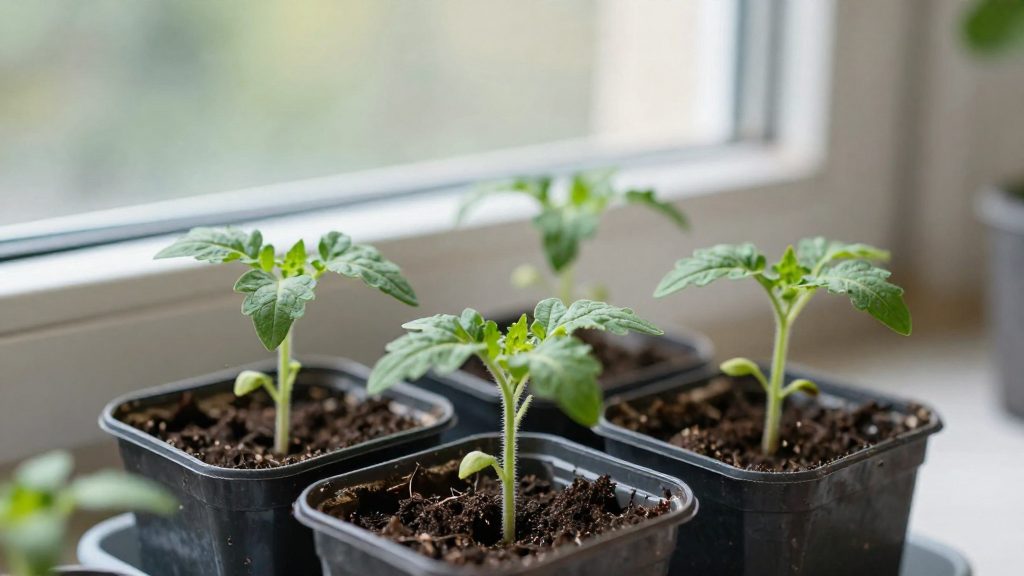
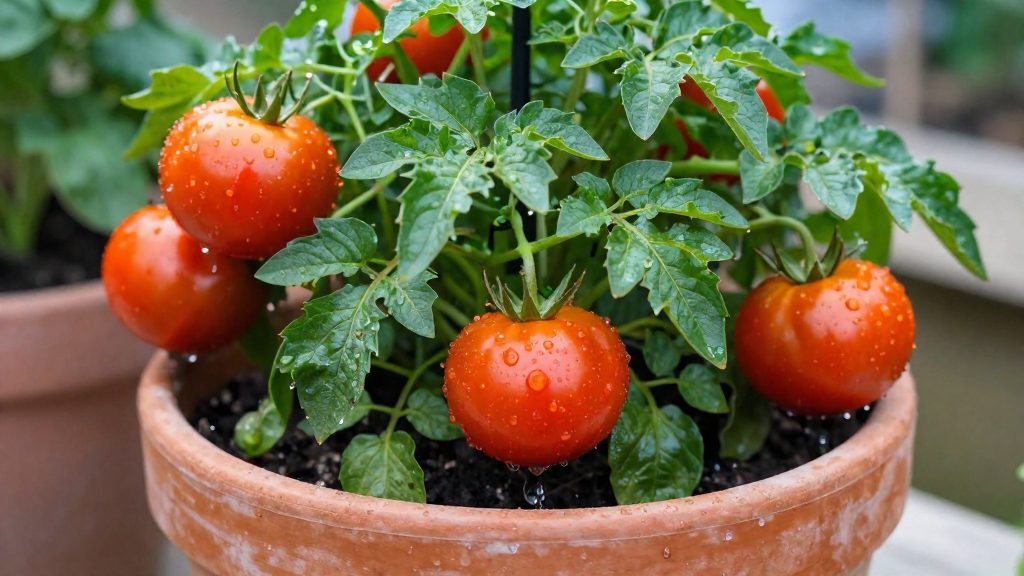
Cherry tomatoes need a container of at least 2 gallons, about 10 inches in diameter, while standard tomatoes need at least 4 gallons, about 12 to 14 inches across, according to Iowa State University Extension and Outreach. Whatever the tomato type, if wood is used, red cedar or redwood is the recommended choice over treated lumber.
Which container size works best for tomatoes?
Container size depends mainly on the tomato type. The minimum volumes and diameters below come from Iowa State University Extension and Outreach.
| Tomato type | Minimum volume | Diameter |
|---|---|---|
| Cherry | 2 gallons | About 10 inches |
| Standard | 4 gallons | 12–14 inches |
Minimum volume: cherry versus standard tomatoes
Cherry tomatoes have the lower minimum, 2 gallons. Standard tomatoes need at least 4 gallons, which is twice the cherry minimum. The consulted sources give these figures as minimums and do not specify a maximum volume for either type.
Diameter range for compact cultivars
Most compact cultivars suit a 14 to 20 inch container, according to Clemson Cooperative Extension (2022-04-12). That band starts at the top of the 12–14 inch range given for standard types and is well above the roughly 10-inch figure for cherry types. The same source notes that a 5-gallon bucket with drilled holes also works. The sources consulted do not give a separate diameter for each individual compact cultivar.
Drainage holes and wood choice
Every container needs drainage holes, as stated by Iowa State University Extension and Outreach. A bucket used as a container must have holes drilled into it. If you build the container from wood, choose red cedar or redwood rather than treated lumber. The sources consulted do not explain why treated lumber is excluded.
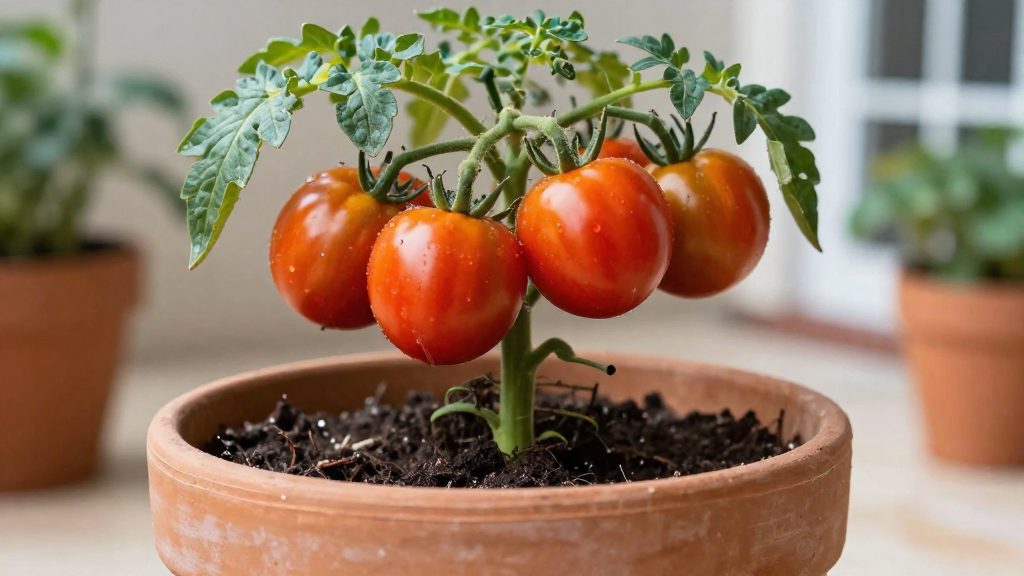
Best tomato varieties for pots
Cultivar choice matters as much as the container itself. Iowa State University Extension and Outreach recommends three groups for container growing: standard compact cultivars, patio types, and cherry types. Clemson Cooperative Extension (2022) advises against indeterminate varieties in pots and names two to avoid.
Standard compact cultivars
Iowa State University Extension and Outreach recommends three standard cultivars for containers: Bush Early Girl, Celebrity, and Jetstar. These are the options to consider when you want a full-size tomato in a pot rather than a cherry or patio type. Check the plant label against these names before buying.
Patio and cherry cultivars
Iowa State University Extension and Outreach also recommends patio types. Iowa State University Extension and Outreach lists Patio Hybrid, Patio Princess, and Mega Bite. For smaller fruit, the same source lists two cherry types: Little Sun Yellow and Terenzo.
| Category | Recommended cultivars | Source |
|---|---|---|
| Standard compact | Bush Early Girl, Celebrity, Jetstar | Iowa State University Extension and Outreach |
| Patio | Patio Hybrid, Patio Princess, Mega Bite | Iowa State University Extension and Outreach |
| Cherry | Little Sun Yellow, Terenzo | Iowa State University Extension and Outreach |
Varieties to avoid
Clemson Cooperative Extension (2022) specifically advises avoiding indeterminate varieties such as Better Boy and Brandywine in containers. Clemson advises against them for container growing. If a plant label does not state whether it is compact, patio, or cherry, check the variety name against the lists above before planting.
What potting mix should you use?
Container tomatoes need a soilless potting mix, not garden soil. According to Iowa State University Extension and Outreach, a soilless mix drains well, resists compaction, stays lightweight, and is free of disease organisms and weed seeds. Those properties suit a confined root zone, which garden soil does not reliably provide. Garden soil is heavier and denser, and it can pack down in a pot over the season, which reduces the air and water movement that roots need.
Physical properties of a soilless mix
- Drains well: Excess water moves through the mix instead of pooling around the roots.
- Resists compaction: The mix stays loose as roots grow and as it is watered repeatedly.
- Lightweight: A filled container is easier to move between sun-exposed spots on a patio or balcony.
These three properties work together. A mix that drains and stays loose gives roots room to grow within the container’s limited volume.
Free of pathogens and weed seeds
The same source states that a soilless mix is free of disease organisms and weed seeds. Garden soil can carry both, so starting with a clean medium reduces the risk of bringing soil-borne problems or weeds into the container from the outset.
Choosing a bag
The official sources consulted do not specify the ingredients of individual bagged mixes, so compare labels and choose a product explicitly sold for containers.
How much sun do container tomatoes need?
Container tomatoes need at least six hours of direct sunlight per day, according to Iowa State University Extension and Outreach. This is the minimum for placement. A pot that gets less direct light will not meet the requirement, however well it is watered or fed. The criterion is direct sun, so a bright spot in open shade, or a location where light is filtered through a canopy, does not count toward the six hours.
Checking the hours before planting
Count the sun hours at the intended spot before you plant. Check the location several times during the day and note when direct sun reaches it and when it leaves. Add up the hours. If the total is below six, move the container before planting rather than trying to correct the light afterward.
Positioning pots for maximum direct exposure
- Place the pot in the sunniest open area you have, away from walls, fences, and trees that cast shade during the main part of the day.
- Watch for shadows from neighboring plants and structures, since a spot that is sunny in spring may become shaded as nearby growth expands.
- Because a container can be moved, reposition it if the sun’s path changes across the season, then recheck the total hours.
Shade effects on flowering and fruit set
The official sources consulted do not specify how shade affects flowering or fruit set on container tomatoes, so this section gives no figure for that effect. The sources do establish the light threshold: plants receiving less than six hours of direct sun fall below the stated requirement. If a container tomato flowers poorly or sets little fruit, the light hours at its location are the first factor to check against that requirement.
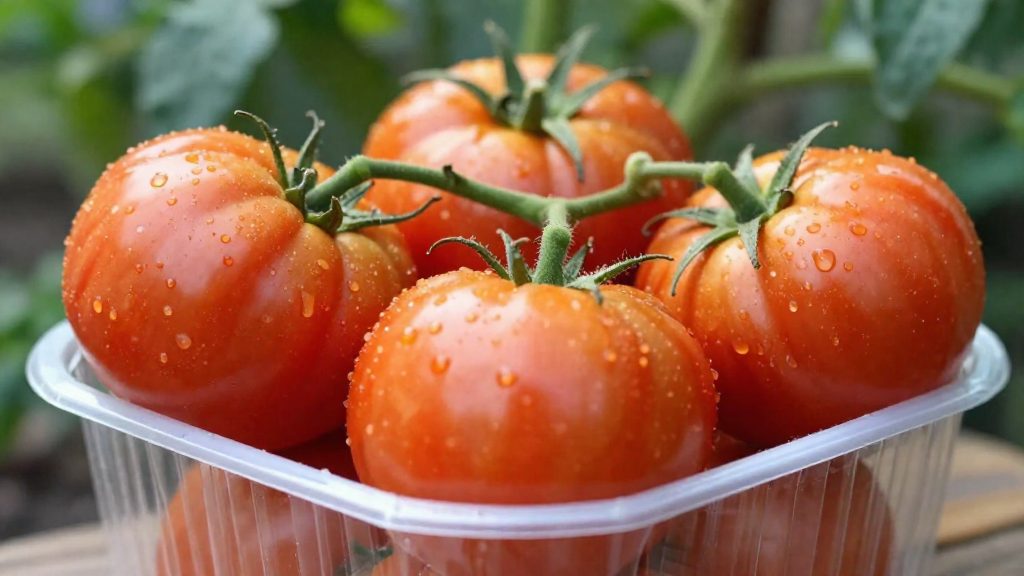
How often should you water tomatoes in pots?
Container tomatoes do not follow a fixed calendar. According to Iowa State University Extension and Outreach, some plants may need watering every day, so the schedule should follow the moisture in the pot rather than the day of the week. The routine has two parts: water thoroughly each time, then check the mix before the next session.
Water until it drains from the bottom holes
- Pour water slowly over the soil surface until it runs out of the drainage holes.
- Runoff shows that the whole root ball has been wetted, not only the top layer.
- Empty any saucer under the pot after watering so the roots do not sit in standing water.
Partial watering leaves dry pockets in the lower root zone, so each session should be complete.
Keep the substrate from drying out completely
Iowa State University Extension and Outreach advises against letting the mix dry out completely. Before each watering, push a finger into the mix to judge its moisture. If the mix feels dry at that depth, water it; if it still feels damp, wait and check again later. Clemson Cooperative Extension (2022) notes that containers which are too small need constant watering, so a small pot will require checks more often than a larger one. Clemson also notes that plants may need daily watering at the height of summer, so the routine should be reviewed as the season progresses.
Water at the base, not the foliage
Direct the water at the soil level, around the base of the plant, and keep the leaves as dry as possible. Iowa State University Extension and Outreach recommends watering at the base rather than on the leaves.
Fertilizing container tomatoes
Container tomatoes rely on the nutrients you supply, because a pot holds a limited volume of growing medium. Iowa State University Extension and Outreach recommends a soluble fertilizer in the 15-30-15 or 20-20-20 formula, applied every one to two weeks. If the potting medium already contains a slow-release fertilizer, feeding may not need to start until mid-summer. Clemson Cooperative Extension (2022) describes two alternatives: timed-release pellets applied at planting and reapplied at the interval printed on the package, or a water-soluble fertilizer applied once a week.
Choosing a soluble formula
Iowa State University Extension and Outreach names two formulas for container tomatoes:
- 15-30-15
- 20-20-20
Both are soluble fertilizers, so they are dissolved in water and applied as a liquid feed. Follow the dilution rate on the product label, since the sources consulted do not give a concentration.
Feeding schedule by product type
| Source | Fertilizer type | Frequency |
|---|---|---|
| Iowa State University Extension and Outreach | Soluble, 15-30-15 or 20-20-20 | Every 1–2 weeks |
| Clemson Cooperative Extension (2022) | Water-soluble | Once a week |
| Clemson Cooperative Extension (2022) | Timed-release pellets | At planting, then at the package interval |
The two Clemson options are alternatives, not a combined routine. Choose one approach and keep to its interval.
When to delay feeding
Check the potting mix label before starting a liquid feed. If the mix already contains slow-release fertilizer, the soluble schedule can wait. Iowa State University Extension and Outreach indicates that feeding may not need to begin until mid-summer in that case.
Support and common problems
Support for tall plants
Cultivars taller than 2 feet need structural support, because their stems grow long and become heavy with fruit. According to Clemson Cooperative Extension, Home & Garden Information Center (2022), cultivars taller than 2 feet need a cage or other support.
Two common options are:
- Cages: A wire cage set in the container before or at planting lets the stems grow through it and rest on its frame.
- Stakes: A single stake pushed into the mix beside the stem gives vertical support. Set it at planting time, because inserting a stake later can damage roots.
Tying stems
Tie stems loosely to the support using soft material such as fabric strips or garden twine. Tie around the main stem just below a leaf joint, and leave enough slack for the stem to thicken. Tight ties can cut into the stem and damage branches, so check ties regularly as the plant grows.
Tipping risk
Containers that are too small can tip over, according to Clemson Cooperative Extension (2022). A tall, fruit-laden plant in a light or narrow pot is more likely to fall. Choose a container with a wide, heavy base, and anchor the support firmly in the mix so the plant’s weight does not pull it loose.
Diagnosing blossom end rot
The official sources consulted do not specify the symptoms or cause of blossom end rot, so this section cannot describe how to identify it. Because the sources do not cover blossom end rot, do not assume a cause from watering technique alone. Keep the mix from drying out completely, as described in the watering section, and ask your local cooperative extension office to diagnose the problem if fruit shows damage.
Frequently asked questions
What size container do I need for tomatoes?
Cherry tomatoes need a minimum container volume of 2 gallons, about 10 inches across, according to Iowa State University Extension and Outreach. Standard tomatoes need at least 4 gallons, or 12 to 14 inches in diameter, and these are minimums rather than maximums. For most compact cultivars, Clemson Cooperative Extension (2022) recommends a container of 14 to 20 inches.
Can I use garden soil in a pot?
No. Iowa State University Extension and Outreach advises a soilless potting mix instead, because it drains well, resists compaction, is lightweight, and is free of disease organisms and weed seeds. The container also needs drainage holes, and if you build it from wood, red cedar or redwood is the recommended choice over treated lumber.
How often should I water container tomatoes?
Water until the excess drains from the bottom holes, and apply it at the base of the plant rather than onto the leaves. Some plants may need watering every day, so check the mix regularly and avoid letting it dry out completely, as Iowa State University Extension and Outreach recommends. Keeping the moisture level even helps the plant through the season.