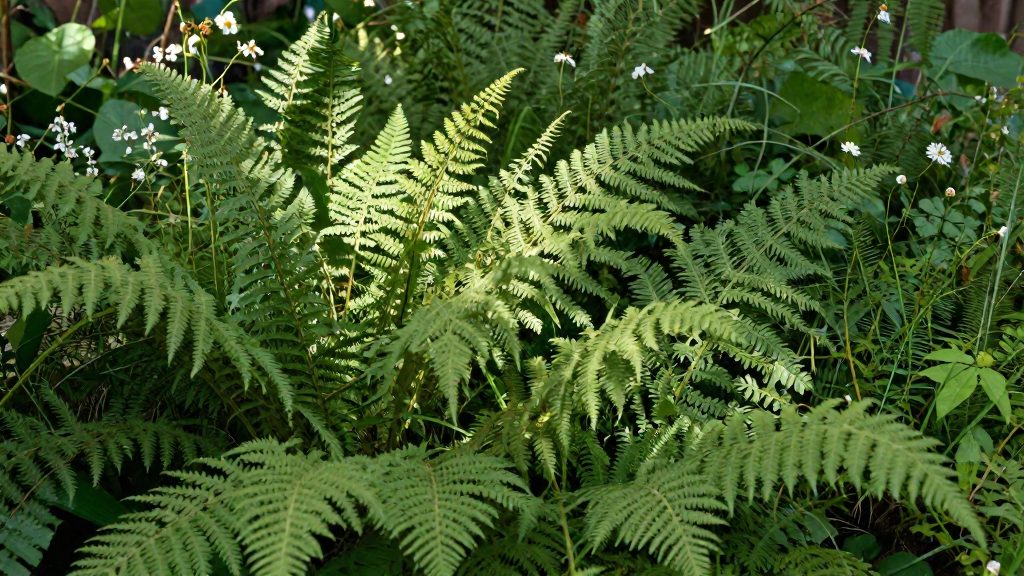
Choosing native plants for shade starts with knowing what kind of shade a bed has, but the sources sort native plants by moisture rather than by light type. Light type mainly tells you how much stress to expect, and moisture tells you which plants to pick. Shade in a garden is classified by how much direct light a spot receives and when it receives it. Three categories cover most sites: full shade, filtered shade and part-day shade. According to University of Maryland Extension (2025), these are the main shade types, and the sources consulted do not specify numeric hour thresholds that separate them, so classification depends on careful observation of each site.
What counts as shade in a garden?
Shade types differ in both duration and intensity of light, so a plant that tolerates one type may struggle in another. Before choosing plants, identify which light category each bed belongs to. The sources consulted sort native plants by moisture condition (dry, wet, or both), not by light category. Use the light category to judge stress risk, such as hot afternoon sun, then pick plants from the list that matches the bed’s moisture.
| Shade type | Example from the sources | What it means for planting |
|---|---|---|
| Full shade | North side of a building | Buildings cast shade mainly on their north and east sides (University of Illinois Extension, 2025-08-04). |
| Filtered shade | Light through trees | Light reaches the ground in patches through a canopy, which suits woodland plantings. |
| Stress scenario: morning shade with hot afternoon sun | Not a separate shade type; described by University of Maryland Extension (2025) | Can stress woodland plants, so choose tougher forest-edge natives (University of Maryland Extension, 2025). |
Part-day shade describes a spot that receives direct sun for only part of the day, without a fixed example in the sources. Morning shade with hot afternoon sun is a distinct case: the plant gets relief from the strongest light only during the morning, and the afternoon heat is what causes stress.
Assessing a site before selecting plants
A simple site assessment uses observation rather than measurement:
- Walk the bed at several times of day and note where direct sun falls and for how long.
- Check whether the shade comes from a building, a tree canopy or a fence, since each produces a different light pattern.
- Note overhangs. Roof overhangs can block significant rainfall from reaching nearby beds (University of Illinois Extension, 2025-08-04), so a shaded spot may also be a dry one.
- Identify whether the bed sits under established trees, where root competition affects planting method.
Record the findings for each bed, then match plants to the category that best describes it.
Which native plants grow in dry shade?
The University of Illinois Extension (2025-08-04) lists six native options for dry shade: wild columbine, woodland phlox, tall anemone, prairie alumroot, Pennsylvania sedge and mapleleaf viburnum. The same source lists a separate group for wet shade, including wild ginger and cinnamon fern, so dry-shade sites should be planted from the dry-shade list. The official sources consulted do not specify height, bloom time or spread for each species, so choose plants by site conditions and by the layer each one will fill.
| Plant | Role in a planting scheme |
|---|---|
| Wild columbine | Herbaceous perennial, understory layer |
| Woodland phlox | Herbaceous perennial, understory layer |
| Tall anemone | Herbaceous perennial, understory layer |
| Prairie alumroot | Herbaceous perennial, understory layer |
| Pennsylvania sedge | Grass-like sedge, low layer |
| Mapleleaf viburnum | Woody shrub, shrub layer |
Layering is the main planting principle. In a dry-shade bed, mapleleaf viburnum provides the shrub structure, while the four herbaceous species and the sedge fill the lower levels beneath existing trees or structures.
Beds in these spots stay drier than open ground, so new plantings need regular watering until established, applied so the soil is moist but not waterlogged.
Best native plants for moist shade
The University of Illinois Extension (2025) lists seven native options for wet shade: wild ginger, wild geranium, great blue lobelia, stout blue-eyed grass, rosy sedge, cinnamon fern, and winterberry. These are the plants to consider when a shaded bed stays damp for much of the season. The sources consulted do not give growth height, bloom time, or soil preferences for each species, so check those details against a regional native plant guide before buying.
Herbaceous and fern options
- Wild ginger, wild geranium, and great blue lobelia are listed as native options for wet shade.
- Stout blue-eyed grass and rosy sedge round out the herbaceous group for the same conditions.
- Cinnamon fern is the moisture-tolerant fern in this list. Christmas fern is also mentioned for wet and dry shade, but it is covered elsewhere on this site.
Shrub option
- Winterberry is the shrub on this list. Place it in the shrub layer so the bed has height as well as ground-level plants.
Building the layers
The University of Maryland Extension (2025) advises aiming for at least 80% native plants by cover for biodiversity benefits. Combine a canopy, an understory, shrubs, and herbaceous plants over leaf litter.
Site conditions to check first
- Morning shade with hot afternoon sun can stress woodland plants, so choose tougher forest-edge natives for those sites.
Spring ephemerals for early color
Spring ephemerals are woodland plants that grow, flower and set their foliage in the early part of the year, before the tree canopy above them fills with leaves. The University of Illinois Extension (2025) lists Virginia bluebells, Jack-in-the-pulpit, mayapple, toothwort, prairie trillium, bloodroot, hepatica and spring beauty as spring ephemerals for shade. Their color arrives while most other perennials in a shade bed have not yet started.
Emergence and bloom timing
These plants depend on a window of early light that opens before the trees leaf out. Once the canopy closes, light at ground level drops sharply, and the plants’ above-ground growth fades. The sources consulted do not give exact emergence or bloom dates, so timing varies with region and climate. Observe your own bed over one full season to note when each species breaks ground and when it flowers, then plan the rest of the planting around those dates.
Summer dormancy and planting gaps
After bloom, spring ephemerals enter summer dormancy and their foliage disappears, leaving open soil in the bed. Plan for this from the start:
- Place later-growing perennials close enough to the ephemerals to fill the space once the ephemerals fade.
- Mark the position of each dormant plant with a label or stake so that it is not dug up during summer weeding or planting.
- Avoid planting shallow-rooted annuals directly over dormant ephemeral clumps, since the soil around them may be disturbed.
Pairing with later native perennials
Pair each ephemeral group with native companions that match the site’s moisture class, so the bed keeps its structure after the ephemerals go dormant. The University of Illinois Extension (2025) lists the following options:
| Moisture condition | Native companions named in the source |
|---|---|
| Dry shade | Wild columbine, woodland phlox, tall anemone, prairie alumroot, Pennsylvania sedge, mapleleaf viburnum |
| Wet shade | Wild ginger, wild geranium, great blue lobelia, stout blue-eyed grass, rosy sedge, cinnamon fern, winterberry |
| Wet and dry shade | Christmas fern |
Christmas fern tolerates both wet and dry shade, so it suits beds where moisture varies across the season. For other combinations, match companions to the moisture conditions you can measure in your own bed.
Native ferns and groundcovers
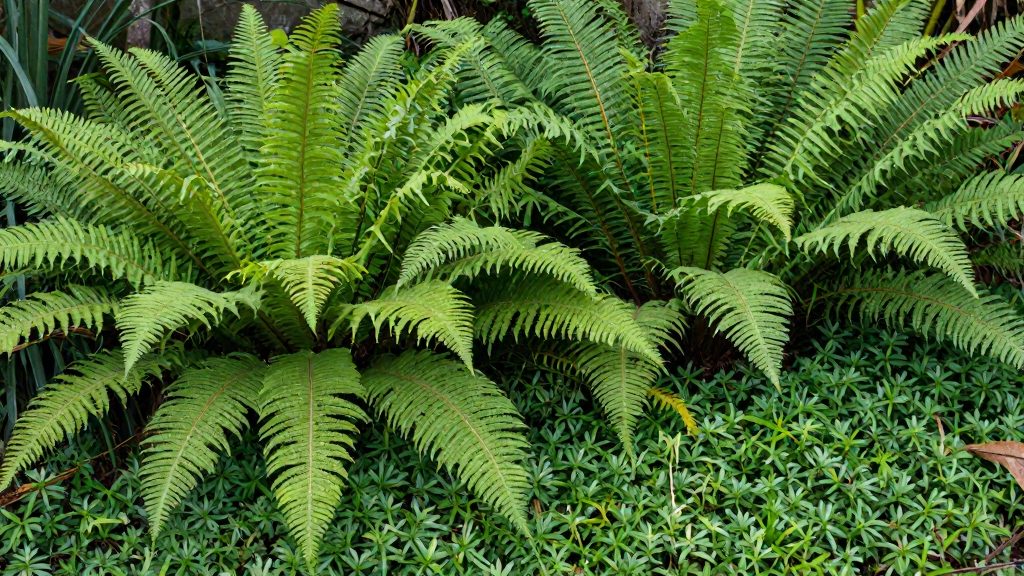
Christmas fern is the native fern that the University of Illinois Extension (2025) lists as tolerating both wet and dry shade, which makes it one of the most flexible choices for shaded beds. Christmas fern is listed as tolerating both wet and dry shade, so it removes one decision from the planting plan. The bed still needs to be checked for moisture before planting.
Christmas fern across moisture conditions
Because Christmas fern tolerates both wet and dry shade, it can be placed in a low spot that stays damp after rain or in a drier bed beneath trees without changing species. The official sources consulted do not specify how it performs in full sun or in heavy clay soils.
Ferns and groundcovers as understory plants
Ferns and groundcovers form the ground layer beneath canopy trees and shrubs.
| Moisture condition | Native examples (University of Illinois Extension, 2025) |
|---|---|
| Dry shade | Wild columbine, woodland phlox, tall anemone, prairie alumroot |
| Wet shade | Wild ginger, wild geranium, great blue lobelia, stout blue-eyed grass |
| Wet and dry shade | Christmas fern |
How do you plant under tree roots?
Under established trees, the aim is to add plants without digging into the root zone. According to University of Illinois Extension (2025), plugs, which are small plants with roots less than 5 inches deep, are the recommended format here because they limit damage to both the soil and the tree’s roots. A plug needs only a small hole, so it avoids the larger excavation that a full-size container plant would require.
Why plugs suit root zones
Tree roots spread out close to the surface, so the soil beneath a mature tree is often shallow and crowded with roots. Plugs have shallow root systems that fit into the upper soil layer without reaching the deeper roots of the tree. Their small size also means less soil has to be removed, which lowers the chance of cutting or exposing major roots.
Limiting soil disturbance
- Work only at each planting point. Do not till or turn over the whole bed.
- Avoid digging trenches or wide planting areas that cross the root zone.
- Plant each plug at the same depth it grew in its container, so the crown sits level with the soil surface.
- Leave the soil around existing roots in place rather than removing or loosening it.
Keeping planting holes small
Dig each hole only slightly larger than the plug’s root ball, then firm the soil gently around the plant. Space plugs so that each one has its own separate hole rather than opening a continuous strip. If a root blocks the spot, shift the planting point a short distance and dig again.
Why leave the leaves?
In shade gardens, fallen leaves are usually best left where they land. The University of Maryland Extension (2025) states that leaves support overwintering insects and fungi and suppress weeds. Both benefits come from the same layer: leaf litter that stays over the soil through winter. The one clear exception is evergreen plants, which need their fallen leaves removed.
Overwintering insects and fungi
Insects and fungi that overwinter in leaf litter depend on that cover during the cold months. According to the University of Maryland Extension (2025), leaving fallen leaves in place supports these organisms directly. Raking a bed clean removes that habitat.
Natural weed suppression
The University of Maryland Extension (2025) also identifies weed suppression as a function of fallen leaves. A layer of leaves over the soil limits the open ground where weeds can establish, which reduces the amount of hand weeding needed in spring. This works best when the leaves are left across the bed rather than removed and bagged.
Removing leaves from evergreens
The exception is evergreen plants. The University of Maryland Extension (2025) advises removing leaves only from evergreens, using Christmas fern as the example. Deciduous plants and open soil keep their leaf cover.
| Plant type | Fallen leaves |
|---|---|
| Deciduous woodland plants and open soil | Leave in place |
| Evergreen plants such as Christmas fern | Remove |
Are all woodland plants really native?
No. A nursery label does not confirm that a shade plant is native to your site. The University of Maryland Extension (2025) identifies two woodland plants that are sold as natives but do not meet that description. Native range is the deciding factor, so check it before buying.
- Yellow wood poppy is non-native and can be aggressive. It should not be counted toward a native planting, even when it is sold for woodland use.
- Allegany pachysandra is native only to the southern Blue Ridge, not to Maryland. A plant can be native to one region and still be out of place in a garden elsewhere in the same state.
| Item | Status according to University of Maryland Extension (2025) | Practical action |
|---|---|---|
| Yellow wood poppy | Non-native, can be aggressive | Exclude from a native planting |
| Allegany pachysandra | Native only to the southern Blue Ridge, not Maryland | Use only if your site is within that range |
To verify a plant before buying, ask the supplier for its native range and compare it with your location. Your regional extension office can also confirm which species are native to your area.
Frequently asked questions
How do I tell which type of shade my bed gets?
Published guidance from University of Maryland Extension (2025) sorts shade into three types: full shade, such as the north side of a building, filtered shade, where light reaches the ground in patches through a tree canopy, and part-day shade. The guidance does not give numeric hour thresholds, so watch the bed across a full day to see when direct sun arrives.
Which native plants suit a dry shade bed?
University of Illinois Extension (2025-08-04) lists wild columbine, woodland phlox, tall anemone, prairie alumroot, Pennsylvania sedge and mapleleaf viburnum for dry shade. Pick from this list when the soil stays dry even in spring, and check the moisture level before buying plants.
Should I rake fallen leaves out of a native woodland bed?
Usually no. University of Maryland Extension (2025) notes that leaves shelter overwintering insects and fungi and also suppress weeds, so they serve as leaf litter that supports the bed. The exception is evergreen plants such as Christmas fern, whose leaves you should remove.