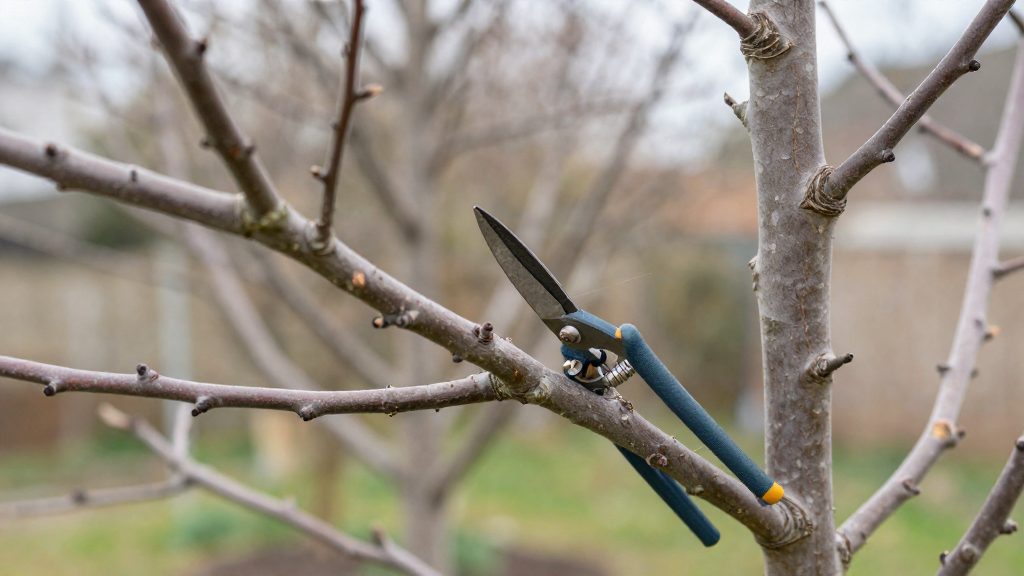
Apple trees are best pruned while dormant, after the coldest part of winter and before spring bud swell, according to Utah State University Extension. This guidance is not specific to Ontario, so Ontario growers should confirm timing with local advice. Pruning earlier risks low-temperature injury, and pruning after bud swell can remove buds and blossoms. The official sources consulted do not specify Ontario calendar dates, so growers should judge timing from local winter conditions and the condition of the buds rather than a fixed date.
When to Prune Apple Trees in Ontario
Dormant pruning is the main structural cut. Make it in the window between the end of the coldest weather and the first visible swelling of the buds. Dormant pruning tends to increase vigour, so it suits trees that need new growth to fill out a framework.
Summer pruning can be done at any time in summer. It is the most effective way to remove vigorous upright water sprouts and to slow an overly vigorous tree.
| Pruning type | Timing | Effect |
|---|---|---|
| Dormant pruning | After the coldest part of winter, before spring bud swell | Tends to increase vigour |
| Summer pruning | Any time in summer | Removes vigorous upright water sprouts; restrains an overly vigorous tree |
Timing Errors to Avoid
- Too early: cutting before the coldest part of winter has passed risks low-temperature injury.
- Too late: cutting after bud swell can knock off buds and blossoms, reducing that season’s fruit.
Fire Blight Precautions
Where fire blight is a problem, prune in hot, dry conditions. Cut at least 8 to 12 inches (about 20 to 30 cm) below the lowest visible sign of infection. Disinfect tools with a 10% bleach solution, made from 1 part bleach to 9 parts water, according to Utah State University Extension.
Light, corrective cuts on young trees are the safer approach during this establishment period.
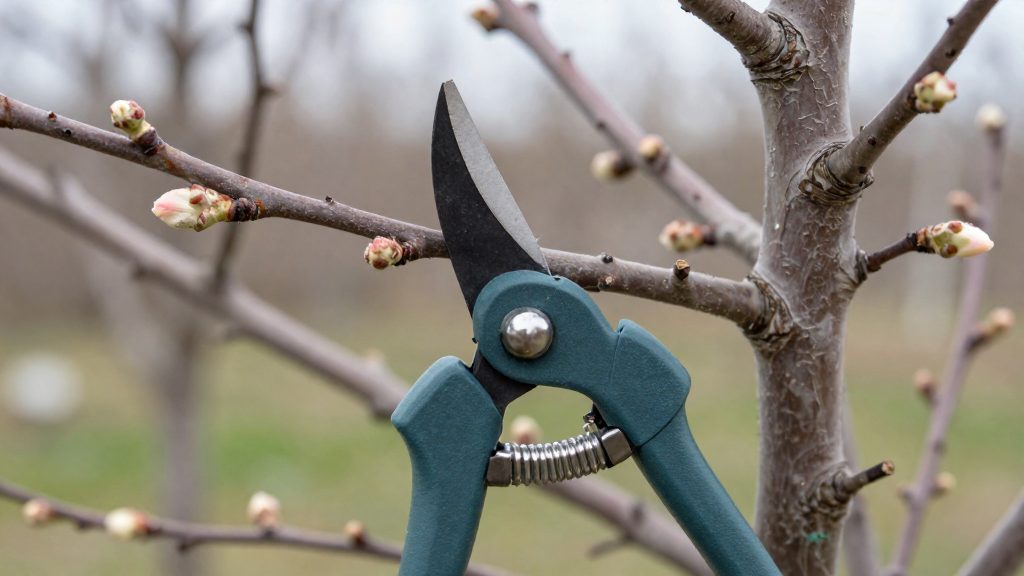
Why late winter is the best time
Dormant pruning, the cutting done while the tree is leafless, is best carried out after the coldest part of winter and before bud swell in spring. According to Utah State University Extension (publication date not specified), this window avoids two separate problems. Cutting too early exposes fresh wounds to low-temperature injury, while cutting after buds have swollen removes flower buds and blossoms, which reduces the crop for that season. The sources consulted define this window by winter conditions and bud development rather than by a fixed calendar date. The official sources consulted do not specify exact Ontario dates, so the practical approach is to watch the weather and the buds rather than the month.
How timing affects the tree
Pruning timing changes how the tree responds:
| Timing | Documented effect |
|---|---|
| Before the coldest part of winter | Risk of low-temperature injury |
| After the coldest part, before bud swell | Recommended window for dormant pruning |
| After bud swell | Can remove buds and blossoms |
Dormant pruning tends to increase vigour, so it suits trees that need more new growth. Summer pruning can be done at any time during summer, and it is the method used to remove vigorous upright water sprouts and to slow an overly vigorous tree (Utah State University Extension).
Can You Prune Apple Trees in Summer?
Yes. According to Utah State University Extension, summer pruning can be done at any time during summer. Its main use is corrective: it is the best way to remove vigorous upright water sprouts and to slow an overly vigorous tree. Dormant pruning, by contrast, tends to increase vigour, so summer cuts are the better choice when the goal is restraining growth. The official sources consulted are not specific to Ontario, so the specific timing of summer work in Ontario is not covered here.
Summer Pruning Goals and Methods
| Goal | Method |
|---|---|
| Remove water sprouts | Remove vigorous upright shoots (general technique, not drawn from the Utah source) |
| Restrain an overly vigorous tree | Reduce excessive new growth (general technique, not from the cited source) |
| Limit fire blight spread | Prune in hot, dry conditions and cut well below the infection |
Fire Blight Precautions
Where fire blight is a problem, the Utah State University Extension guidance gives these steps:
- Prune in hot, dry conditions.
- Cut at least 8 to 12 inches (about 20 to 30 cm) below the lowest visible sign of infection.
- Disinfect pruning tools with a 10% bleach solution, made from 1 part bleach to 9 parts water.
Limits for Young Trees
Avoid heavy summer pruning of young trees during their first 1 to 3 years. The same source notes that heavy pruning at this stage can delay flowering, so limit cuts on young trees to what the goal requires.
Should you avoid pruning in autumn?
For dormant pruning, autumn falls outside the recommended window. Utah State University Extension advises pruning after the coldest part of winter and before spring bud swell. Pruning earlier than this puts the tree at risk of low-temperature injury, so autumn cuts are best avoided. This is a Utah source, and the consulted material does not give Ontario-specific dates, so check local frost timing with regional extension services before pruning.
| Pruning type | Recommended timing | Notes from the source |
|---|---|---|
| Dormant pruning | After the coldest part of winter, before spring bud swell | Tends to increase vigour |
| Summer pruning | Any time in summer | Best method for removing vigorous upright water sprouts and restraining an overly vigorous tree |
| Autumn pruning | Earlier than the dormant window | Not recommended, because of the low-temperature risk above |
Pruning after bud swell also causes problems, since it can remove buds and blossoms. Dormant pruning therefore has a narrow window, while summer pruning can be done at any time in summer and is the better option for controlling excessive growth.
Young trees need special care. Utah State University Extension advises avoiding heavy pruning in the first 1 to 3 years, because it can delay flowering.
Where fire blight is present, the same source recommends pruning in hot, dry conditions. Cut at least 8 to 12 inches (about 20 to 30 cm) below the lowest visible sign of infection, and disinfect tools between cuts with a 10% bleach solution (1 part bleach to 9 parts water).
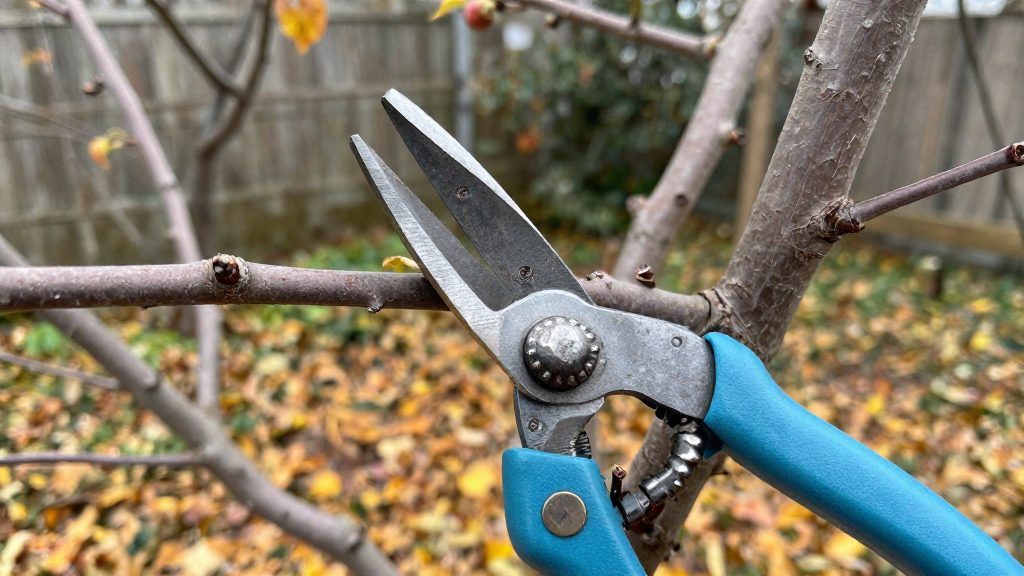
Pruning Young Apple Trees: What to Do
For young apple trees, the main rule is restraint. According to Utah State University Extension (publication date not specified), heavy pruning in the first one to three years can delay flowering, so cuts in this period should be light and purposeful. The official sources consulted do not specify Ontario-specific dates, so the timing below is general and should be checked against local conditions.
Dormant pruning is done after the coldest part of winter and before spring bud swell. Pruning earlier exposes the tree to low-temperature injury, while pruning after bud swell can remove buds and blossoms. Dormant pruning tends to increase vigour.
Summer pruning can be done at any time in summer. According to the same source, it is the most direct way to remove vigorous upright water sprouts and to restrain an overly vigorous tree.
| Pruning type | Timing | Main purpose | Notes |
|---|---|---|---|
| Dormant | After the coldest part of winter, before spring bud swell | Shaping and structure | Tends to increase vigour; too early risks low-temperature injury |
| Summer | Any time in summer | Removing upright water sprouts, restraining vigour | Best option for curbing excessive growth |
| Fire blight removal | Hot, dry conditions | Removing infected wood | Cut at least 8 to 12 inches (about 20 to 30 cm) below the lowest visible infection |
Removing Fire Blight Wood
Where fire blight is a problem, prune in hot, dry conditions. Cut at least 8 to 12 inches (about 20 to 30 cm) below the lowest visible sign of infection. Disinfect tools with a 10% bleach solution (1 part bleach to 9 parts water), including between cuts.
Practical Sequence for a Young Tree
- Make main shaping cuts during dormancy, after the coldest weather and before buds swell.
- Remove upright water sprouts during summer.
- Cut out fire blight-infected wood in hot, dry weather, well below the visible infection, disinfecting tools as you work.
Preventing the Spread of Fire Blight
Where fire blight is a problem, the consulted source recommends pruning in hot, dry conditions, cutting well below any visible symptoms, and disinfecting tools. According to Utah State University Extension, the cut should be at least 8 to 12 inches (about 20 to 30 cm) below the lowest visible sign of infection. That publication is a Utah source, and the official sources consulted do not specify Ontario-specific fire blight guidance, so local extension advice should be checked before pruning.
Pruning Method
| Step | What to do | Guideline |
|---|---|---|
| Timing | Schedule pruning for infected trees | Hot, dry conditions |
| Locate infection | Find the lowest visible sign of infection on each branch | Start from this point |
| Set the cut | Measure down from the lowest visible infection | At least 8 to 12 inches (about 20 to 30 cm) |
| Disinfect tools | Disinfect pruners and saws after each cut that touches infected wood | 10% bleach solution |
Disinfecting Tools
The source specifies a 10% bleach solution, made from 1 part bleach to 9 parts water. Tools should be disinfected after each cut that touches infected wood.
Tools and disinfection
The main reference consulted for this section is Utah State University Extension, which is not specific to Ontario. The disinfection steps below apply to apple pruning as described in that source, and local advice from an Ontario extension service should be checked for regional details.
Disinfecting tools
Utah State University Extension recommends a 10% bleach solution, made by mixing 1 part bleach with 9 parts water. This solution is the one specified for pruning where fire blight is a problem.
| Step | Action |
|---|---|
| 1 | Prepare the 10% bleach solution (1 part bleach to 9 parts water) in a container you can fully submerge or soak a cloth in. |
| 2 | Disinfect the blades after each cut that touches infected wood. |
Use the same 1 part bleach to 9 parts water mix for every disinfection step.
Fire blight cutting method
When fire blight is present, Utah State University Extension advises pruning in hot, dry conditions. Cut at least 8 to 12 inches (about 20 to 30 cm) below the lowest visible sign of infection. Disinfect the tools after every cut that touches diseased wood.
Frequently asked questions
When should I prune my apple tree in Ontario if the sources don’t give local dates?
Utah State University Extension places the dormant period after the coldest part of winter and before spring bud swell, but it is not specific to Ontario. The official sources consulted do not specify Ontario calendar dates, so check OMAFRA or a local extension office or nursery, and judge timing from the winter weather and the state of the buds.
Can I prune an apple tree in summer to slow down excessive growth?
Yes, summer pruning can be done at any time in summer, and it is the most direct way to remove vigorous upright water sprouts and restrain an overly vigorous tree. Dormant cuts tend to increase vigour, so summer work is the better choice when the goal is to limit growth.
Should I prune a young apple tree heavily to shape it?
No. Utah State University Extension advises against heavy pruning of young trees in their first 1 to 3 years, because it can delay flowering. Keep cuts light and limit them to what the tree needs, since heavy pruning at this stage costs the tree its first flowers.