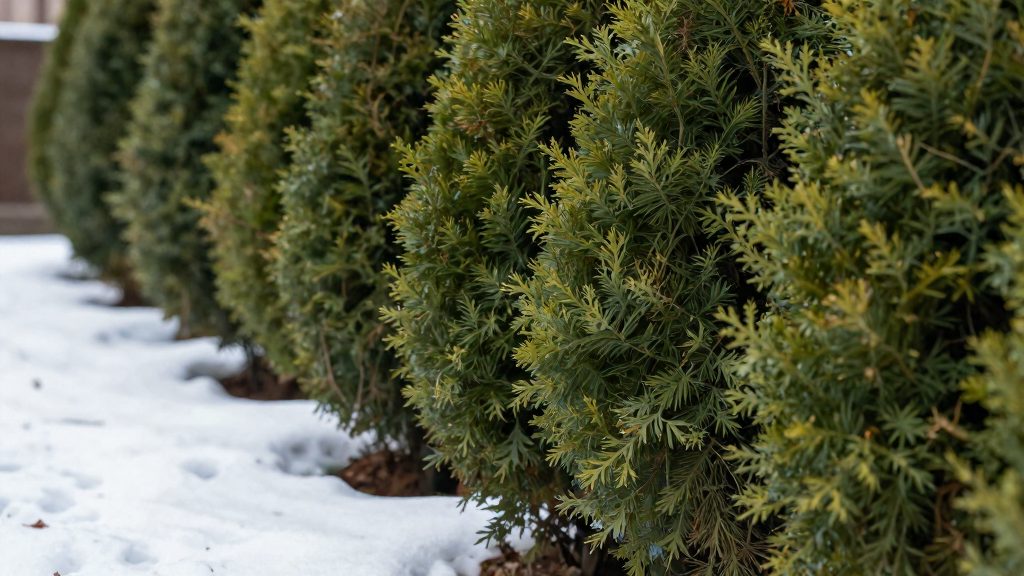
For a cold climate, the hedge shrubs with the lowest listed hardiness zones are arctic willow, shrubby cinquefoil, Siberian peashrub, ninebark, hedge cotoneaster, and Amur maple, all rated at zone 2 to 2b. Among evergreens, American arborvitae, including the ‘Smaragd’ cultivar, is listed at USDA zone 3 (down to -40°F, or -40°C). Lower zone numbers mean the plant tolerates colder winters, so the zone is the first figure to check against your local conditions.
Which are the best hedges for a cold climate?
The table below lists each shrub with the hardiness zone its source gives. Zone numbers are the main cold-tolerance figure for these plants. The nursery source also gives a minimum temperature for some of them. Compare both with the coldest winter temperatures in your area.
| Shrub | Listed hardiness | Source |
|---|---|---|
| Arctic willow | Zone 2 | Laidback Gardener (Larry Hodgson), 2015 |
| Shrubby cinquefoil | Zone 2 | Laidback Gardener (Larry Hodgson), 2015 |
| Siberian peashrub | Zone 2 | Laidback Gardener (Larry Hodgson), 2015 |
| Amur maple | Zone 2a | Laidback Gardener (Larry Hodgson), 2015 |
| Hedge cotoneaster | Zone 2b | Laidback Gardener (Larry Hodgson), 2015 |
| Ninebark | Zone 2b | Laidback Gardener (Larry Hodgson), 2015 |
| Shrub roses | Zones 2 to 7, depending on variety | Laidback Gardener (Larry Hodgson), 2015 |
| Alpine currant | Zone 4b | Laidback Gardener (Larry Hodgson), 2015 |
| Arborvitae | Zone 3b | Laidback Gardener (Larry Hodgson), 2015 |
| Flame Amur maple | Zone 3 | Instant Hedge (nursery) |
| American arborvitae, ‘Smaragd’ | Zone 3, down to -40°F | Instant Hedge (nursery) |
| Green Mountain boxwood | Zone 4, down to -30°F | Instant Hedge (nursery) |
| Wichita Blue juniper | Zone 4, down to -30°F | Instant Hedge (nursery) |
Evergreen hedges and their limits
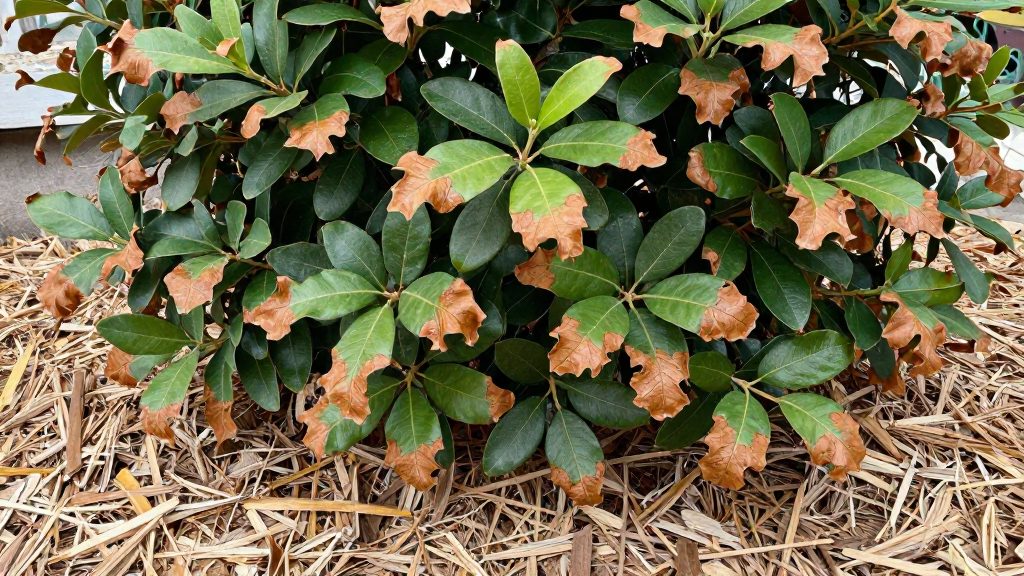
Evergreens give year-round screening, but several have listed weaknesses in cold areas. Winter burn affects yew in colder climates, and yew is only recommended for zone 6 and above. Spruce thins at the base and reacts poorly to hard pruning, so it suits hedges that need little cutting back. Honeysuckle is suitable only if the chosen variety resists witch’s broom.
Selection method
- Find the coldest winter minimum for your area and compare it with the zone listed for each shrub.
- Choose plants rated at or below your zone number.
- For shrub roses, check the variety label, because the listed range is 2 to 7 depending on variety.
- Confirm that spruce and other sensitive species are planted where they will not need hard pruning.
Understanding Hardiness Zones in Canada
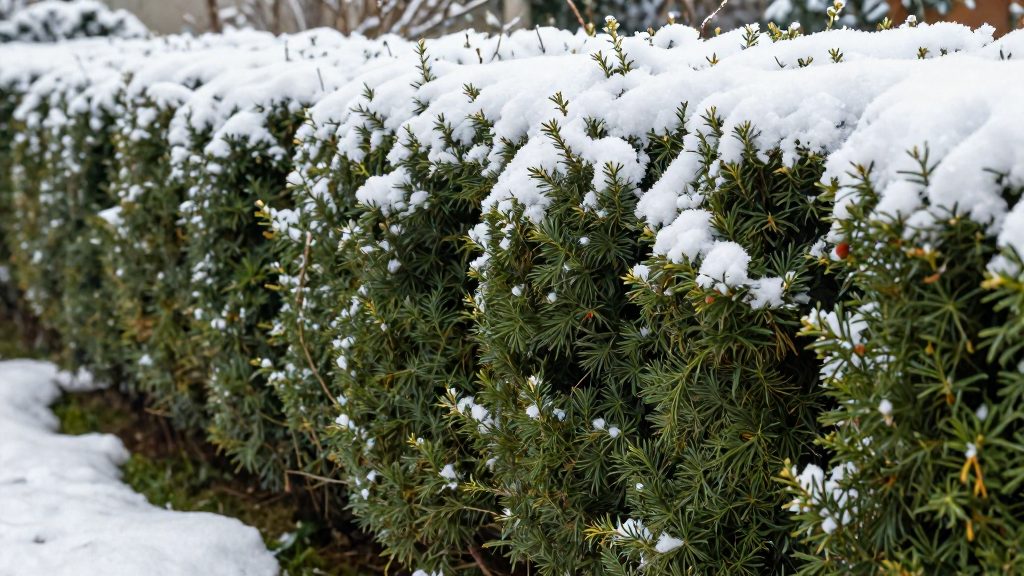
A hardiness zone is a numbered rating that shows how cold a shrub can tolerate in winter. A lower number means the plant survives colder conditions. For hedge selection, the zone rating is the first filter: a shrub rated for a higher zone number than your local zone will likely be damaged or killed. The hardiness figures below come from Laidback Gardener (Larry Hodgson, July 2015) and from the nursery Instant Hedge. The zones listed here come from US sources and are USDA zones. They are not Canadian zones. Before buying, look up your location on a USDA hardiness zone map so you compare like with like. Canadian zone numbers are not interchangeable with these USDA ratings.
| Shrub | Listed zone | Source |
|---|---|---|
| Amur maple | 2a | Laidback Gardener (2015) |
| Arctic willow | 2 | Laidback Gardener (2015) |
| Shrubby cinquefoil | 2 | Laidback Gardener (2015) |
| Siberian peashrub | 2 | Laidback Gardener (2015) |
| Hedge cotoneaster | 2b | Laidback Gardener (2015) |
| Ninebark | 2b | Laidback Gardener (2015) |
| Arborvitae | 3b | Laidback Gardener (2015) |
| Alpine currant | 4b | Laidback Gardener (2015) |
| Green Mountain boxwood | 4 (down to -30°F) | Instant Hedge |
| Wichita Blue juniper | 4 (down to -30°F) | Instant Hedge |
| Flame Amur maple | 3 (down to -40°F) | Instant Hedge |
| American arborvitae, including ‘Smaragd’ | 3 (down to -40°F) | Instant Hedge |
Shrub roses are rated from zone 2 to zone 7, depending on the variety, so the cultivar label is the deciding factor for roses.
Practical steps:
- Check your local planting calendar before planting.
Conifer hedges: arborvitae, juniper, yew and spruce
Conifer hedges stay green through winter, but cold tolerance differs widely between species and cultivars. The sources consulted list USDA hardiness zones for several evergreens used in hedging, and matching the zone to your local winter minimum is the first step in choosing a plant.
Hardiness of common conifer hedge plants
| Plant | Hardiness listed by source |
|---|---|
| Arborvitae (Thuja occidentalis), including ‘Smaragd’ | Zone 3, down to -40°F (Instant Hedge) |
| Wichita Blue juniper | Zone 4, down to -30°F (Instant Hedge) |
| Yew | Zone 6 and above (Laidback Gardener, Larry Hodgson, 2015) |
Arborvitae (zone 3) and Wichita Blue juniper (zone 4) are listed for colder zones than yew, which is recommended only from zone 6 and above (Laidback Gardener). Arborvitae is the hardier of the two.
Yew, spruce and hemlock
Spruce thins at the base over time and reacts poorly to hard pruning. Shape it lightly and avoid cutting back into old wood, since the sources do not describe regrowth from bare branches.
Hemlock (pruche) is not covered by the official sources consulted, so no hardiness zone or pruning guidance is stated here. Check the cold limit of the specific cultivar with a local nursery before planting.
Planting and pruning principles
- Shape spruce lightly and keep pruning moderate.
- Set plants at a spacing that gives each one room to grow into a continuous line.
Deciduous Shrubs Hardy to Zone 2
Zone 2 is the lowest hardiness rating listed for hedge shrubs in the sources consulted, and only a few shrubs carry it. According to Laidback Gardener (Larry Hodgson) (2015), the hedge shrubs rated zone 2 or 2a/2b are Amur maple, arctic willow, hedge cotoneaster, ninebark, shrubby cinquefoil, and Siberian peashrub. Shrub roses are also listed, but their rating ranges from zone 2 to zone 7 depending on the variety.
| Shrub | Listed hardiness zone | Source |
|---|---|---|
| Amur maple | 2a | Laidback Gardener (Larry Hodgson) (2015) |
| Arctic willow | 2 | Laidback Gardener (Larry Hodgson) (2015) |
| Hedge cotoneaster | 2b | Laidback Gardener (Larry Hodgson) (2015) |
| Ninebark | 2b | Laidback Gardener (Larry Hodgson) (2015) |
| Shrubby cinquefoil | 2 | Laidback Gardener (Larry Hodgson) (2015) |
| Siberian peashrub | 2 | Laidback Gardener (Larry Hodgson) (2015) |
| Shrub roses (varies by variety) | 2 to 7 | Laidback Gardener (Larry Hodgson) (2015) |
Matching a hedge to your zone
- Hardiness zone ratings describe the coldest winter conditions a plant tolerates.
- The sources do not give the minimum winter temperature for zone 2. Use the zone number as the reference rather than an assumed temperature.
- Shrub roses need a variety check. A rose labelled zone 2 and a rose labelled zone 7 are different plants for cold sites, so read the tag or catalogue entry for each variety.
Cultivar names affect the rating
A cultivar can carry a different zone than the species it comes from. Instant Hedge (nursery) lists Flame Amur maple under zone 3, while Laidback Gardener (Larry Hodgson) (2015) lists Amur maple at zone 2a. For a zone 2 hedge, confirm the rating of the exact cultivar you buy.
Site and planting practice
- Plant in a sunny position, since sun exposure supports the growth of a dense hedge line.
- Water to keep the root zone moist without waterlogging it. Soggy soil stresses roots, especially in cold conditions.
- Space plants according to the mature width of each cultivar, so the hedge fills in without crowding.
Which shrubs to avoid for a hedge in a cold climate?
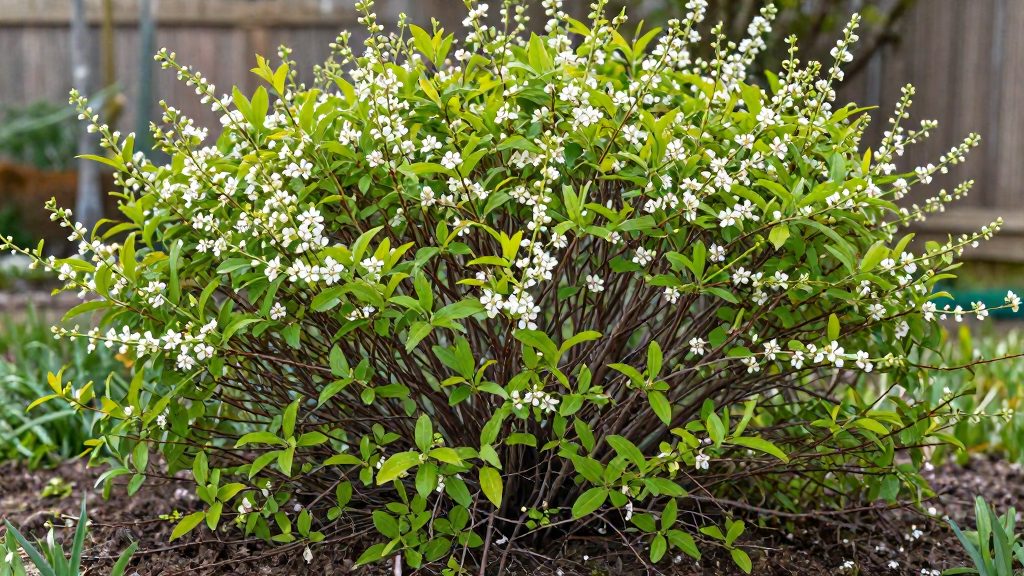
Some common hedge shrubs struggle in cold climates because of limited hardiness, winter damage, poor response to pruning, or invasiveness. Check the hardiness zone of the exact species or cultivar before planting. For a hedge, growth habit and tolerance of clipping matter as much as hardiness.
| Shrub | Issue in cold climates | Reference |
|---|---|---|
| Yew | Makes a good hedge in zone 6 and above, but is prone to winter burn in colder climates | Laidback Gardener (Larry Hodgson, 2015) |
| Spruce | Thins at the base and reacts poorly to hard pruning | Laidback Gardener (Larry Hodgson, 2015) |
| Honeysuckle | Suitable only if the variety resists witch’s broom | Laidback Gardener (Larry Hodgson, 2015) |
| Japanese barberry | Listed as hardy to zone 4, but considered invasive in some areas | Laidback Gardener (Larry Hodgson, 2015) |
Yew and spruce: form and winter damage
Yew is a dense, clippable hedge plant in mild zones, but it suffers winter burn where winters are harsh. Spruce is a poor hedge choice when a solid base is needed, because its lower branches thin out over time. Hard pruning of spruce gives a weak response, so it is better suited to a windbreak or a loosely shaped screen.
Honeysuckle and Japanese barberry: variety and invasiveness
Honeysuckle should only be planted when the chosen variety is documented as resistant to witch’s broom, a disfiguring clustered growth of twigs. Japanese barberry is hardy enough for zone 4, but its invasive status in some regions means it should be checked against local rules before planting.
Cold-hardy alternatives named in the references
| Shrub | Listed hardiness | Reference |
|---|---|---|
| Alpine currant | Zone 4b | Laidback Gardener (Larry Hodgson, 2015) |
| Arborvitae | Zone 3b | Laidback Gardener (Larry Hodgson, 2015) |
| Amur maple | Zone 2a | Laidback Gardener (Larry Hodgson, 2015) |
| Green Mountain boxwood | Zone 4, down to -30°F | Instant Hedge (nursery) |
| Wichita Blue juniper | Zone 4, down to -30°F | Instant Hedge (nursery) |
| American arborvitae ‘Smaragd’ | Zone 3, down to -40°F | Instant Hedge (nursery) |
Can shrub roses form a hedge?
Shrub roses can form a hedge in colder temperate areas. According to Laidback Gardener (Larry Hodgson) (2015), they belong to the hedge shrubs suited to these conditions, along with ninebark, hedge cotoneaster and arborvitae. Their hardiness zone depends on the variety. The same source gives a range from zone 2 to 7, so the zone must be checked for each variety rather than assumed for the whole group.
Hardiness and variety choice
- The sources consulted do not specify which shrub rose varieties give the best hedge density.
Comparison with other cold-hardy hedge shrubs
| Shrub | Hardiness zone listed |
|---|---|
| Shrub rose | 2 to 7, depending on variety |
| Hedge cotoneaster | 2b |
| Ninebark | 2b |
| Alpine currant | 4b |
| Arborvitae | 3b |
Planting method
- Check the light requirements of the chosen variety before planting the row.
- Adapt the planting date and care routine to your regional climate.
The sources consulted do not give spacing distances, planting months or pruning frequency for shrub roses, so these details should be checked with a regional gardening guide before planting.
Planting and pruning a hedge in harsh winters
A cold-climate hedge holds up when each shrub is rated for the coldest conditions of its site. Hardiness zones are the main selection tool. According to Laidback Gardener (Larry Hodgson, 2015-07-22), shrubs suited to colder temperate areas include alpine currant (zone 4b), Amur maple (zone 2a), arborvitae (zone 3b), hedge cotoneaster (zone 2b), ninebark (zone 2b), and shrub roses (zones 2 to 7, depending on variety). Check your local zone before buying, and match the rating to the lowest winter temperatures you expect.
Matching species to the cold
| Plant | Hardiness rating | Notes |
|---|---|---|
| Green Mountain boxwood | USDA zone 4 (down to -30°F) | Listed by Instant Hedge (nursery) |
| Wichita Blue juniper | USDA zone 4 (down to -30°F) | Listed by Instant Hedge (nursery) |
| Flame Amur maple | USDA zone 3 (down to -40°F) | Listed by Instant Hedge (nursery) |
| American arborvitae (Thuja occidentalis), including ‘Smaragd’ | USDA zone 3 (down to -40°F) | Listed by Instant Hedge (nursery) |
| Japanese barberry | Zone 4 | Considered invasive in some areas |
| Yew | Zone 6 and above | Prone to winter burn in colder climates |
Planting
- Select species rated for the minimum winter temperature of your area, not only the average.
- Choose a site with good light, since a sunny location suits most hedge shrubs listed above.
Pruning in winter
- Spruce: shape it lightly and avoid cutting into old wood.
Frequently asked questions
Which hedge shrubs handle the coldest winters?
Arctic willow, shrubby cinquefoil, Siberian peashrub, ninebark, hedge cotoneaster and Amur maple carry the lowest zone numbers in the sources, at zones 2 to 2b, according to Laidback Gardener (Larry Hodgson, 2015). Among evergreens, American arborvitae ‘Smaragd’ is the hardiest option listed, at USDA zone 3 down to -40°F (-40°C), according to Instant Hedge (nursery, undated).
How do I use a hardiness zone number to choose a hedge?
A hardiness zone is a cold-tolerance rating, and a lower number means the plant survives colder winters. Compare the rating with the coldest winter temperatures where you live, because a shrub rated for a higher zone number than your local zone will likely be damaged or killed. The ratings in these sources are USDA zones, so check them against a USDA hardiness zone map, since Canadian zone numbers are not interchangeable with them.
Is yew a good choice for a hedge in a cold winter?
Not in colder areas. Laidback Gardener (Larry Hodgson, 2015) recommends yew only from zone 6 and above, and notes that it is prone to winter burn in colder climates. For a cold-climate hedge, choose one of the zone 2 to 3 shrubs or conifers listed above instead.