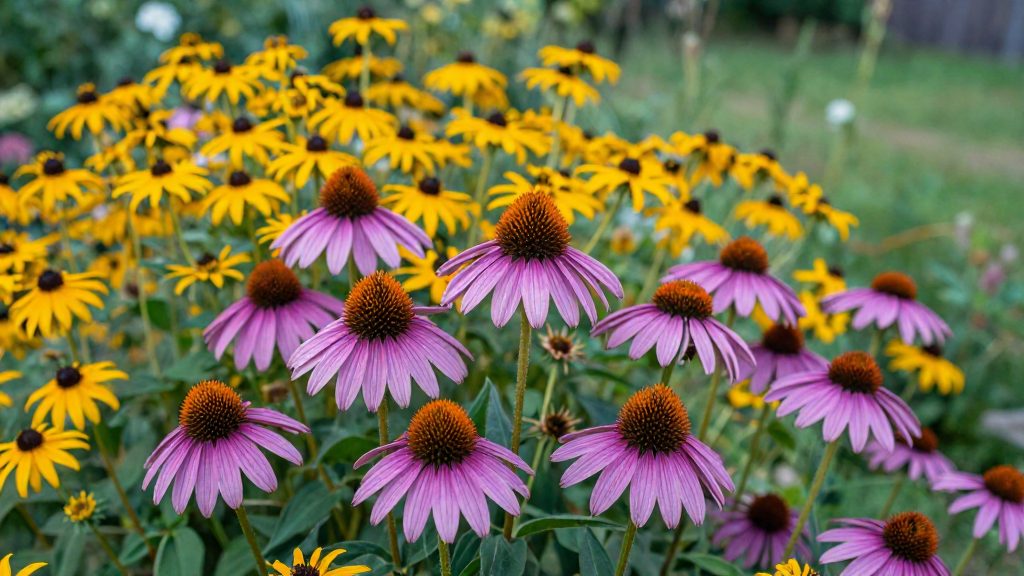
Native wildflowers suit a prairie garden because they are adapted to the local climate and soil. According to the City of Calgary (2026), once established they often need little maintenance, water or fertilizer. A planting built on species that already grow in the region works with existing conditions rather than against them, which reduces the routine interventions a garden requires.
Why choose native wildflowers for a prairie garden?
Adaptation to local climate and soil
Selecting species that already grow in your region is the basic step. Local native lists are the most reliable reference, because a species suited to one climate may not suit another. The official sources consulted do not specify how these adaptations apply outside Calgary.
Lower maintenance and fertilizer needs after establishment
Once plants are established, the same source notes that they often need little maintenance and little or no fertilizer. In practice, this means the routine shifts from regular feeding to periodic observation of plant health and growth.
Ecological role compared with introduced ornamentals
The official sources consulted do not specify how introduced ornamentals compare with native plants on ecological role, so no direct comparison is made here.
Best native wildflowers for full sun
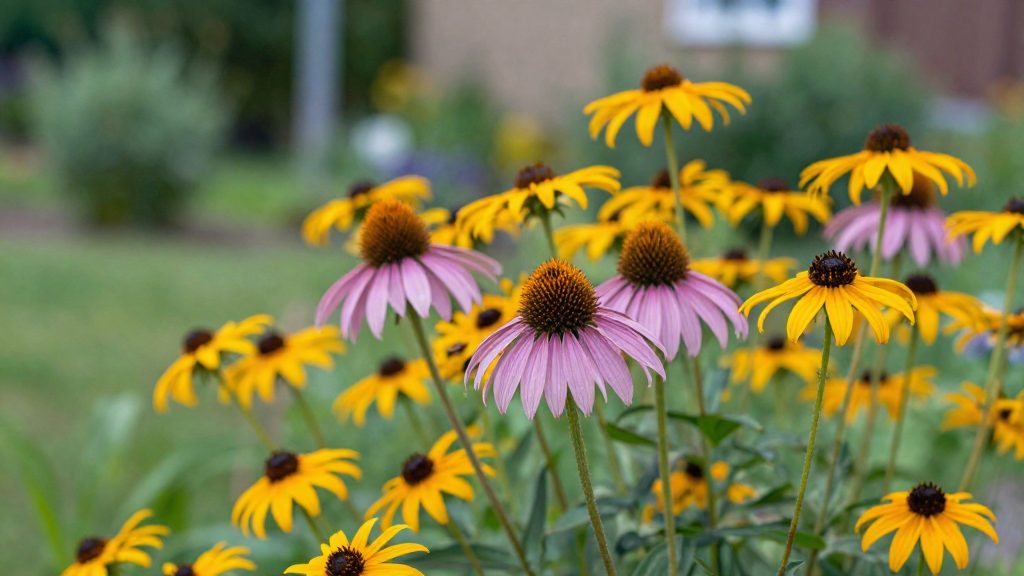
The City of Calgary (2026) lists eleven native wildflowers for full-sun sites: Showy Milkweed, Gumweed, Purple Prairie Clover, Yarrow, Blue Flax, Smooth Aster, Canada Goldenrod, Prairie Coneflower, Blanket Flower, Prairie Crocus and Annual Sunflower. These are the species to shortlist for open, exposed prairie beds.
Choosing species from the full-sun list
- Match each species to the light. The full-sun list applies to unshaded sites. The City publishes separate lists for part shade and shade, including Wild Bergamot, Joe Pye Weed and Canada Anemone, which should go in shaded areas instead.
The official sources consulted do not specify individual drought tolerance, height or bloom period for each species on the list, so check those details on the plant label or with a local nursery before final selection.
Watering once established
Established native wildflowers are drought tolerant. According to the City of Calgary (2026), they may need water only after 2–3 weeks of hot, dry weather with little or no rain.
Native wildflowers for part shade and shade
The City of Calgary (2026) sorts its native wildflower recommendations by light tolerance, with separate lists for full sun, part shade and shade. Matching each species to the light a bed actually receives is the first step in planting a shaded area, so observe the spot across the day before choosing plants. The species below are the ones the City lists for part-shaded and shaded conditions. Because the list is written for Calgary’s climate and soil, check it against your own region before planting.
Part-shade species
Several plants are listed for areas that receive partial light:
- Wild Bergamot
- Joe Pye Weed
- Giant Hyssop
Shade species
These plants are listed for shaded conditions:
- Tall Lungwort
- Early Blue Violet
- Showy Aster
- Canada Anemone
Other part-shade options
The following species are also listed for part shade and suit beds where light is limited for part of the day:
- Sticky Purple Geranium
- Harebell
- Slender Beardtongue
Planting by light level
Group the species by the light conditions of each bed rather than mixing them at random. Match each bed to the list that fits the light it actually receives: the part-shade list for beds with partial light, and the shade list for beds that stay shaded. The official sources consulted do not specify exact hours of light for each category, so judge the exposure on site.
How do you mix species for season-long bloom?
A prairie-style bed stays in flower through the season when it combines native wildflowers that differ in height, flower shape, colour and bloom timing. The City of Calgary (2026) recommends mixing these four traits deliberately, because a single-species planting gives one display at one moment. Calgary’s guidance names these traits as the basis for a varied, wildlife-friendly planting, so a mixed bed can be planned around them from the start.
Mixing plant heights and flower shapes in one bed
Combine taller and shorter native species in the same planting so that each layer is visible and no plant is hidden. Tall species can sit at the back of the bed or in the centre of a larger drift, with lower species in front.
Flower shape matters as much as height. Combining flat, open flower heads with spiked or clustered ones gives the bed different textures and gives pollinators different types of flowers to visit.
- Place taller species toward the back or centre.
- Place shorter species at the front edges.
- Alternate open and spiked flower forms within each layer.
Choosing colours to vary the look across plantings
Colour is one of the four traits the City advises mixing. Calgary’s guidance advises mixing colours, so plan a palette that includes several hues rather than repeating one. Within a planting, grouping a few plants of the same colour creates clearer blocks of colour, while scattered single plants of contrasting colours add variety.
Matching species to bloom periods across the growing season
Continuous flowering depends on choosing species whose bloom periods follow one another. The official sources consulted do not specify the bloom dates of the individual species listed above, so exact timing should be confirmed with local native plant references before planting. A practical approach is to list the candidate species, record their bloom periods from those references, and then check that at least one species is in flower in each part of the season.
Watering native wildflowers once established
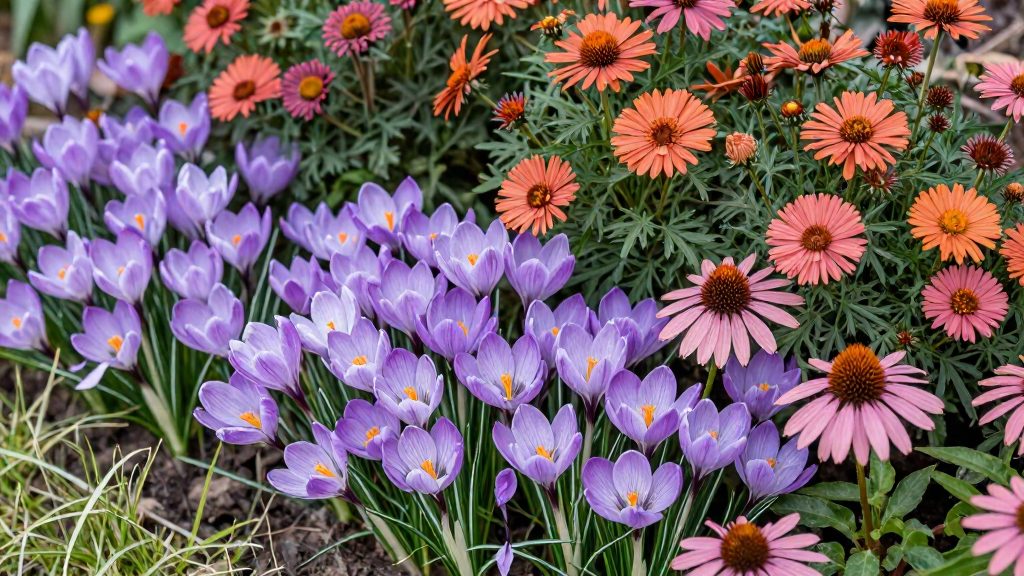
Established native wildflowers need little supplemental water. According to the City of Calgary (2026), these plants are drought tolerant and generally need watering only after 2-3 weeks of hot, dry weather with little or no rain. Watering on a fixed schedule is unnecessary for most established plantings.
The first one to two years are different. During this period, the plants are still building their root systems, so watering should follow each plant’s own instructions rather than the drought-trigger rule above. The City of Calgary (2026) gives no general volume or frequency for this stage, so the plant label or supplier guidance is the reference to follow.
| Stage | Watering guidance |
|---|---|
| First one to two years | Follow each plant’s instructions |
| Established plants | Water only after 2-3 weeks of hot, dry weather with little or no rain |
Several native wildflowers grown in full sun, such as Blanket Flower, Yarrow and Prairie Coneflower, are listed among the species the City of Calgary (2026) recommends for these conditions. The established-plant watering rule applies to all of these species, whether grown in full sun or part shade. During the first one to two years, every species follows its own plant instructions.
A practical way to apply the rule:
- Check the soil before deciding to water. Established plants only need supplemental water after a long dry, hot spell with no rain.
- Water the root zone when you do irrigate, rather than lightly wetting the surface.
- Avoid keeping the soil soaked. Native plants adapted to local conditions tolerate dryness better than waterlogged ground.
Supporting pollinators year-round
Native wildflower beds support wildlife outside the flowering season through habitat features that remain in place after bloom. According to the City of Calgary (2026), supporting wildlife means leaving plant debris over winter, delaying spring cleanup, and providing nesting sites such as hollow stems, bare soil patches and wood stumps.
Leave plant debris standing over winter
Dead stems, seed heads and leaf litter left on the bed through winter provide cover. Cutting the entire bed back in autumn removes that shelter. The City of Calgary (2026) advises leaving plant debris over winter rather than clearing it, which is the simplest way to keep the habitat working between seasons.
Delay spring cleanup
Spring cleanup is when the bed is most likely to be disturbed. Postponing it keeps the winter cover and nesting material in place for longer. The City of Calgary (2026) does not give a calendar date for this step, so timing should follow conditions in your region rather than a fixed day on the calendar.
Hollow stems, bare soil and wood stumps
The City of Calgary (2026) names hollow stems, bare soil patches and wood stumps as nesting sites. Each one needs a different kind of management:
| Habitat feature | How to keep it |
|---|---|
| Hollow stems | Leave stems standing through winter instead of cutting them to the ground in autumn |
| Bare soil patches | Keep small areas of the bed free of plants and mulch |
| Wood stumps | Leave them in place within the bed |
A bed with standing stems, open ground and wood stumps offers more nesting options than a uniformly cleared and mulched bed. These features complement the planting itself, so they should be planned into the bed design from the start.
Where can you buy native prairie plants?
Native prairie plants are sold mainly by specialist native plant nurseries and by seed suppliers that focus on regional species. General garden centres often stock ornamental cultivars rather than wild species, so look for sellers who list each species by name and state where their stock came from. The City of Calgary (2026) names native wildflowers such as Showy Milkweed, Purple Prairie Clover, Blanket Flower, Prairie Coneflower, Blue Flax and Smooth Aster, which gives you a set of names to search for when comparing suppliers.
Confirming local provenance and species names
Before buying, check the following:
- Botanical name and common name: ask for both, and confirm they match the species you intend to plant.
- Provenance: ask where the seed was collected or where the plants were grown. A stated regional origin is a useful signal.
- Specific listings: avoid products sold only as a generic “wildflower mix” without a species list.
Seed or container-grown plants
The official sources consulted do not specify how seed and container-grown plants compare in cost, establishment speed or success rate, so the choice depends on your site and how much planting time you have.
For seed, keep the supplier’s label with the packet so you can confirm which species you sowed. For container-grown plants, inspect the stock on arrival and check that the label matches the species you ordered.
Frequently asked questions
Which native wildflowers work best in a sunny prairie bed?
The City of Calgary (2026) lists eleven species for unshaded sites, among them Showy Milkweed, Blanket Flower, Prairie Coneflower and Annual Sunflower. Choose from the full-sun list only if the bed receives direct light, since the City recommends separate species for part shade and full shade.
How often do established native wildflowers need watering?
According to the City of Calgary (2026), established plants are drought tolerant and may need water only after 2 to 3 weeks of hot, dry weather with little or no rain. During the first year or two, follow the care instructions for each individual plant.
How can a prairie garden support local wildlife?
The City of Calgary (2026) recommends mixing plant heights, flower shapes, colours and bloom times so that something is flowering across the season. It also advises leaving plant debris over winter, delaying spring cleanup, and providing nesting sites such as hollow stems, patches of bare soil and wood stumps.