Lupines can be sown in early spring or in fall, and according to the Old Farmer’s Almanac, fall sowing is often preferred for mid-spring blooms. The official sources consulted do not give dates for Canadian regions, so timing should follow local conditions, especially the average last frost date, rather than a fixed calendar date. Fall sowing outdoors is the simplest option because natural winter conditions meet the seeds’ needs. Spring sowing works too, but the seeds must first be refrigerated for several weeks.
When to sow lupines: timing by sowing method
Canada’s climate varies widely from region to region, so the sowing window differs by location. The sources consulted give no Canadian-specific dates, so use the timing below as a method and adjust it to your local last frost date.
| Sowing method | Timing | Key requirement |
|---|---|---|
| Direct sowing outdoors | Fall or winter | Cold, moist conditions break dormancy naturally (Epic Gardening) |
| Direct sowing outdoors | Early spring | Refrigerate seeds for several weeks first (Epic Gardening) |
| Indoor start | 6 to 8 weeks before the average last frost | Germination is sporadic over 2 to 4 weeks or more; transplant at about 4 to 6 weeks old (Epic Gardening; Old Farmer’s Almanac) |
Direct sowing in the permanent spot is preferred because lupine taproots are sensitive to disturbance. If you start seeds indoors, use biodegradable pots or soil blocks, transplant before the taproot becomes long, and harden the seedlings off before planting them out.
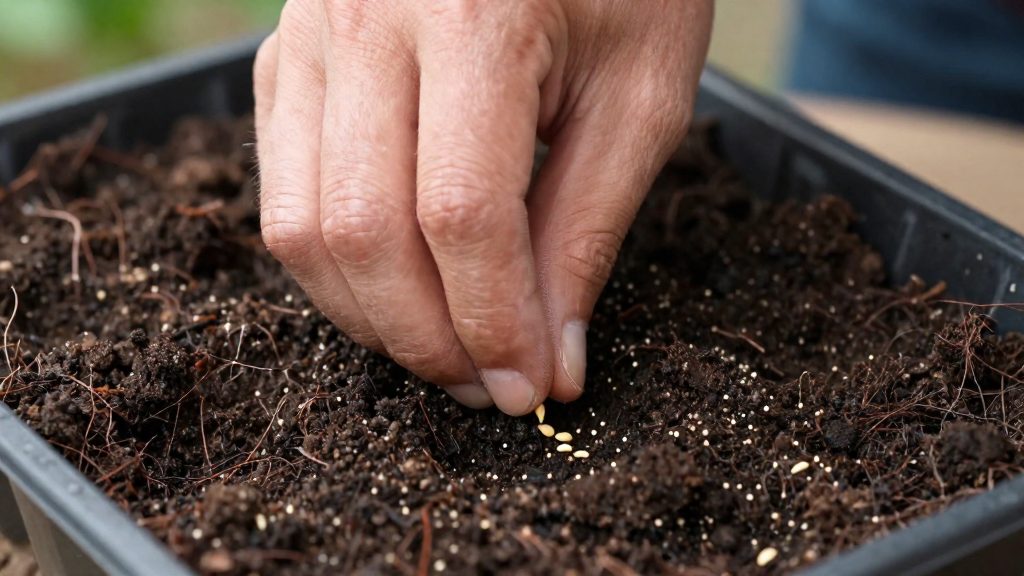
Should you scarify or soak lupine seeds?
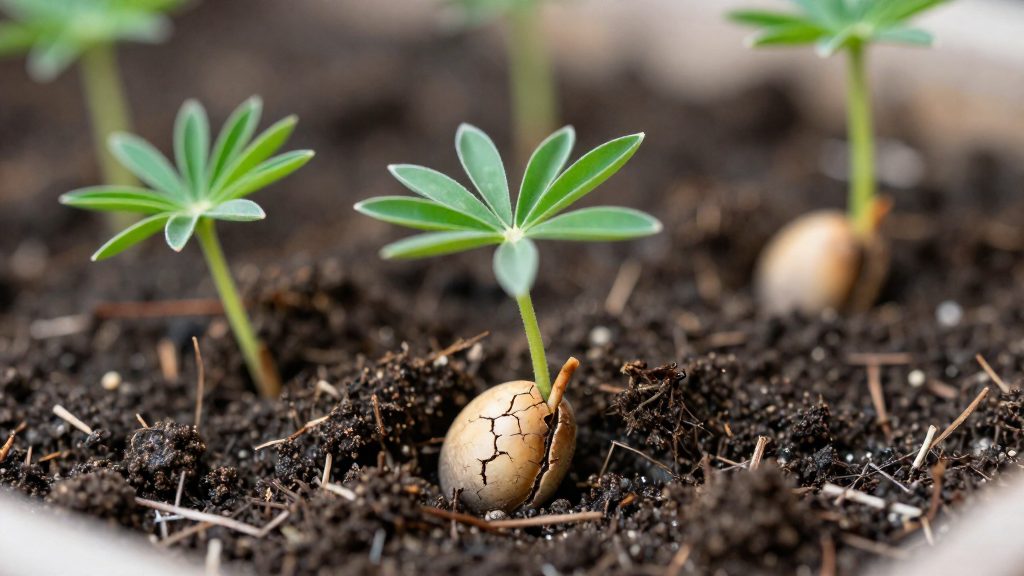
Lupine seeds have a hard seed coat that limits water uptake. The University of Washington Botanic Gardens (Plant Answers) recommends nicking or piercing the coat, a process called scarification, so moisture can reach the seed, then soaking the seeds afterward. Epic Gardening notes that direct-sown seeds do not need scarifying, because seasonal exposure does that work. Scarification and soaking are therefore most relevant when you start seeds indoors or handle them before sowing in the ground.
Scarification methods
| Method | How to do it | Soaking |
|---|---|---|
| Nick the coat | Cut a small notch with a sharp blade or nail clippers | Soak for a couple of hours, until the seeds look plump |
| Abrade the coat | Rub the seed lightly with medium-grit sandpaper | Soak for a couple of hours, until the seeds look plump |
| Soak only | Skip nicking | Soak for longer; Epic Gardening states this also works, but the consulted sources do not give a duration |
Handle the seeds gently when scarifying. The goal is to break the coat enough for water to enter, not to crush the seed.
Cold, moist conditions
Lupine seeds need cold, moist conditions for several weeks to break dormancy, according to Epic Gardening. Fall or winter sowing outdoors provides this naturally. If you sow in spring, refrigerate the seeds first to supply the cold period.
Practical sequence
- Nick the seed coat or rub it with sandpaper.
- Soak the seeds for a couple of hours until plump.
- If the seeds will be sown in spring, refrigerate them for several weeks in moist conditions.
- Sow at the recommended depth and cover lightly with soil.
Is cold stratification necessary?
Cold stratification is the period of cold, moist conditions that lupine seeds need before they break dormancy. According to Epic Gardening, lupine seeds need several weeks of these conditions. The method you choose depends on when you sow and whether the seeds are going into the soil or into a pot.
Fall or winter direct sowing supplies this period naturally, because the seeds spend the cold season in the ground. When seeds are sown indoors, or at a time when they would not otherwise experience cold, Epic Gardening recommends refrigerating them to provide the same conditions. The sources consulted do not specify an exact temperature or duration for refrigeration beyond “several weeks.”
| Sowing method | How the cold, moist period is met | Scarification |
|---|---|---|
| Fall or winter direct sowing in the permanent spot | Happens naturally in the soil over the cold season | Not needed, since seasonal exposure does this work (Epic Gardening) |
| Refrigeration before sowing | Seeds are held cold and moist for several weeks (Epic Gardening) | Nick and soak the seed coat first |
Sowing timing also affects the result. The Old Farmer’s Almanac lists early spring and fall as sowing windows and notes that fall sowing is often preferred for mid-spring blooms. Because lupine taproots are sensitive to disturbance, Epic Gardening advises direct sowing in the permanent spot where possible. Indoor-started seedlings can be transplanted at about 4 to 6 weeks old, before the taproot gets long.
Direct sowing or starting indoors
Lupine seeds can be sown directly in their permanent spot or started indoors and transplanted later. The choice mainly affects timing and handling. Direct sowing suits most gardens because taproots are sensitive to disturbance, so the seedling does best where it will grow. Indoor starting gives an earlier start but requires care when moving the plant. According to the Old Farmer’s Almanac, lupines are sown in early spring or fall, and fall sowing is often preferred for mid-spring blooms.
Direct sowing
- Sow in the final location, since moving the plant later can damage the taproot.
- Seeds sown in fall or winter go through the cold, moist period they need to break dormancy, which happens naturally outdoors, according to Epic Gardening.
- Cover seeds lightly with soil, about 1/8 inch deep.
- Seeds sown directly do not need scarifying, because seasonal exposure does that work, according to Epic Gardening.
Starting indoors
- Start seeds six to eight weeks before the average last frost.
- Use biodegradable pots or soil blocks, or transplant before the roots grow large.
- Harden seedlings off before planting them out.
- Transplant at about 4 to 6 weeks old, before the taproot gets long, according to the Old Farmer’s Almanac.
- Expect sporadic germination: seeds may sprout within two to four weeks or later, according to Epic Gardening.
| Factor | Direct sowing | Indoor starting |
|---|---|---|
| Timing | Early spring or fall | Six to eight weeks before the average last frost |
| Cold, moist period | Provided naturally by fall or winter sowing | Refrigerate seeds if the period is not provided naturally |
| Transplanting | Not needed | At about 4 to 6 weeks old |
Sowing Depth and Ideal Soil
Lupine seeds are covered lightly with soil, about 1/8 inch (about 3 mm) deep, according to Epic Gardening. Lupines also have a taproot that does not tolerate disturbance, so the planting location and the method of starting seedlings matter as much as depth. Direct sowing in the permanent spot is the recommended approach. Seeds started indoors need containers that allow transplanting without damaging the root. Lupines also prefer slightly acidic soil, and they do not need fertilizer, according to the Old Farmer’s Almanac.
Sowing Depth
Press the prepared seed into the soil and cover it with about 1/8 inch of soil. Epic Gardening describes this as a light covering, so the seed should not be buried deeply.
Soil Requirements
The Old Farmer’s Almanac states that lupines prefer slightly acidic soil. The same source notes that they do not need fertilizer, so the soil does not need to be enriched at sowing. The official sources consulted do not specify a target pH value.
Taproot Management and Container Choice
Because the taproot is sensitive, direct sowing in the final location is the best option, according to Epic Gardening. For indoor starts:
- Use biodegradable pots or soil blocks so the seedling can be planted with minimal root disturbance.
- Transplant before the roots become large, or harden the seedlings off first.
- The Old Farmer’s Almanac indicates that indoor-started seedlings can be transplanted at about 4 to 6 weeks old, before the taproot gets long.
| Factor | Recommendation | Source |
|---|---|---|
| Sowing depth | Cover lightly, about 1/8 inch | Epic Gardening |
| Soil type | Slightly acidic | Old Farmer’s Almanac |
| Fertilizer | Not needed | Old Farmer’s Almanac |
| Permanent planting | Direct sowing is best | Epic Gardening |
| Indoor containers | Biodegradable pots or soil blocks | Epic Gardening |
| Indoor transplant age | About 4 to 6 weeks old | Old Farmer’s Almanac |
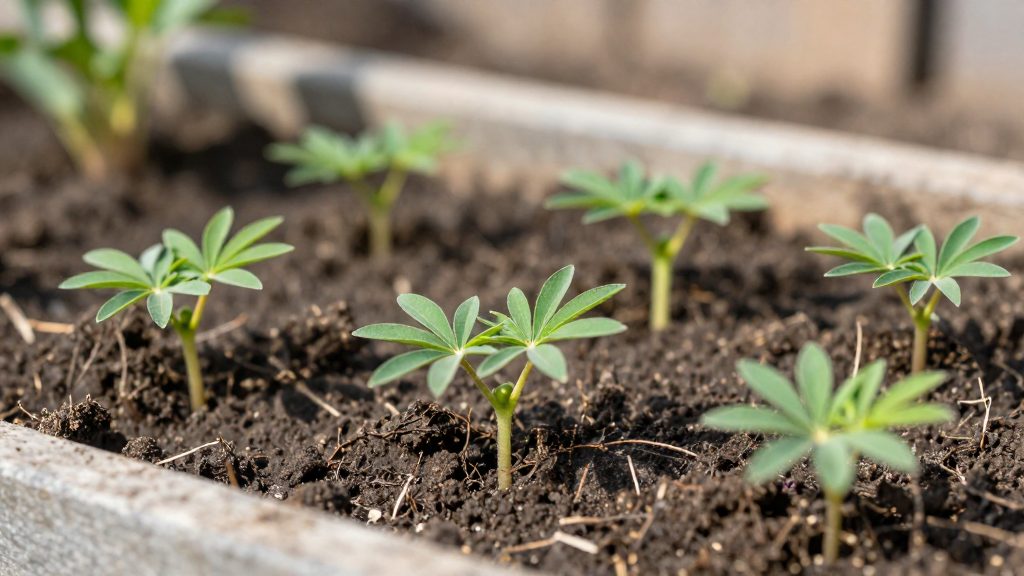
Seedling care and establishment
Lupine seedlings are sensitive to root disturbance, so the way they are started and moved affects how well they establish. Direct sowing in the permanent spot is the preferred method. Indoor starts need a plan that protects the taproot. The steps below cover the period from germination through the first winter, based on guidance from Epic Gardening and the Old Farmer’s Almanac.
Taproot protection is the central concern. Lupines have taproots that react poorly to disturbance. Seedlings started indoors should go into biodegradable pots or soil blocks, which can be planted along with their container so the root is not cut or pulled. Transplant before the root grows long, which the Old Farmer’s Almanac places at about 4 to 6 weeks old. Before moving plants outdoors, harden off the seedlings by exposing them to outdoor light, wind, and temperature gradually.
| Stage | Key detail | Source |
|---|---|---|
| Indoor sowing | 6 to 8 weeks before the average last frost | Epic Gardening |
| Germination | Sporadic, within 2 to 4 weeks or more | Epic Gardening |
| Soil cover at sowing | About 1/8 inch deep | Epic Gardening |
| Transplanting | About 4 to 6 weeks old, before the taproot lengthens | Old Farmer’s Almanac |
| Fertilizer | Not needed | Old Farmer’s Almanac |
Lupines prefer slightly acidic soil, so a site with that pH suits them better than one that needs amendment. The sources consulted do not give specific watering or light guidance for seedlings.
For the first winter, fall sowing is the simplest option. Lupine seeds need several weeks of cold, moist conditions to break dormancy, and fall or winter sowing provides these naturally. Sowing in fall is often preferred for mid-spring blooms, according to the Old Farmer’s Almanac. Seeds that are not sown outdoors in fall can be refrigerated to imitate this cold period.
Flowering in the first year should not be expected in every case. The Old Farmer’s Almanac notes that Russell hybrids can take a year to begin their abundant blooms.
Because lupines are classed as toxic, and many species are poisonous to livestock, wear gloves when handling seedlings and keep young plants away from children, pets, and grazing animals. The official sources consulted do not specify further winter protection measures for young plants.
When do lupines bloom?
Lupine bloom timing depends mainly on when the seed is sown and on the type of plant. Early spring and fall are both recommended sowing windows, and according to the Old Farmer’s Almanac, fall sowing is often preferred for mid-spring blooms. Sowing in the permanent spot is generally best, because lupines have taproots that are sensitive to disturbance. Seeds sown outdoors also receive the cold, moist period they need to break dormancy, which fall or winter sowing provides naturally (Epic Gardening).
Indoor starts follow a different schedule. Epic Gardening recommends starting seeds six to eight weeks before the average last frost, and notes that indoor-sown seeds may germinate sporadically over two to four weeks or more. The Old Farmer’s Almanac advises transplanting seedlings at about four to six weeks old, before the taproot becomes long.
| Sowing method | Timing from the sources | Effect on flowering |
|---|---|---|
| Fall or winter direct sowing | Cold, moist conditions occur naturally | Associated with mid-spring blooms (Old Farmer’s Almanac) |
| Indoor start | Six to eight weeks before average last frost (Epic Gardening) | Seedlings are transplanted at four to six weeks old |
Plant age also affects the first flowering. Russell hybrids can take a year to begin their abundant blooms, so a first-season sowing may not produce the display described on the packet. The sources consulted do not give exact bloom dates by region, so local frost dates and the chosen sowing window should guide expectations.
Toxicity and precautions
Lupines are classed as toxic, and according to the Old Farmer’s Almanac, many species are poisonous to livestock. The sources consulted do not specify which compounds are responsible or how much plant material causes harm, so the precautions below are general handling practices, not dose-based limits. Seeds should be handled with the same care as the mature plant.
Handling seeds
- Wear gloves when nicking, sanding or soaking seeds.
- Wash hands after sowing, and do not touch your face or eat while working with seed.
- Store seeds in their pods inside paper bags, as recommended for collection and storage, and label each bag clearly.
- Keep seed bags and pods out of reach of children and pets.
Livestock and grazing
- Do not let animals graze on lupine plantings.
- Remove spent pods and seed heads before they can be reached by animals.
- Dispose of cut stems and plant debris rather than leaving them in pasture or feed areas.
Frequently asked questions
Do lupine seeds always need to be scarified before sowing?
Not when you sow outdoors in fall or winter, since seasonal exposure softens the seed coat over time, according to Epic Gardening. For indoor starts, nick the coat with a sharp blade, nail clippers, or medium-grit sandpaper, then soak the seeds for a couple of hours until they look plump. The University of Washington Botanic Gardens (Plant Answers) recommends this nicking and soaking sequence.
How deep should lupine seeds be sown?
Cover them lightly with about 3 mm (1/8 inch) of soil, as Epic Gardening specifies. Keep this shallow cover consistent, because the sources consulted give no other depth figure.
Why do indoor lupine seedlings sprout at different times?
Germination is sporadic, and indoor-sown seeds can take two to four weeks or longer to emerge, according to Epic Gardening. Start them six to eight weeks before your average last frost date, and transplant at about 4 to 6 weeks old, before the taproot grows long, as the Old Farmer’s Almanac advises.