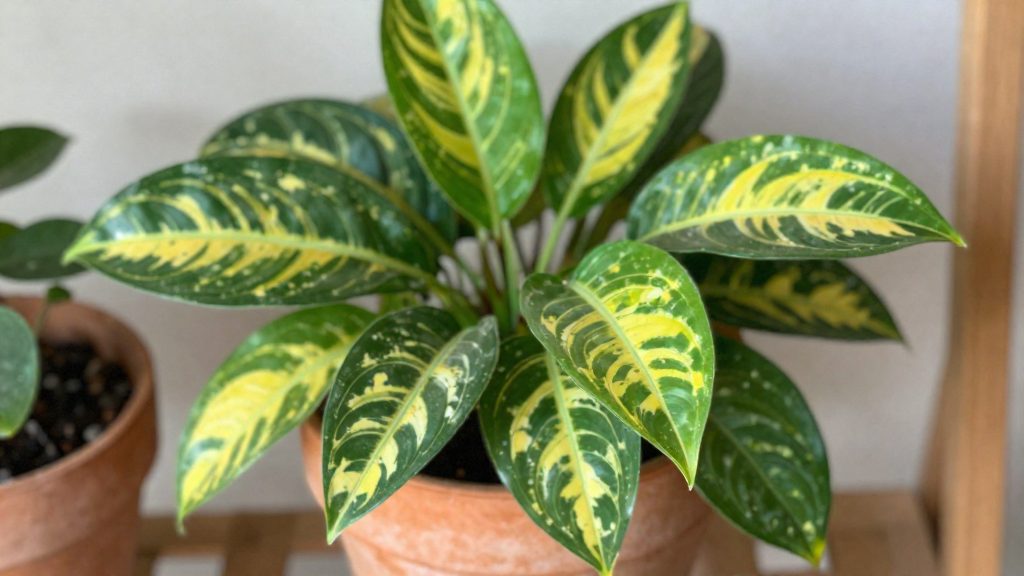
The easiest houseplants for beginners in Canada are pothos and snake plant, according to Toronto plant experts quoted by Global News (2018-03-14). Those experts say most houseplant deaths come from overwatering, so plants that tolerate low light and long dry spells make the safest starting point. Snake plant, pothos, spider plant, ZZ plant, and cactus appear across the consulted sources as low-effort choices, though each has different light and watering needs.
What are the best easy houseplants for beginners in Canada?
Beginner success depends mostly on matching a plant to the light in your home and watering it only when needed. The consulted sources agree on several options that tolerate neglect.
| Plant | What the sources say | Source |
|---|---|---|
| Snake plant | Tolerates low light; water deeply only when the soil is fully dry | Farmers’ Almanac; Global News (2018-03-14) |
| Pothos | Tolerates nearly any light, including office fluorescents | Farmers’ Almanac |
| Spider plant | Prefers bright indirect light | Farmers’ Almanac |
| ZZ plant | Survives long periods of neglect and needs little water | The Georgia Straight (2018-02-14) |
| Cactus | Needs about one watering a month in winter; likes direct sun, such as a south window | Farmers’ Almanac |
| Peace lily | Suits low light | The Georgia Straight (2018-02-14) |
Snake plant
Snake plant is the most cited beginner choice in the sources. Farmers’ Almanac advises watering it about every 2 to 3 weeks in most homes. Global News (2018-03-14) quotes a Toronto plant specialist who says the interval can range from every two to four weeks, depending on indoor air conditions. The plant is mildly toxic to cats and dogs if chewed in quantity.
Pothos
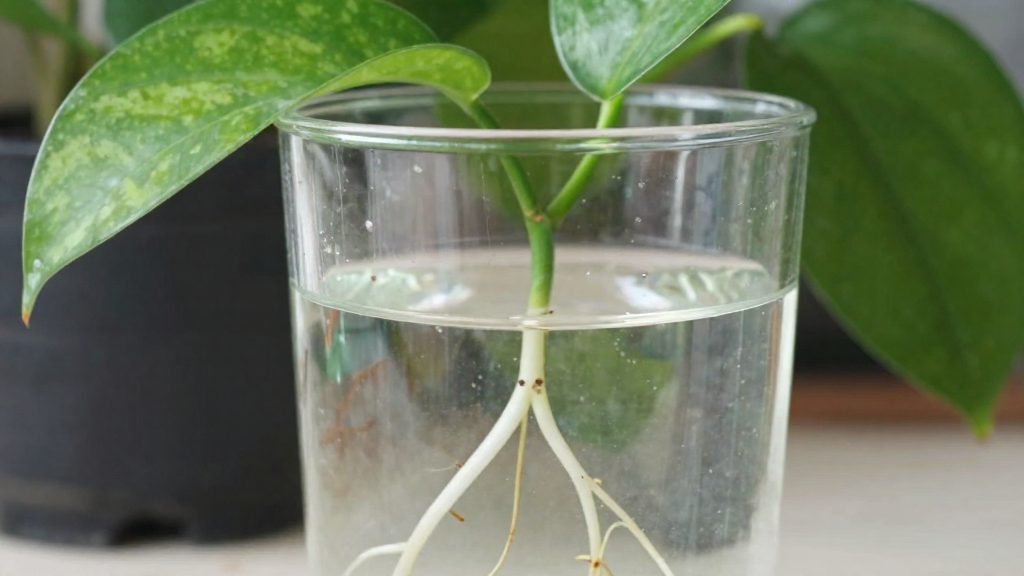
Pothos handles a wide range of lighting, including office fluorescents, which makes it useful in offices and dim rooms. Farmers’ Almanac notes that it is toxic to cats and dogs, so placement matters in homes with pets.
ZZ plant, peace lily, and ponytail palm
ZZ plant tolerates long periods of neglect, according to The Georgia Straight (2018-02-14). Peace lily suits low light, per the same source. It is generally listed as toxic to cats and dogs, so check the ASPCA listing before placing it in a home with pets. Global News (2018-03-14) describes ponytail palm as low maintenance because it stores water in its trunk.
Watering method
Farmers’ Almanac gives a simple test for beginners: push a finger into the top inch of soil. If it is dry, water thoroughly. If it is damp, wait. This check works better than a fixed calendar because light, temperature, and pot size all change how fast soil dries.
Matching plants to window direction
Global News (2018-03-14) recommends checking which way your windows face before buying a plant. South-facing windows give strong light, and north-facing windows give filtered light. Match the plant to the exposure rather than the other way around.
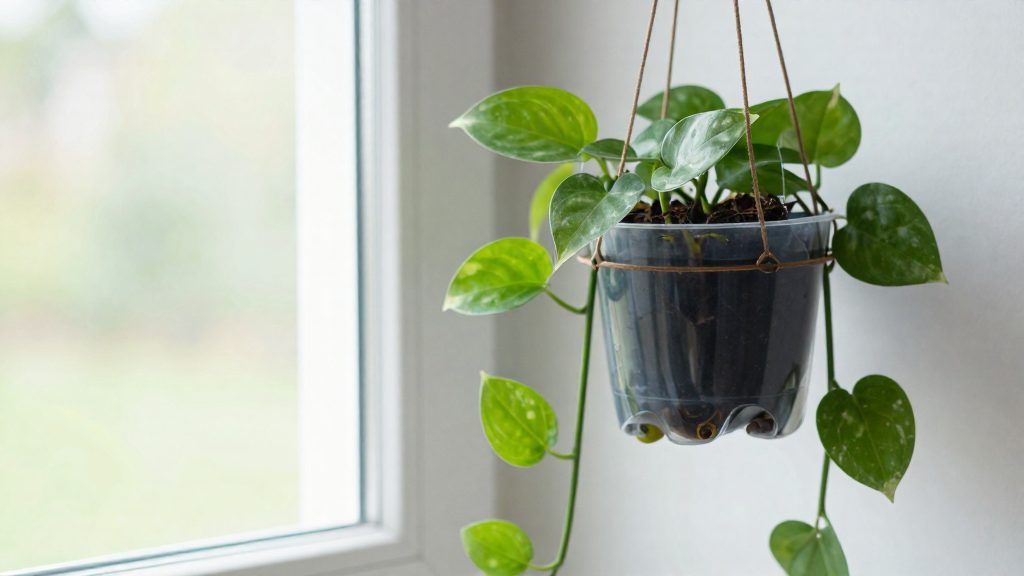
Pothos and Other Tolerant Plants: Light, Watering and Pet Safety
Pothos is one of the most forgiving houseplants for beginners. According to Farmers’ Almanac, it tolerates nearly any light, including office fluorescent lighting. Toronto plant experts cited by Global News (2018) recommend pothos and snake plant for beginners, and they report that overwatering causes most houseplant deaths. The sources consulted here do not give specific care figures for philodendron, so the guidance below covers pothos and other tolerant species.
Light and watering basics
Light is the first factor to check. Global News (2018) advises identifying the direction your windows face before buying a plant: south-facing windows provide strong light, while north-facing windows provide filtered light. Pothos handles a wide range of light, so it suits rooms that receive little direct sun. Snake plant tolerates low light and dry conditions, and ZZ plant survives long periods of neglect, according to The Georgia Straight (2018).
For watering, Farmers’ Almanac recommends a simple test: touch the top inch of soil. If the soil is dry, water thoroughly. If it is damp, wait. This method works better than a fixed calendar because indoor conditions vary.
Comparison of tolerant species
| Plant | Light tolerance | Watering guidance | Toxicity to cats and dogs |
|---|---|---|---|
| Pothos | Nearly any light, including office fluorescents (Farmers’ Almanac) | Follow the top-inch test | Toxic (Farmers’ Almanac) |
| Snake plant | Low light (Farmers’ Almanac) | Every 2 to 3 weeks in most homes (Farmers’ Almanac); every 2 to 4 weeks depending on indoor air conditions (Global News, 2018) | Mildly toxic if chewed in quantity (Farmers’ Almanac) |
| Spider plant | Bright indirect light (Farmers’ Almanac) | Not specified in the sources consulted | Non-toxic per the ASPCA (Farmers’ Almanac) |
| ZZ plant | Survives long periods of neglect (The Georgia Straight, 2018) | Needs little water (The Georgia Straight, 2018) | Not specified in the sources consulted |
Practical steps for beginners
- Choose a spot based on window orientation before buying.
- Check soil moisture with a finger before every watering.
- Water thoroughly when the soil is dry, then let excess water drain.
- Avoid a fixed schedule; adjust to indoor humidity and temperature.
Snake plant and ZZ plant: for dark rooms
Snake plant and peace lily are the options in this group that the sources link to low light, and ZZ plant is described as very tolerant of neglect. The Farmers’ Almanac states that snake plant tolerates low light, and The Georgia Straight (2018-02-14) describes it as tolerant of dry, low-light conditions. The same article reports that ZZ plant survives long periods of neglect and needs little water. The consulted sources do not specify a light range or watering interval for ZZ plant. Peace lily is another option that suits low light, according to The Georgia Straight (2018-02-14).
Watering causes more problems than light does. Global News (2018-03-14) reports that Toronto plant experts say most houseplant deaths come from overwatering. The sources differ slightly on how often to water snake plant:
| Source | Watering guidance for snake plant |
|---|---|
| Farmers’ Almanac | Water deeply only when the soil is fully dry, about every 2 to 3 weeks in most homes |
| Global News (2018-03-14) | Every two to four weeks, depending on indoor air conditions |
For beginners, the Farmers’ Almanac suggests a simple check: push a finger into the top inch of soil. If the soil is dry, water thoroughly. If it is damp, wait.
Window direction affects light levels. Before choosing a spot, check which way the window faces. South-facing windows give strong light, and north-facing windows give filtered light (Global News, 2018-03-14). A north-facing window is generally the better fit for a plant meant to tolerate dim conditions.
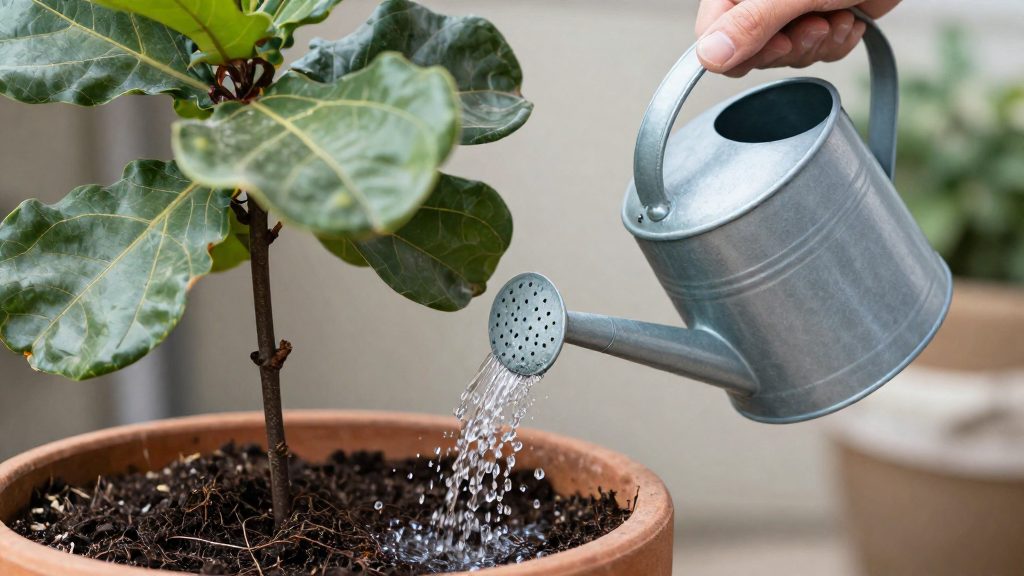
How to Water Without Drowning Your Plants?
Overwatering is the most common cause of houseplant loss, according to Toronto plant experts cited by Global News (2018-03-14). Watering works best when it follows the plant’s need for moisture rather than a fixed calendar, and the soil itself is the most reliable indicator. Frequency varies with the species, the light, and the air inside the home, so the same schedule can suit one plant and drown another.
The finger test is the simplest method for beginners. Push a finger into the top inch of soil. If it feels dry, water thoroughly, letting the water drain freely out of the pot. If it feels damp, wait and check again later. This rule replaces guesswork about dates.
Watering needs also differ by plant type:
| Plant | Watering frequency | Source |
|---|---|---|
| Snake plant | Water deeply only when the soil is fully dry, about every 2 to 3 weeks in most homes | Farmers’ Almanac |
| Snake plant | Every 2 to 4 weeks, depending on indoor air conditions | Global News (2018-03-14) |
| Cactus | About once a month in winter | Farmers’ Almanac |
Light conditions also affect how quickly soil dries. Check which way your windows face before choosing a plant. South-facing windows give strong light and north-facing windows give filtered light, according to Global News (2018-03-14). Stronger light generally means the soil may need checking more often. A plant in a low-light corner will need water less often than the same plant on a sunny sill.
Plants that store water also tolerate longer gaps between waterings. Global News (2018-03-14) describes the ponytail palm as low maintenance because it stores water in its trunk. ZZ plants survive long periods of neglect and need little water, according to The Georgia Straight (2018-02-14).
Which Light Level Suits Each Window Orientation?
Window orientation is the most practical way to estimate how much light a houseplant will receive indoors. According to Global News (2018), south-facing windows give strong light, while north-facing windows give filtered light. Before buying a plant, check which direction each window faces, then choose a species that matches that light. Plants that tolerate low light suit spots away from strong sun, while cacti need direct sun, such as a south window, according to the Farmers’ Almanac.
| Window orientation | Light described in sources | Plants named for this light |
|---|---|---|
| South-facing | Strong light | Cactus (needs direct sun) |
| North-facing | Filtered light | Plants the sources link to low light (snake plant, peace lily) may suit this light; the sources do not name an orientation for any plant, and give no light range for ZZ plant |
Some plants are less sensitive to exact placement. The Farmers’ Almanac states that pothos tolerates nearly any light, including office fluorescents. The spider plant prefers bright indirect light, so a spot near a window without direct sun on its leaves suits it, though the sources do not link this preference to a specific window direction.
For beginners, the sources point to a simple approach:
- Start with a low-light species, such as the snake plant or ZZ plant, in a north-facing or filtered-light spot.
- Place cacti in the brightest, sunniest location, such as a south-facing window.
- Use pothos for areas where the window direction is unclear, since it tolerates a wide range of light.
The sources consulted do not specify light levels for east- or west-facing windows, so this section does not assign them a category.
Indoor plants and pets: what to check?
Before buying a houseplant, check whether it is toxic to cats and dogs. Farmers’ Almanac reports that pothos is toxic to both animals, and that snake plant is mildly toxic to them if chewed in quantity. Spider plant is described as non-toxic, citing the ASPCA. Toxicity varies by species, so look up each plant before placing it in a room where pets roam.
| Plant | Reported status for cats and dogs | Source |
|---|---|---|
| Pothos | Toxic | Farmers’ Almanac |
| Snake plant | Mildly toxic if chewed in quantity | Farmers’ Almanac |
| Spider plant | Described as non-toxic | Farmers’ Almanac, citing the ASPCA |
Practical checks before buying
- Read the plant’s name on the label and confirm it matches the species you intend to buy, since common names can refer to different plants.
- Check the species against the ASPCA’s listings, the source Farmers’ Almanac cites for spider plant.
- Place toxic species out of reach, on high shelves or in rooms pets cannot enter.
- Watch for chewing. The snake plant’s mild toxicity applies to chewing in quantity, so a single nibble differs from repeated chewing. If a pet chews any houseplant, contact a veterinarian.
Placement and pets
Pets tend to investigate trailing foliage. Pothos, which the sources describe as tolerant of nearly any light, can be hung or placed high so that stems stay out of reach. Keeping the plant’s position fixed also reduces the chance of a cat or dog discovering it while exploring a room.
Caring for Your Plants Through the Canadian Winter
Winter is when indoor light and watering need the most attention for houseplants in Canada. According to Global News (2018), Toronto plant experts say most houseplant deaths come from overwatering. The winter routine is therefore to water less, place each plant according to the light its window provides, and choose species that tolerate low light.
Match each plant to its window
Check which direction each window faces before placing or buying a plant. According to Global News (2018), south-facing windows give strong light and north-facing windows give filtered light. Cacti need direct sun, so they belong in a south window. Snake plants, ZZ plants and peace lilies suit the dimmer positions.
Pothos is the most adaptable option. According to Farmers’ Almanac, it tolerates nearly any light, including office fluorescents.
Water by checking the soil
Use the top-inch test: touch the top inch of soil. If it is dry, water thoroughly. If it is damp, wait. Farmers’ Almanac gives this as the simple beginner rule. It works better than a fixed calendar because indoor conditions change how quickly soil dries.
| Plant | Light tolerance | Watering guidance |
|---|---|---|
| Snake plant | Tolerates low light | Water deeply only when soil is fully dry, about every 2 to 3 weeks in most homes (Farmers’ Almanac). Global News (2018) cites every two to four weeks, depending on indoor air. |
| Cactus | Needs direct sun, such as a south window | About once a month in winter (Farmers’ Almanac) |
| ZZ plant | Suits low light | Needs little water and survives long periods of neglect (The Georgia Straight, 2018) |
Cacti in winter
Cacti need very little water during the cold months, about once a month in winter according to Farmers’ Almanac. Keep them in the sunniest window you have, since they need direct light.
Pet safety
Pothos is toxic to cats and dogs. Snake plant is mildly toxic if chewed in quantity. Spider plant is described as non-toxic by the ASPCA, as reported by Farmers’ Almanac.
Frequently asked questions
Which houseplants are easiest to keep alive if I have never grown one?
Toronto plant experts quoted by Global News (2018-03-14) recommend pothos and snake plant for beginners because both cope with low light and long dry spells. The same experts link most houseplant deaths to overwatering, so a plant that tolerates dry soil is a forgiving first choice.
How often should I water a snake plant?
Farmers’ Almanac suggests watering a snake plant about every 2 to 3 weeks in most homes, once the soil is completely dry. Global News (2018-03-14) gives a wider range of every two to four weeks, depending on indoor air conditions. To check, use the finger test: press a finger into the top inch of soil, water thoroughly if it is dry, and wait if it is damp.
Are these plants safe if I have cats or dogs?
Farmers’ Almanac lists pothos as toxic to cats and dogs and snake plant as mildly toxic if chewed in quantity. It describes spider plant as non-toxic, citing the ASPCA. The consulted sources do not cover pet toxicity for peace lily or ZZ plant, so check their ASPCA listings before bringing either into a home with pets.