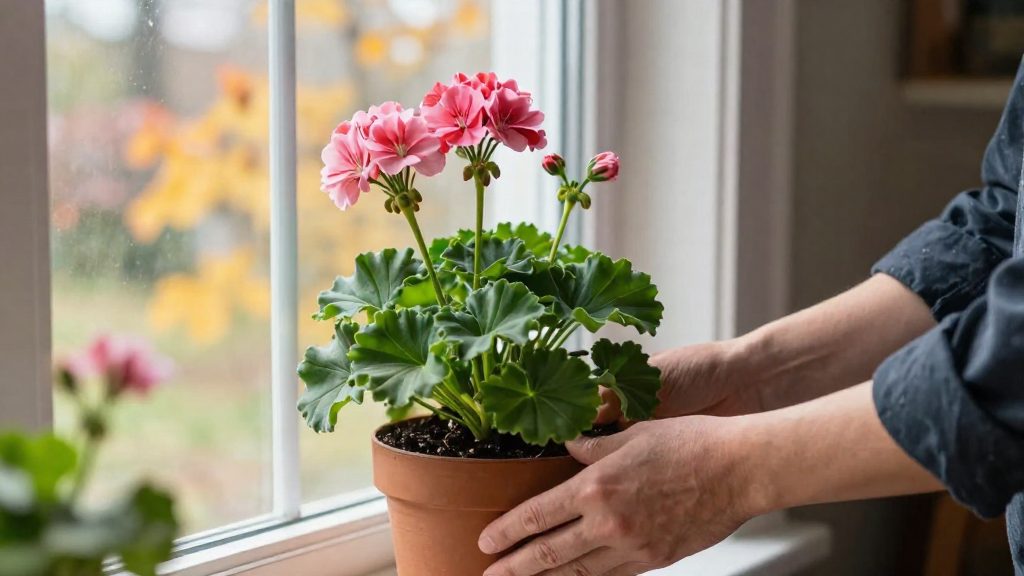
Bring potted plants indoors as late as possible in autumn, and move them back outside as early as conditions allow in spring. According to Scotts Miracle-Gro Canada (manufacturer), the autumn timing depends on your region’s average first frost date, and sensitive plants should start moving once night temperatures approach 10 °C. Use these two signals together rather than the calendar alone, and allow time for the move, because the plants need to adjust before they go indoors.
When to bring potted plants indoors in Canada
Autumn timing signals
| Signal | Action | Source |
|---|---|---|
| Your region’s average first frost date | Bring potted plants in by this date | Scotts Miracle-Gro Canada (manufacturer) |
| Night temperatures approaching 10 °C | Start moving sensitive plants indoors | Scotts Miracle-Gro Canada (manufacturer) |
| Early September | Stop fertilizing hardy potted perennials and shrubs | Global News (Associated Press, Dean Fosdick), 2014-10-07 |
| Late September to early October | Reduce watering of hardy potted perennials and shrubs | Global News (Associated Press, Dean Fosdick), 2014-10-07 |
Hardy potted perennials and shrubs can overwinter in a cool spot above freezing, such as an unheated garage or greenhouse, so they do not always need to move into the house at the same time as tropical or sensitive plants.
Preparing plants before the move
According to GARDENA Canada (manufacturer), each plant should be cleaned before it comes inside. Remove dead leaves and dead wood, and treat pests before bringing the plant in.
Acclimation before the final move
Scotts Miracle-Gro Canada (manufacturer) recommends allowing about a week to acclimate plants by gradually reducing light before they are fully indoors. Avoid moving a plant straight from full outdoor light to a dim room.
Watching for pests once indoors
GARDENA Canada (manufacturer) notes that scale insects can appear in winter quarters from the end of January. Spider mites, mealybugs and aphids can appear from February. Keep plants apart from other houseplants for several weeks after they come in, as recommended in the Scotts Miracle-Gro Canada protocol.
Returning plants outdoors in spring
Move plants back outside as early as conditions allow, according to GARDENA Canada (manufacturer). The official sources consulted do not specify a single spring date for all regions, so base the timing on local conditions.
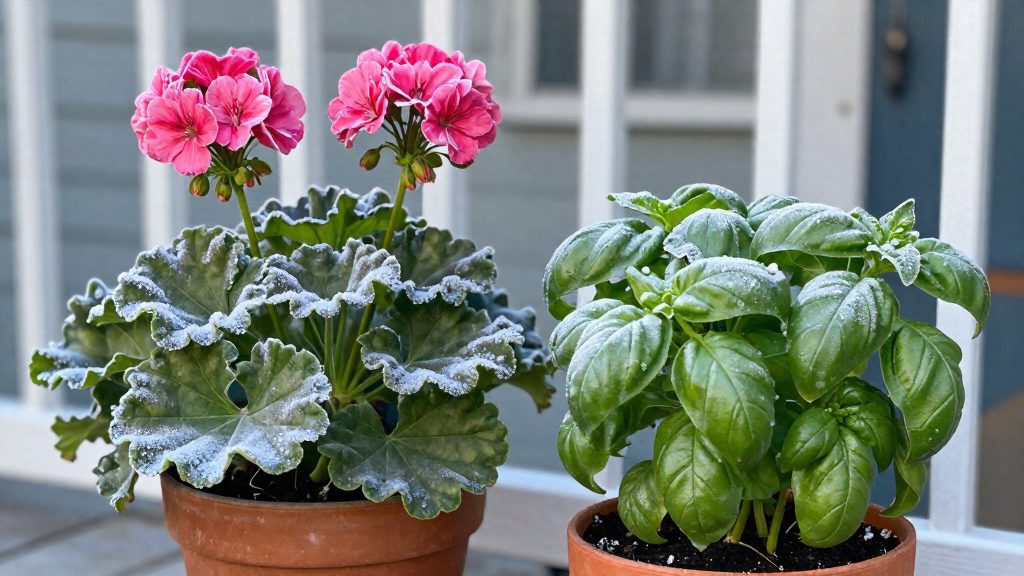
How to Prepare Plants Before Bringing Them Indoors
Preparation covers three things: timing the move, cleaning the plant, and treating pests before the plant enters the house. GARDENA Canada (manufacturer) advises bringing potted plants indoors as late as possible and returning them outside as early as conditions allow. Scotts Miracle-Gro Canada (manufacturer) links the timing to your location: bring plants in by your regional first frost date, and begin moving sensitive plants once night temperatures approach 10 °C.
Timing the move
- Base the date on your region’s average first frost, not on the calendar.
- Move sensitive plants first, once nights approach 10 °C.
- Allow about a week for acclimation. Reduce light gradually during this period so the plant adjusts to lower light levels.
Cleaning the plant
Before the move, clean the plant and remove dead leaves and dead wood. GARDENA Canada (manufacturer) lists this as a first step, ahead of pest treatment.
Pest treatment protocol
Scotts Miracle-Gro Canada (manufacturer) describes the following sequence:
| Step | Action | Timing |
|---|---|---|
| 1 | Inspect the plant for pests | 3 days before moving |
| 2 | Rinse the plant | Before spraying |
| 3 | Spray with insecticidal soap | After rinsing |
| 4 | Repeat the soap application | 3 days after step 3 |
| 5 | Bring the plant indoors | After the second application |
After moving, keep the plant apart from other houseplants for several weeks.
GARDENA Canada (manufacturer) notes that pests appear at different points in winter quarters. Scale insects can appear from the end of January, while spider mites, mealybugs and aphids can appear from February. Inspecting and treating plants before the move helps catch pests early.
Adjusting care before the move
In that source, watering is reduced in late September and early October, and fertilizing stops in early September.
Acclimation, Light and Winter Care for Potted Plants
Acclimation means moving a potted plant from outdoor light and temperature to indoor conditions in stages. According to Scotts Miracle-Gro Canada, sensitive plants should be brought in by your region’s average first frost date, with the move starting once night temperatures approach 10 °C. Allow about a week for the plant to adjust by gradually reducing its light.
Prepare the plant before moving it
- Bring plants in as late as possible in autumn, and move them back outside as early as conditions allow (GARDENA Canada).
- Clean each plant and remove dead leaves and dead wood.
- Treat pests before the plant enters the house.
Pest protocol before entry
- Inspect the plant three days before moving it.
- Rinse it thoroughly.
- Spray it with insecticidal soap.
- Repeat the soap application after three days.
- Bring the plant indoors and keep it apart from other houseplants for several weeks (Scotts Miracle-Gro Canada).
GARDENA Canada notes that scale insects can appear in winter quarters from the end of January, and that spider mites, mealybugs and aphids can appear from February. Check plants at these times, even if they were treated before moving.
Light reduction
Reduce light gradually over about a week rather than moving the plant directly from full outdoor sun into a dim room. Light needs also depend on the plant type. Deciduous plants can overwinter in a dark place, but evergreens need light, and the warmer the location, the more light they need (GARDENA Canada).
Winter temperatures by plant type
| Plant type | Winter temperature (GARDENA Canada) |
|---|---|
| Mediterranean plants | 10–12 °C |
| Tropical plants | 20–22 °C |
| Agapanthus | 5–10 °C |
| Citronella | 10–15 °C |
Watering, feeding and leaf drop
- Water less indoors, and only when the soil is dry at 1 inch (about 2.5 cm) depth (Scotts Miracle-Gro Canada).
- Pause fertilizing over winter.
- Expect some leaf drop, which is normal.
- Repot in early spring.
Hardy perennials and shrubs
According to Global News (Associated Press, Dean Fosdick, 2014-10-07), watering should be reduced in late September and early October, and fertilizing should stop in early September.
Winter temperatures by plant type
Winter temperature requirements differ by plant type, so one indoor setting does not suit every potted plant. According to GARDENA Canada (manufacturer), Mediterranean plants need 10–12 °C, tropical plants need 20–22 °C, agapanthus does best at 5–10 °C, and citronella needs 10–15 °C. Sorting plants into these groups before they come inside makes it possible to assign each one to a room or spot that matches its range.
| Plant type | Winter temperature (GARDENA Canada) |
|---|---|
| Mediterranean plants | 10–12 °C |
| Tropical plants | 20–22 °C |
| Citronella | 10–15 °C |
| Agapanthus | 5–10 °C |
Hardy potted perennials and shrubs have a different requirement. According to Global News (Associated Press, 2014-10-07), they can overwinter in a cool spot that stays above freezing, such as an unheated garage or a greenhouse.
Light needs also depend on the plant’s growth habit. GARDENA Canada (manufacturer) states that deciduous plants can overwinter in a dark place, while evergreens need light. The warmer the location, the more light they need.
Timing the move matters as well. Scotts Miracle-Gro Canada (manufacturer) advises starting to move sensitive plants indoors once night temperatures approach 10 °C. Allow about a week for acclimation by gradually reducing the light the plants receive before they settle into their winter location.
Watering, Light and Fertilizing in Winter
Indoors, overwintered potted plants need less water and no fertilizer. Water only when the soil is dry at about 1 inch (2.5 cm) depth, and pause fertilizing for the winter. Light is the other main variable: deciduous plants can rest in a dark place, while evergreens need light, and the warmer the room, the more light they require. Some leaf drop is normal, according to Scotts Miracle-Gro Canada.
Watering
Check the soil before each watering rather than following a set calendar. Push a finger about 1 inch into the potting mix. Water only if it is dry at that depth. Plants indoors take up water more slowly than they do in summer, so frequent watering increases the risk of waterlogged roots.
Light
Light needs depend on the plant type:
- Deciduous plants can overwinter in a dark place, according to GARDENA Canada.
- Evergreens need light. GARDENA Canada notes that the warmer the location, the more light they need.
Fertilizing and Seasonal Timing
Stop fertilizing well before the cold season. For hardy potted perennials and shrubs, Global News (Associated Press, 2014) advises stopping in early September and reducing watering in late September and early October. Scotts Miracle-Gro Canada recommends pausing fertilizing over winter and repotting in early spring.
| Period | Action | Source |
|---|---|---|
| Early September | Stop fertilizing hardy perennials and shrubs | Global News (Associated Press, 2014) |
| Late September to early October | Reduce watering | Global News (Associated Press, 2014) |
| Winter | Water only when the top inch of soil is dry; pause fertilizing | Scotts Miracle-Gro Canada |
| Early spring | Repot | Scotts Miracle-Gro Canada |
Pests to Watch For
Pests often hitch a ride indoors on plants that spent the growing season outside, and they can build up quickly in a heated room. According to GARDENA Canada (manufacturer), scale insects can appear in winter quarters from the end of January, while spider mites, mealybugs and aphids can appear from February. The treatment routine works best when it is done before the plant comes inside.
| Pest | When it can appear indoors (GARDENA Canada) |
|---|---|
| Scale insects | From the end of January |
| Spider mites | From February |
| Mealybugs | From February |
| Aphids | From February |
The pre-move inspection is the main step. Scotts Miracle-Gro Canada (manufacturer) recommends inspecting each plant 3 days before moving it, rinsing it, and spraying it with insecticidal soap. Repeat the soap application after 3 days, then bring the plant indoors. GARDENA Canada adds that plants should be cleaned, with dead leaves and dead wood removed, before they are moved.
During each inspection, check the undersides of leaves, the joints where leaves meet stems, and the stems themselves, since these are areas where small pests are easy to overlook. Remove any dead material you find, because it can hide pests and does not contribute to the plant’s winter health.
After the plant is inside, keep it isolated from other houseplants for several weeks, as recommended by Scotts Miracle-Gro Canada (manufacturer). This gives you time to notice any pests that were missed during treatment before they spread to the rest of your collection.
What to do with empty pots and hardy plants
Empty containers and hardy potted perennials or shrubs need different handling over winter. Empty pots mainly need protection from water damage. Hardy plants need a cool spot above freezing and a gradual reduction in care before the cold arrives. The steps below follow guidance from the sources consulted.
Storing empty pots
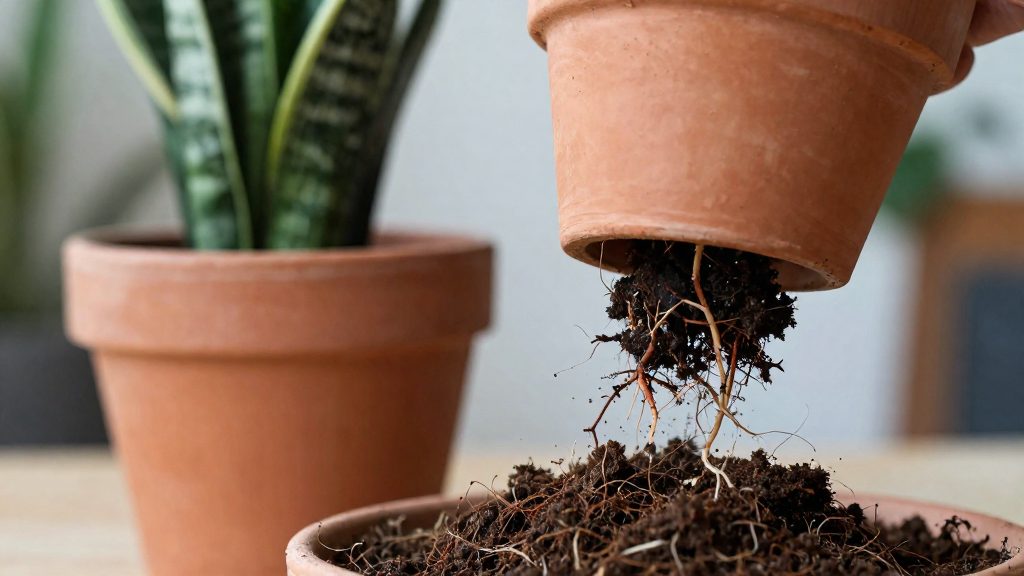
Water that freezes inside a pot expands and can crack it. According to Scotts Miracle-Gro Canada, empty pots should be covered with plastic so water cannot collect and freeze inside them. Clay pots should be stored upside down in a sheltered spot, which keeps rain and melted snow from pooling in the container.
Overwintering hardy perennials and shrubs
This is stated by Global News (Associated Press, Dean Fosdick), 2014-10-07. Before moving them there, reduce their care in stages:
| Task | Timing |
|---|---|
| Stop fertilizing | Early September |
| Reduce watering | Late September to early October |
Reducing watering gradually lets the plant slow its growth before it goes into winter quarters. Keep the plant in its pot while doing this, so the roots stay protected.
Timing the move
The official sources consulted do not specify an exact date for moving hardy plants into winter quarters. Use the timing of your region’s first frost as a reference point, and move plants before temperatures drop below freezing.