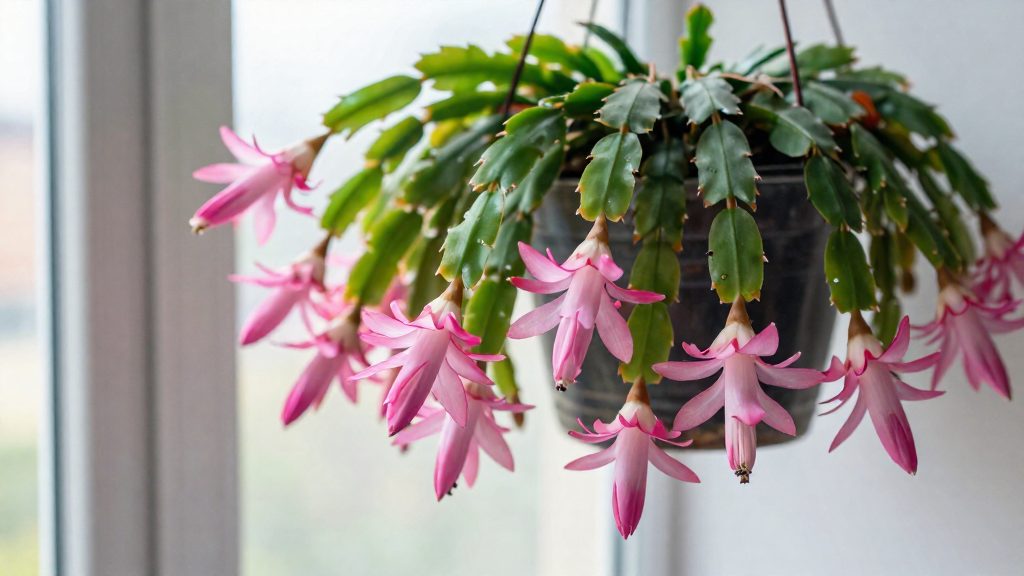
The Christmas cactus (Schlumbergera bridgesii) needs very bright light, including at least two hours of winter sun, according to the New York Botanical Garden (NYBG, 2026). Light also controls flowering. The plant needs long, uninterrupted nights in autumn to form buds, so a bright spot for daytime growth and a dark setting for night-length control both matter.
What light does a Christmas cactus need?
Daytime light is the first requirement. Place the plant in a very bright position, where it receives at least two hours of winter sun. Bright light supports the plant during the months when it is growing and preparing to flower.
Darkness is the second requirement, and it works differently. Flower induction depends on the length and continuity of the dark period, and the required conditions change with temperature:
| Condition | Light and temperature requirement |
|---|---|
| General growth | Very bright light, including at least two hours of winter sun |
| Bud formation in autumn | Nights at 45–55 °F (about 7–13 °C) |
| Flower induction at 55–70 °F (about 13–21 °C) | 13 hours of continuous darkness, for example a black cloth from 6 p.m. to 7 a.m. |
| Flower induction above 70 °F (about 21 °C) | Placement in a completely dark cupboard for 6 to 9 weeks |
The dark period must be continuous. A cloth that is lifted during the night interrupts the treatment and defeats its purpose. Do not move the plant once buds are forming, because they can drop. Cover it in place with the cloth. If the room is above 21 °C (70 °F), place it in the dark closet before buds appear.
When returning the plant to bright light after the dark period, use the same bright spot described above, and keep it away from drafts and large temperature swings, which NYBG (2026) also identifies as harmful to bud formation.
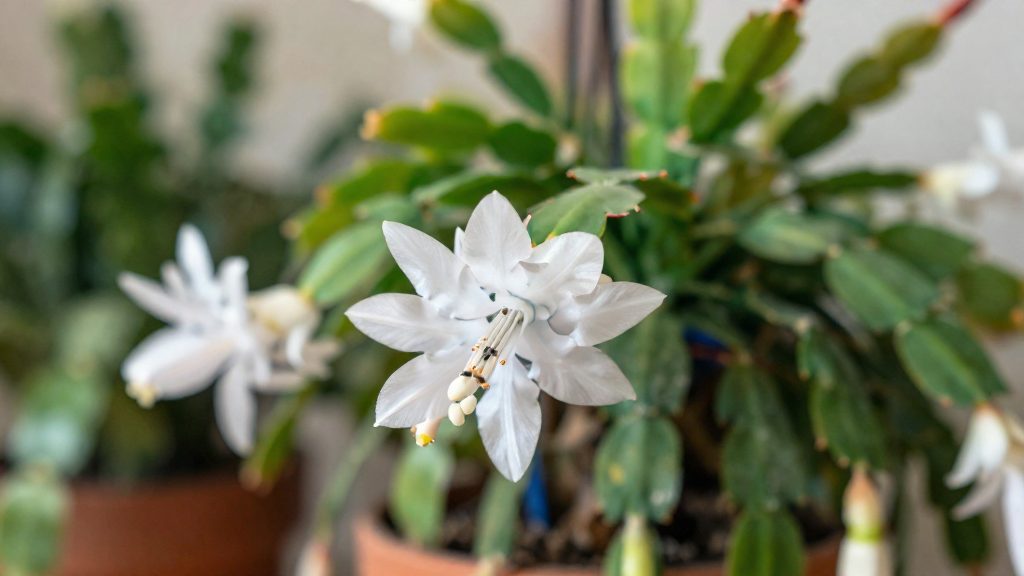
How to Water a Christmas Cactus
Watering a Christmas cactus (Schlumbergera bridgesii) depends on the moisture of the potting mix, not on a fixed calendar. According to the New York Botanical Garden (NYBG, 2026), the method is to water thoroughly once the upper half of the potting mix is completely dry, then empty the saucer after 15 minutes so the plant does not stand in saturated substrate.
Watering Method
- Check the moisture. Push a finger into the upper half of the pot. Water only if this layer is completely dry.
- Water thoroughly. Moisten the full root zone rather than adding small amounts of water to the surface.
- Empty the saucer. After 15 minutes, pour off any water left in the saucer.
- Wait before the next watering. Repeat the moisture check; do not water on a schedule.
Checkpoints
| Condition | Action |
|---|---|
| Upper half of the mix completely dry | Water thoroughly |
| Upper half still moist | Do not water yet |
| Water remaining in the saucer after 15 minutes | Empty the saucer |
Substrate and Drainage
The watering method works best in a porous mix. The NYBG (2026) recommends one part coarse sand or perlite for every three parts standard potting mix. This blend lets excess water drain away from the roots instead of collecting around them.
Watering During Bud Formation
Watering does not replace the other conditions that affect flowering. According to the NYBG (2026), the plant should not be moved during bud formation, because buds can fall off. Drafts, sudden temperature changes, and low humidity should also be avoided during this period.
Choosing the right substrate and pot
A Christmas cactus (Schlumbergera bridgesii) needs a loose, fast-draining medium because its roots should not stay in wet soil. According to the New York Botanical Garden (NYBG, 2026), a suitable mix combines one part coarse sand or perlite with three parts standard potting mix. The goal is to let water move through the root zone so the soil dries from the top down between waterings.
Substrate mix
| Component | Parts | Role in the mix |
|---|---|---|
| Standard potting mix | 3 | Base medium that holds moisture and nutrients |
| Coarse sand or perlite | 1 | Improves drainage and porosity |
Blend the components thoroughly before potting so the drainage material is distributed evenly. Dense garden soil compacts and retains water, which makes it poorly suited to containers.
Pot selection
Choose a pot with drainage holes at the base. Without them, excess water collects at the bottom of the root zone. The pot material matters less than its drainage: whatever the material, excess water must be able to escape. Select a container only slightly larger than the root ball, since a large volume of substrate stays wet for longer.
Watering with drainage in mind
Water thoroughly when the top half of the soil is completely dry, rather than on a fixed schedule. Water the soil, not the stems, and let the excess drain freely.
Temperature and Humidity in Winter Indoor Conditions
The Christmas cactus (Schlumbergera bridgesii) responds to temperature mainly during bud formation, which begins in autumn. The New York Botanical Garden (NYBG, 2026) recommends night temperatures of 7–13 °C (45–55 °F) to set buds. Drafts and large temperature swings during bud formation can cause buds to drop. During autumn bud formation, the plant’s position should keep it within this range at night.
The plant also needs a humid, stable environment during bud set. According to the NYBG (2026), you should avoid drafts and sudden temperature changes, and keep humidity high. In practice, place the plant away from exterior doors, open windows, and heat sources that cycle on and off. Grouping several plants together can raise the local humidity around them.
Light is the other winter factor. The NYBG (2026) notes that the plant needs very bright light, including at least two hours of winter sun. Place the plant in the brightest suitable window, and do not move it once buds appear.
| Stage | Temperature | Conditions | Source |
|---|---|---|---|
| Bud formation (autumn) | 45–55 °F (about 7–13 °C) at night | Stable temperatures, no drafts, high humidity | NYBG (2026) |
| Bloom induction | 55–70 °F (about 13–21 °C) | 13 hours of continuous darkness, for example a dark cloth from 6 p.m. to 7 a.m. | NYBG (2026) |
| Bloom induction, warm room | Above 70 °F (about 21 °C) | Place in a completely dark closet for 6 to 9 weeks | NYBG (2026) |
Watering should follow the same stability logic. Water thoroughly when the top half of the potting mix is completely dry, then empty the saucer after 15 minutes so the roots do not sit in wet mix (NYBG, 2026). Keep the mix from staying saturated, as the NYBG advises.
The NYBG (2026) does not give regional winter temperature data, so adjust these ranges to the conditions in your home. Use a thermometer near the plant to check actual night temperatures rather than relying on the thermostat setting.
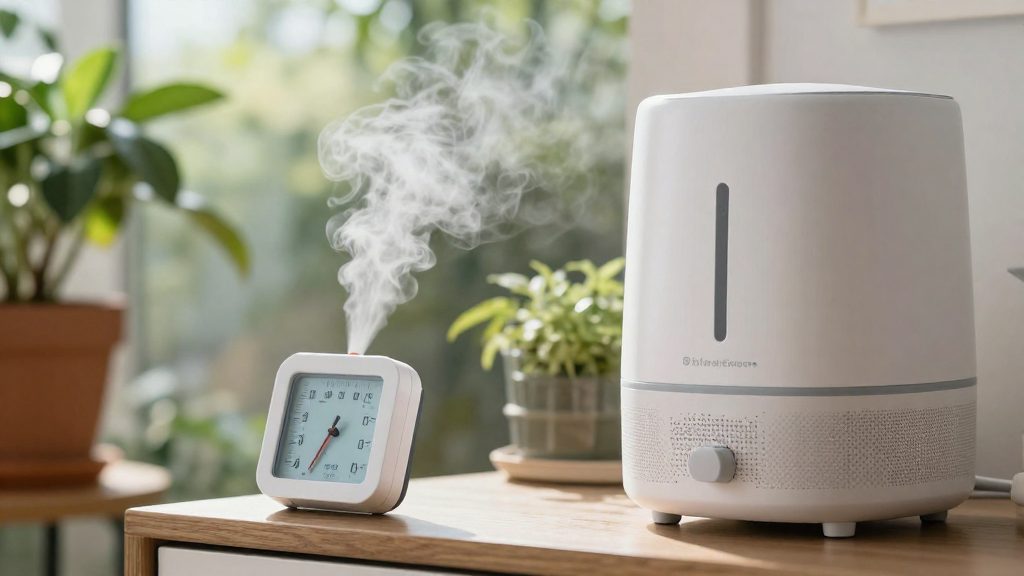
How to Make a Christmas Cactus Bloom
The New York Botanical Garden (2026) describes a Christmas cactus (Schlumbergera bridgesii) as a plant that flowers reliably when it gets very bright light, a cool autumn period, and a fixed dark period. Blooming depends on these conditions being met in sequence. Bud formation happens in autumn at night temperatures of 45–55 °F (about 7–13 °C), so the plant needs a stable spot during that stage.
Light and Placement
Provide very bright light, including at least two hours of winter sun, according to the New York Botanical Garden (2026). Place the plant near a bright window, away from cold drafts from doors or single-glazed glass.
Watering and Drainage
Water thoroughly when the top half of the potting mix is completely dry. After watering, empty the saucer after 15 minutes, because the plant should not stay in waterlogged soil (New York Botanical Garden, 2026).
Forming Flower Buds
| Condition | Recommended value | Source |
|---|---|---|
| Night temperature for bud formation | 45–55 °F (about 7–13 °C) | New York Botanical Garden (2026) |
| Humidity during bud formation | High | New York Botanical Garden (2026) |
| Moving the plant during bud formation | Avoid, buds may drop | New York Botanical Garden (2026) |
Avoid drafts and large temperature swings during this period. Do not move the plant once buds appear.
Inducing Flowering with Darkness
To trigger flowering, the plant needs a long, uninterrupted dark period:
- At 55–70 °F (about 13–21 °C): give 13 hours of continuous darkness, for example by covering the plant with black cloth from 6 p.m. to 7 a.m.
- Above 70 °F (about 21 °C): place the plant in a completely dark closet for 6 to 9 weeks.
Any light interruption during the dark period can disrupt bud development, so the cover must block all light.
Pruning After Flowering
After flowering, remove spent blooms and stem ends. The New York Botanical Garden (2026) reports that this encourages branching and more abundant flowering the following season.
What to do after flowering?
After the blooms fade, the Christmas cactus (Schlumbergera bridgesii) enters a recovery phase, and the care you give it now affects the next flowering season. According to the New York Botanical Garden (NYBG) (2026), the plant needs very bright light, including at least two hours of winter sun, and its watering and potting mix should stay consistent during this period. Pruning spent growth is the main post-bloom task.
Prune after blooming
Remove each faded flower as it wilts, and cut back the stem tips. According to NYBG (2026), this encourages branching, which produces more growing points and more abundant flowering later.
Adjust watering
Water thoroughly when the top half of the potting mix is completely dry. Then empty the saucer after 15 minutes, because the plant should not sit in waterlogged substrate.
Check the potting mix
NYBG (2026) recommends a porous mix of one part coarse sand or perlite to three parts standard potting mix. This drainage helps prevent the soggy conditions that the watering guidance is designed to avoid.
Prepare for the next bloom
Flower buds form in autumn. Buds form in autumn, and NYBG (2026) specifies the conditions to provide during this stage:
| Condition | Guideline |
|---|---|
| Night temperature for bud formation | 45–55 °F (about 7–13 °C) |
| Drafts and temperature swings | Avoid both |
| Humidity | Keep high |
| Moving the plant during bud formation | Avoid, as buds may drop |
| Flowering induction at 55–70 °F (about 13–21 °C) | 13 hours of continuous darkness, for example black fabric from 6 p.m. to 7 a.m. |
| Flowering induction above 70 °F (about 21 °C) | Completely dark closet for 6 to 9 weeks |
Why do buds drop?
Bud drop on a Christmas cactus (Schlumbergera bridgesii) is closely tied to conditions during the autumn bud formation period, according to the New York Botanical Garden (NYBG, 2026). Buds form when nights are cool, and the plant is sensitive to disturbance at this stage. The main triggers are temperature swings, draughts, and moving the plant once buds have started to form.
Conditions that protect developing buds
| Factor | Requirement during bud formation |
|---|---|
| Night temperature | 45–55 °F (about 7–13 °C) |
| Air movement | Avoid draughts |
| Temperature changes | Avoid large swings |
| Humidity | Keep it high |
| Position | Do not move the plant |
Practical steps
- Choose a stable spot. Keep the plant away from heating vents, open doors, and cold windows, since draughts and large temperature changes are named as causes of bud drop.
- Keep the plant in place. Leave it where it is for the whole bud formation period.
- Maintain humidity. The NYBG recommends high humidity around the plant during this period.
- Water correctly. Water thoroughly when the top half of the potting mix is completely dry. Empty the saucer after 15 minutes so the plant does not stand in wet substrate.
- Provide strong light. The Christmas cactus needs very bright light, including at least two hours of winter sun.
Substrate
A porous mix helps prevent waterlogging. The NYBG suggests one part coarse sand or perlite to three parts standard potting mix.
Frequently asked questions
Why won’t my Christmas cactus flower?
Blooming depends on flower induction, which requires cool nights and long, uninterrupted darkness in autumn. If the room stays between 55 and 70 °F (13 to 21 °C), give the plant 13 hours of continuous darkness each night. Above 70 °F (21 °C), a completely dark cupboard for 6 to 9 weeks is the standard method.
How often should I water a Christmas cactus?
Water only when the top half of the potting mix is completely dry, then soak the soil thoroughly. Empty the saucer after about 15 minutes so the roots do not sit in waterlogged soil, which NYBG (2026) identifies as a risk for this plant.
Should I trim my Christmas cactus after it flowers?
Yes. Remove faded flowers and the tips of the stems after blooming, a practice called deadheading, which encourages branching and a fuller display the following season.