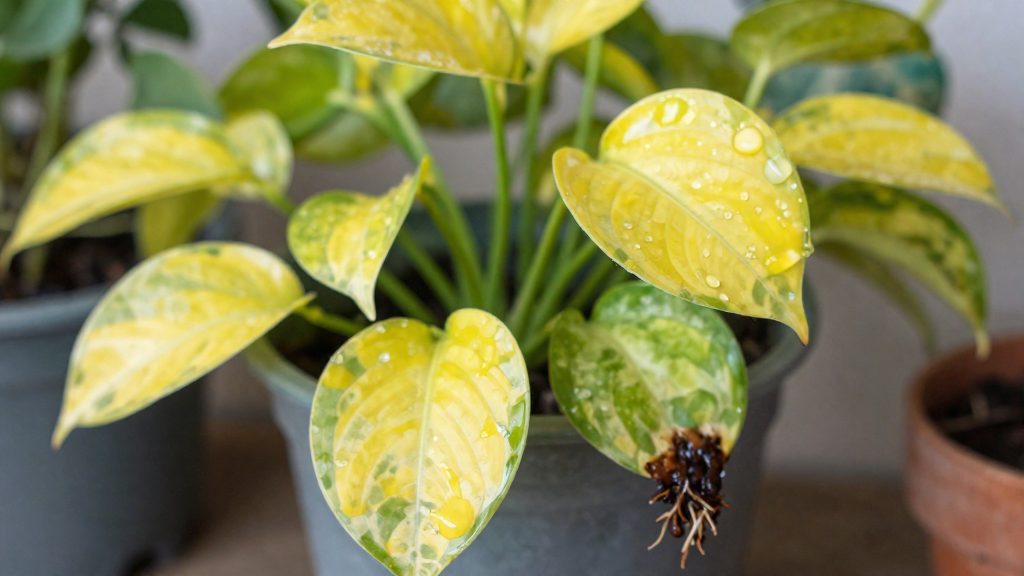
Yellow pothos leaves usually point to a change in light, watering, roots, or plant health, and several different causes produce the same colour. The pattern of yellowing narrows the cause. According to Gardener’s Path, a couple of mature lower leaves turning an even yellow is normal aging, while yellow leaves with a crinkled texture, water spots with yellow halos, or bleached patches point to specific problems. Epic Gardening links yellowing to inconsistent watering, overwatering and underwatering.
Why do pothos leaves turn yellow?
Yellow versus brown or crispy symptoms
Some causes leave a recognisable pattern of yellowing. The sources consulted do not describe brown or crispy leaf margins as symptoms of these causes, so those symptoms should be assessed separately.
| Symptom | Typical appearance | Cause named by the source |
|---|---|---|
| Even yellow on older leaves | A couple of mature lower leaves turn uniformly yellow | Natural aging (Gardener’s Path) |
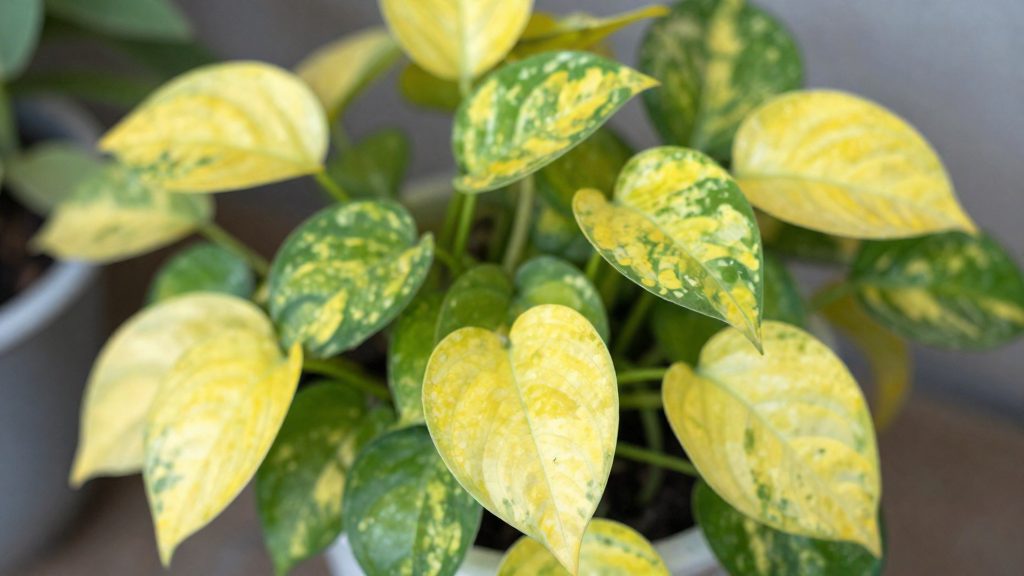
| Scrambled-egg yellow | Bleached, pale yellow areas | Too much direct sun (Gardener’s Path) |
| Crinkly yellow | Leaves look crinkled, soil is dry | Underwatering (Gardener’s Path) |
| Yellow halos | Water spots surrounded by yellow | Bacterial leaf spot, Pseudomonas cichorii (Gardener’s Path) |
| Darker spots with yellowing | Dark spots with yellowed tissue | Aerial blight (Epic Gardening) |
Several causes, one symptom
Inconsistent watering, overwatering and underwatering all cause yellowing, according to Epic Gardening. Mealybugs and spider mites can also yellow the leaves.
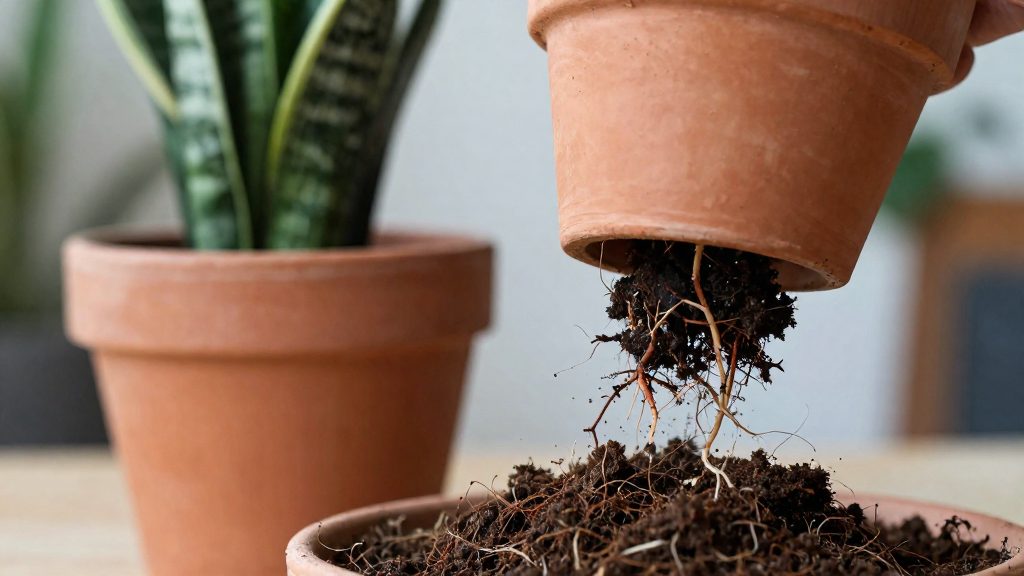
Root-bound plants are another cause. Roots coil inside the pot or grow out of the drainage holes.
Yellowing on any part of the plant
Yellowing is not limited to old leaves. According to Gardener’s Path, it can appear on many parts of the plant, including new growth, so the location of yellow leaves alone does not identify the cause.
Neon pothos naturally has yellow-green foliage, so its colour is not a sign of a problem. For other pothos, look at the leaf texture, the pattern of spots, and the condition of the soil to determine which cause applies.
Is overwatering the main cause?
Overwatering is one of several causes of yellow pothos leaves, but the sources consulted do not rank it above the others. Checking the soil and roots gives a more reliable answer than assuming the plant has too much water.
Pythium root rot from soggy soil
Overwatering or poorly draining soil can cause Pythium root rot in pothos, according to Gardener’s Path. Affected roots are brown, mushy and foul-smelling.
To check the roots, remove the plant from its pot and inspect the root ball. Roots that are brown, soft and smell bad point to waterlogged conditions. Roots that are firm and not smelly make Pythium root rot less likely, but check the soil, light, feeding and pests before concluding.
Underwatering: dry soil and crinkly leaves
Underwatering produces dry soil and crinkly yellow leaves, according to Gardener’s Path. The two problems look different in the pot. Dry soil with crinkled leaves suggests thirst, while brown, mushy roots with a foul smell suggest excess water.
A thorough soak usually helps underwatered plants. Water until the whole root ball is saturated, then trim the yellowed leaves, as Gardener’s Path recommends.
Can too much sun yellow pothos leaves?
Too much direct sun bleaches pothos leaves to a scrambled-egg yellow, according to Gardener’s Path. The bleaching shows as pale yellow patches rather than an even colour change. Leaves that have been bleached by direct sun do not regain their original colour, even after the plant is moved. The yellowing is permanent on those leaves, so the goal is to stop further damage and let healthy growth replace the affected foliage.
Move the plant out of direct light as the first step. Relocate it to a spot that receives bright light without sun falling directly on the leaves. A position a short distance back from a sunny window usually works better than a spot right against the glass. Avoid moving the plant into deep shade, because the aim is to reduce intensity, not to remove light entirely.
Bright indirect light is the exposure to aim for. It gives the leaves enough energy to produce new, green growth without the scorching effect of direct rays. Check the position every few weeks as the seasons change, since the angle and strength of sunlight through a window shift over the year.
The bleached leaves will stay yellow. Once the plant is in a suitable spot, new leaves should emerge green, and the damaged foliage can be left in place or removed as it ages.
| Symptom | Typical appearance | Action needed |
|---|---|---|
| Sun bleaching | Scrambled-egg yellow patches | Move out of direct light; affected leaves won’t regain colour |
| Natural aging | Even yellow on a couple of mature lower leaves | None; this is normal as new growth emerges |
Fertilizer buildup and root-bound plants
Yellowing from salt buildup or cramped roots starts in the potting mix and roots. Excess fertilizer builds up salts in the soil and damages the roots. According to Gardener’s Path, yellowing from this cause often starts at the leaf tips. A root-bound pothos has a different problem: its roots coil inside the pot or grow out through the drainage holes, and the plant can yellow as a result.
| Cause | Visible sign | Corrective step |
|---|---|---|
| Excess fertilizer | Yellowing that often starts at the leaf tips | Flush the soil |
| Root-bound plant | Roots coiling in the pot or growing out of the drainage holes | Repot into a larger container |
Salt buildup from excess feeding
Salts accumulate when fertilizer is applied more often than the plant needs it. Gardener’s Path advises soil flushing if you fertilize more often than about once every couple of months. In practice, flushing means watering the pot thoroughly until water runs freely out of the drainage holes, which carries dissolved salts out of the root zone. Let the pot drain completely before watering again. Afterwards, reduce how often you feed the plant so salts do not build up again.
Root-bound plants
A root-bound pothos has used most of the space in its container. Gardener’s Path notes two signs to check: roots coiling around the inside of the pot, and roots growing out of the drainage holes. Repotting into a larger container addresses the constraint. Gardener’s Path recommends repotting about every 1.5 to 2 years, so a plant that has not been repotted within that period is a candidate for a larger pot. The official sources consulted do not specify a particular potting mix or container size for this step.
Pests and diseases that yellow leaves
Pests and pathogens are among the several causes of yellow pothos leaves. The main bacterial cause is leaf spot caused by Pseudomonas cichorii. Sap-feeding pests such as mealybugs and spider mites can also yellow the foliage. The type of mark on the leaf helps distinguish these causes from simple yellowing.
Bacterial leaf spot (Pseudomonas cichorii)
According to Gardener’s Path, this bacterium causes water spots with yellow halos on pothos leaves. The spots appear as distinct marks surrounded by a yellow ring, rather than an even yellowing across the whole leaf.
The bacteria spread through splashed water on the foliage. When water hits the leaves during watering, it carries the bacteria from one leaf to another. Gardener’s Path states that avoiding water splashed on the foliage prevents the disease.
Infected leaves cannot be saved, according to the same source. Prevention relies on keeping water off the foliage during watering.
Other pest and pathogen causes
| Cause | Visible sign | Source |
|---|---|---|
| Bacterial leaf spot (Pseudomonas cichorii) | Water spots with yellow halos | Gardener’s Path |
| Pythium root rot | Brown, mushy, foul-smelling roots | Gardener’s Path |
| Mealybugs | Yellowing leaves | Epic Gardening |
| Spider mites | Yellowing leaves | Epic Gardening |
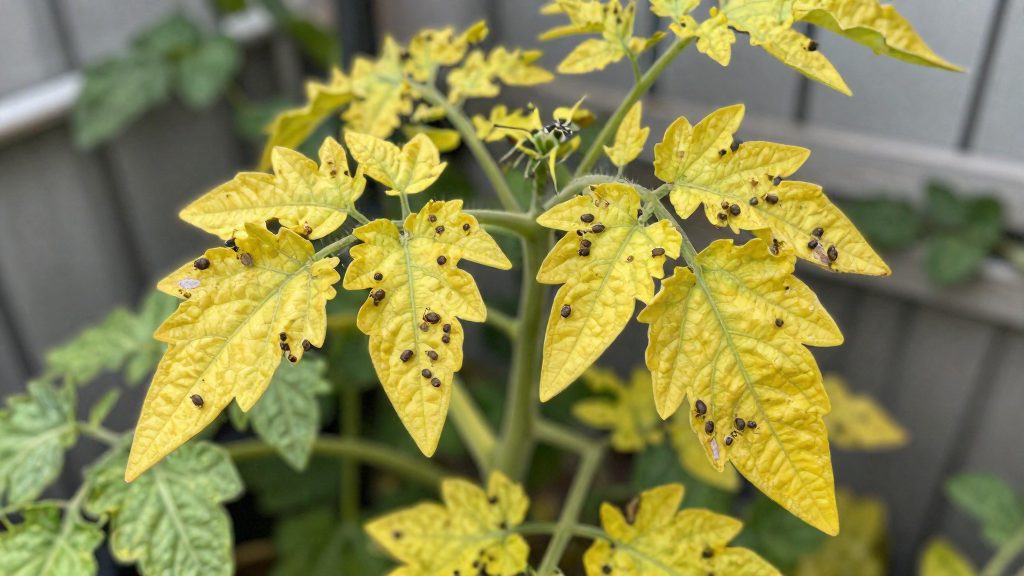
| Aerial blight | Darker spots; the plant often does not recover | Epic Gardening |
Epic Gardening treats mealybugs by rubbing them with alcohol daily until they are gone, then applying neem oil. Pythium root rot is linked to overwatering or poorly draining soil, so the same watering habits that prevent leaf spot also help limit this problem.
When is yellowing just natural aging?
On a pothos, yellowing is not always a problem. According to Gardener’s Path, a couple of mature lower leaves that turn an even yellow while new growth emerges is natural aging, and it needs no treatment. To tell the two apart, check how many leaves are affected, where they sit on the stem, and whether the plant is producing fresh growth at the same time.
Natural aging usually looks like this:
- One or two mature leaves near the base of the plant are yellow.
- The yellow is even across the leaf, not patchy or spotted.
- New leaves are emerging at the growing tips.
- The rest of the plant looks firm and green.
In this case, removing the spent leaf is only a matter of tidiness. The plant keeps the rest of its foliage.
Other causes such as watering, light, feeding, roots or pests produce different patterns, as described above.
Common patterns and their first steps:
| Pattern | Most likely cause | First step |
|---|---|---|
| One or two mature lower leaves, even yellow, new growth present | Natural aging | None needed |
| Yellowing with soggy soil or poor drainage | Overwatering or root rot | Check roots for brown, mushy tissue |
| Dry soil and crinkly yellow leaves | Underwatering | Give a thorough soak, then trim yellowed leaves |
| Pale, scrambled-egg yellow leaves in strong light | Too much direct sun | Move out of direct light |
| Roots coiling in the pot or growing out of drainage holes | Root-bound plant | Repot into a larger container |
| Yellowing with visible pests | Mealybugs or spider mites | For mealybugs, rub with alcohol daily until gone, then apply neem oil (Epic Gardening) |
Pests deserve a separate check. Epic Gardening reports that mealybugs and spider mites can yellow pothos leaves, and recommends treating mealybugs with daily rubbing alcohol until they are gone, followed by neem oil.
How do you fix and prevent yellow leaves?
Preventing yellow leaves on pothos depends on three things: a watering routine the plant can hold, even soil moisture, and a correct diagnosis before any change.
Start weekly, then space out gradually
For a plant that is settling in or recovering, Epic Gardening suggests watering pothos about once every 1 to 2 weeks, starting with weekly watering and spacing the intervals out gradually. Lengthen the gap only when the soil shows it is drying at a steady pace, and shorten it again if the leaves start to change. Check the soil before each watering rather than following the calendar alone.
Keep soil moisture consistent between waterings
Soil that stays bone-dry for long periods gives crinkly yellow leaves, while poorly draining soil can cause Pythium root rot, according to Gardener’s Path. Aim for soil that dries out between waterings without becoming saturated. Pots with drainage holes and a soil mix that drains well reduce the risk of standing water around the roots.
Feeding and light also affect the routine. Excess fertilizer builds up salts that damage roots. Too much direct sun bleaches the leaves.
Diagnose the cause before changing the routine
Changing several things at once makes it hard to tell which adjustment helped. Match the symptom to its likely cause first.
| Symptom | Likely cause (per sources) | First check |
|---|---|---|
| Brown, mushy, foul-smelling roots | Overwatering or poor drainage, Pythium root rot (Gardener’s Path) | Root condition and soil drainage |
| Dry soil, crinkly yellow leaves | Underwatering (Gardener’s Path) | Soil dryness at the root zone |
| Leaves bleached to a scrambled-egg yellow | Too much direct sun (Gardener’s Path) | Light exposure of the plant |
| Yellowing starting at leaf tips | Excess fertilizer salts (Gardener’s Path) | How often the plant is fed |
| Roots coiling or growing out of drainage holes | Root-bound plant (Gardener’s Path) | Root growth in the pot |
| Mealybugs or spider mites on the foliage | Pest damage (Epic Gardening) | Undersides of leaves and stems |
| Water spots with yellow halos | Bacterial leaf spot, Pseudomonas cichorii (Gardener’s Path) | Water left on the foliage |
| A couple of mature lower leaves turning an even yellow while new growth emerges | Natural aging (Gardener’s Path) | Whether new growth is healthy |
Should you cut off yellow pothos leaves?
A yellowed pothos leaf does not turn green again, so trimming it is about plant appearance and health rather than recovery. Whether to remove it depends on the cause. Some yellow leaves are harmless and can stay on the plant, while others should be trimmed once the underlying problem is corrected.
Leaves that can stay on the plant
- Natural aging: A couple of mature lower leaves that turn an even yellow as new growth emerges are part of normal aging. These leaves can be left alone or removed for looks.
- Neon pothos: Neon pothos has naturally yellow-green foliage (Epic Gardening), so a yellow-green colour on a healthy neon plant is not a reason to cut.
Trim once the cause is fixed
| Cause | Leaf outcome | Action |
|---|---|---|
| Too much direct sun | Leaves bleach to a scrambled-egg yellow | Can be left or removed for looks; they won’t regain colour |
| Underwatering | Dry soil and crinkly yellow leaves | Trim the yellowed leaves |
| Natural aging | Even yellow on a couple of mature lower leaves | Can stay; no treatment needed |
Remove bacterial leaf spot leaves
Bacterial leaf spot (Pseudomonas cichorii) causes water spots with yellow halos. Gardener’s Path states that infected leaves can’t be saved, and that avoiding water splashed on the foliage prevents the disease. Aerial blight also causes yellowing with darker spots, and Epic Gardening notes that the plant often does not recover from it.
How to cut
- Cut at the leaf base, where the leaf stalk joins the stem, rather than leaving a stub.
- Use clean, sterilized cutting tools. Wipe blades between plants if you are removing affected leaves from more than one plant.
- Remove only the yellowed or infected leaves. Leave healthy green leaves in place.
Frequently asked questions
Why are only the lower leaves on my pothos turning yellow?
If a couple of mature lower leaves turn an even yellow while new growth appears, this is natural aging and needs no treatment, according to Gardener’s Path. Yellowing that spreads to newer leaves or follows a different pattern points to another cause.
How can I tell whether my pothos is overwatered or underwatered?
Overwatering or poorly draining soil can cause Pythium root rot, where affected roots turn brown, mushy and foul-smelling. Underwatering leaves the soil dry and the leaves crinkled and yellow, and a thorough soak usually helps, according to Gardener’s Path. Epic Gardening suggests watering about once every 1–2 weeks and adjusting from there.
Will yellow pothos leaves turn green again?
Usually not. Gardener’s Path notes that pothos leaves bleached to a scrambled-egg yellow by too much direct sun do not regain their colour, although moving the plant out of direct light helps. Leaves infected with bacterial leaf spot (Pseudomonas cichorii) also cannot be saved, so removing them is the only option.