A raised bed is a planting area built above the existing ground, with its own frame and filled with growing medium. The consulted sources point to three decisions that shape its results: full sun exposure, a width that lets you reach the centre, and a site close to water and the house. Espace pour la vie (Montréal, 2026) gives 6 to 8 hours of direct sunlight per day for maximum yield, and NC State Extension, Sampson County (2026) gives 8 to 10 hours.
Key Decisions: Sun, Size, Water Access and Fill
Sunlight and Placement
Site selection comes first. Espace pour la vie (Montréal, 2026) states that a raised vegetable bed should receive full light for maximum yield, meaning at least 6 to 8 hours of direct sun per day. NC State Extension, Sampson County (2026) recommends 8 to 10 hours. The two figures differ, and the consulted sources do not explain the gap, so choose the sunniest spot available on your plot.
Dimensions
NC State Extension, Sampson County (2026) gives the following size ranges:
| Dimension | Recommended value | Source |
|---|---|---|
| Maximum width | About 1.2 m (4 feet) | NC State Extension, Sampson County (2026) |
| Height | 1 to 3 feet (about 30 to 90 cm) | NC State Extension, Sampson County (2026) |
| Length | 4 to 16 feet (about 1.2 to 4.9 m) | NC State Extension, Sampson County (2026) |
The width limit keeps the centre within reach, so you can work the whole bed without stepping on the planting surface.
Water Access and Proximity to the House
Water the bed thoroughly, but avoid keeping the soil waterlogged. A bed beside a tap is quicker to water, and a bed close to the house is checked more often.
Filling the Frame
Fill the bed with quality topsoil or compost, as NC State Extension, Sampson County (2026) suggests. The consulted sources do not specify a fill depth or mix ratio beyond the height range above.
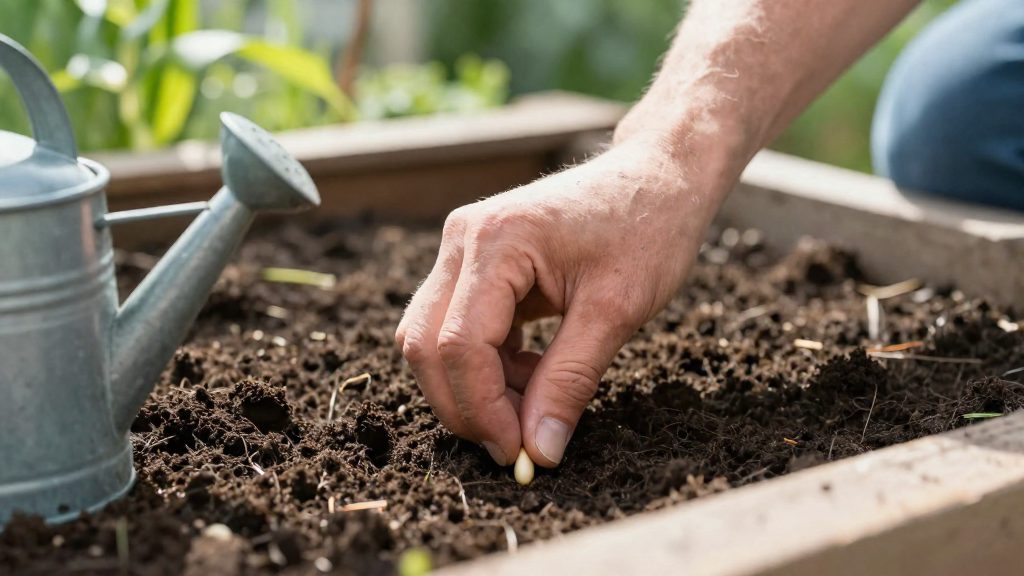
Where to Install a Raised Bed Vegetable Garden
A raised bed vegetable garden needs a site with full sun, since direct light drives yield. Espace pour la vie (Montreal, 2026) recommends at least 6 to 8 hours of direct sunlight per day, and NC State Extension, Sampson County (2026) advises 8 to 10 hours. Both sources point in the same direction, so aim for the upper end of either range. Before building, track the site through the day and note shade from fences, trees, and walls, because shade reduces the direct sunlight the crops receive.
Sun Requirements by Source
| Source | Recommended direct sun | Date |
|---|---|---|
| Espace pour la vie (Montreal) | 6 to 8 hours per day, for maximum yield | 2026 |
| NC State Extension, Sampson County | 8 to 10 hours | 2026 |
Water Access and Distance from the House
Place the bed close to a water access point, such as an outdoor tap or a hose connection. Watering a bed that is far away is more tedious, and a distant garden is less often maintained. Keep the bed near the house so it is visited more often for watering, harvesting, and checking for pests.
When watering, apply water at the soil level and avoid keeping the soil waterlogged, which can damage roots.
Dimensions That Fit the Site
The bed’s footprint must match the space available and allow access on all sides. The sources consulted give the following ranges:
- Reachable width: no more than 4 feet (about 1.2 m), so the centre can be reached without stepping on the bed (NC State Extension, Sampson County, 2026)
- Height: 1 to 3 feet (NC State Extension, Sampson County, 2026)
- Length: 4 to 16 feet (NC State Extension, Sampson County, 2026)
Measure the chosen spot and leave a clear path around the bed before ordering materials or filling it.
Site Checklist
- Choose a spot with full sun for most of the day
- Confirm that a water source is within easy reach
- Keep the bed close to the house
- Confirm that the footprint falls within the width, height, and length ranges above
- Leave room to walk around the bed
Which dimensions to choose?
A raised bed’s dimensions depend mainly on reach and light. According to NC State Extension, Sampson County (2026), the maximum width is 4 feet (about 1.2 m), which lets you reach the centre of the bed without stepping on the soil. The same source gives a height of 1 to 3 feet (about 0.3 to 0.9 m) and a length of 4 to 16 feet (about 1.2 to 4.9 m). Length is the most flexible dimension, so it is the one to adjust to the space available.
| Dimension | Range or limit | Source |
|---|---|---|
| Maximum width | 4 ft (about 1.2 m) | NC State Extension, Sampson County (2026) |
| Height | 1 to 3 ft (about 0.3 to 0.9 m) | NC State Extension, Sampson County (2026) |
| Length | 4 to 16 ft (about 1.2 to 4.9 m) | NC State Extension, Sampson County (2026) |
Placement that affects the choice
Sun exposure is the main constraint on where a bed can go. Espace pour la vie (Montreal, 2026) links maximum yield to full light, at least 6 to 8 hours of direct sun per day. NC State Extension, Sampson County (2026) recommends 8 to 10 hours. The two figures differ, and the official sources consulted do not explain the gap. Before fixing the bed’s position, observe how many hours of direct sun the chosen spot receives during the growing season.
Water access and distance from the house also matter. NC State Extension, Sampson County (2026) recommends placing the bed near a water source and close to the house, because a distant garden is less often maintained. A bed that is easy to reach for watering and weeding is more likely to stay productive, so the dimensions chosen should fit a spot you will visit daily.
What materials to use?
A raised bed uses two materials: the fill mix inside the bed and the frame that holds it. According to NC State Extension, Sampson County (2026), the bed should be filled with quality topsoil or compost. The official sources consulted do not specify a ratio between the two, so a mix of both is a reasonable starting point, adjusted to what is available locally.
The same source suggests a first layer of sand, about 6 inches (15 cm) deep, placed before the soil. This is a US recommendation, and the sources consulted do not confirm it for Canadian conditions. Gardeners in Canada should check with a local extension service before adding a sand layer, since local soils differ.
The sources consulted do not name a preferred frame material. They do specify the dimensions the frame must respect:
| Dimension | Recommended range | Source |
|---|---|---|
| Width | Maximum 4 ft (about 1.2 m) | NC State Extension, Sampson County (2026) |
| Height | 1 to 3 ft | NC State Extension, Sampson County (2026) |
| Length | 4 to 16 ft | NC State Extension, Sampson County (2026) |
Width is the most constraining dimension. A bed no wider than 4 feet can be reached from both sides, so the centre of the planting area is accessible without stepping onto the soil. Within the stated ranges, length and height can be adjusted to the available space and to the volume of fill material you plan to buy.
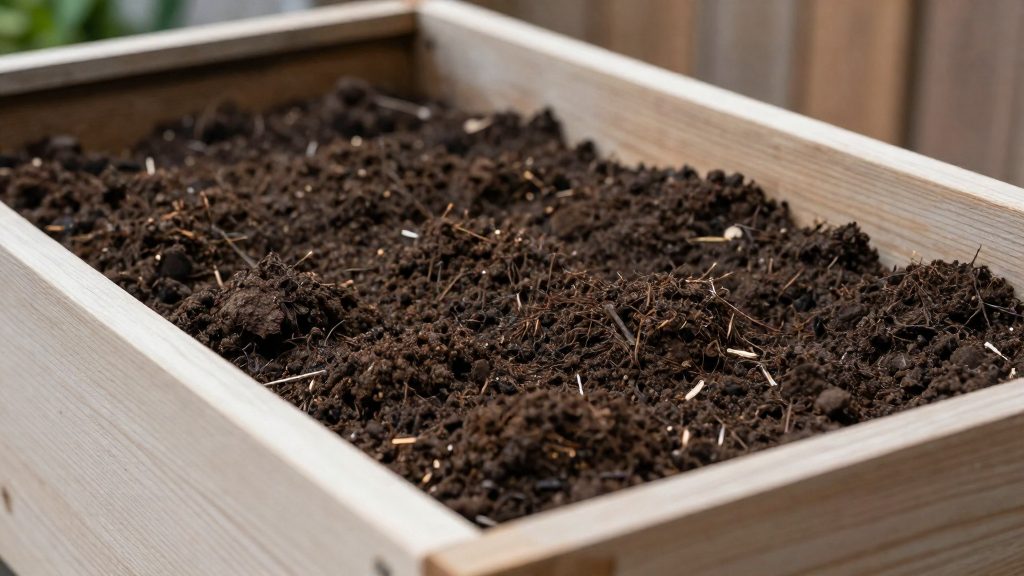
What Soil Mix to Fill the Bed With
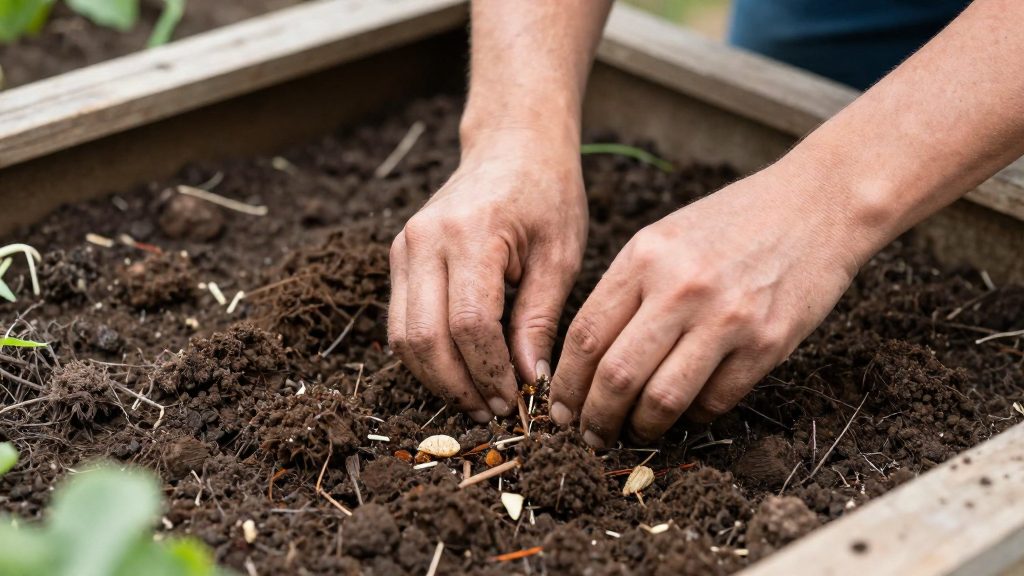
According to NC State Extension, Sampson County (2026), a raised bed should be filled with a quality garden soil or with compost. A raised bed is filled with a growing medium, so the quality of that mix largely determines how well the plants establish.
Quality topsoil or compost is the recommended filling. Choose a product with a clear description of its contents and avoid unlabeled bulk material. Compost adds organic matter, which helps the mix hold moisture and stay loose over the growing season.
NC State Extension also suggests starting with a first layer of 6 inches of sand before adding soil. This is a US recommendation, and the official sources consulted do not confirm it for Canadian conditions. Check with a local gardening authority before using a sand base in a cold-climate bed.
Steps for filling the bed:
- Fill the frame in stages, adding soil or compost evenly across the whole area rather than piling it in the center.
- Level the surface so that water spreads across the bed instead of running off one side.
- Check the depth after the first watering, since the mix settles, and top it up if needed.
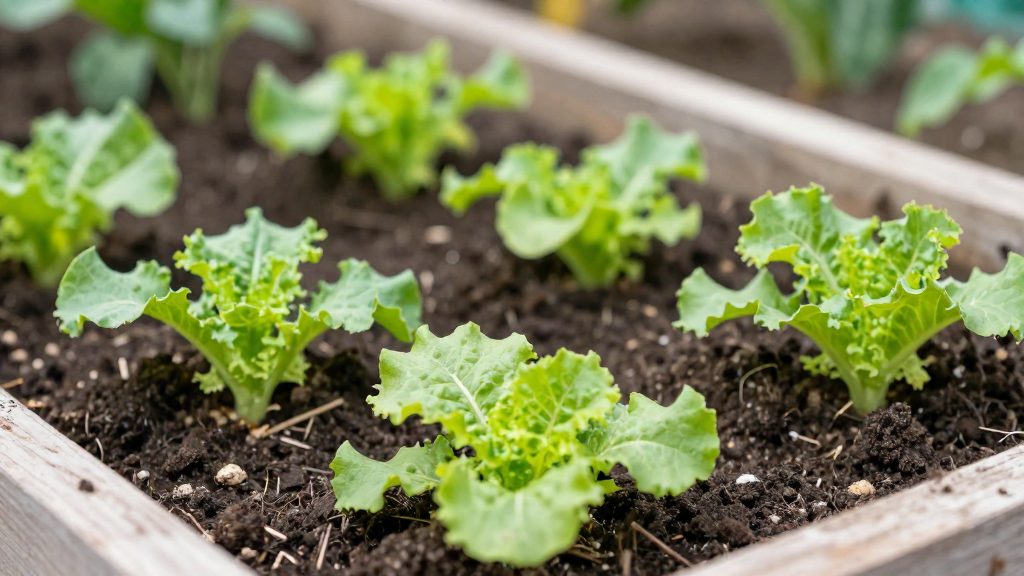
What to Plant in the First Year
For a first raised bed, choose crops by how much direct sun the site gets, not from a fixed list. Espace pour la vie (Montréal, 2026) recommends at least 6 to 8 hours of direct sunlight per day for maximum yield, while NC State Extension, Sampson County (2026) advises 8 to 10 hours. Because the two minimums differ, the bed’s actual light should decide which crops you plant first.
Sun requirements by source
| Source | Sunlight recommendation |
|---|---|
| Espace pour la vie (Montréal, 2026) | At least 6 to 8 hours of direct sun per day |
| NC State Extension, Sampson County (2026) | 8 to 10 hours of sun per day |
Before choosing crops, observe the site over a full day and count the hours of full sun it receives. A bed that meets the higher figure can hold more sun-demanding plants. A bed closer to the lower figure suits crops with lower light needs, and the official sources consulted do not specify which crops fall into each group.
Sizing the bed to your plantings
NC State Extension, Sampson County (2026) gives the following dimensions:
- Bed width: maximum 4 feet (about 1.2 m), so the centre can be reached without stepping on the soil.
- Height: 1 to 3 feet.
- Length: 4 to 16 feet.
Stay within the reach from either side when planning rows. The sources consulted do not specify which vegetables to plant, planting dates or spacing, so check local frost dates and seed packet instructions.
Soil for the first season
Fill the bed with good-quality topsoil or compost, as NC State Extension, Sampson County (2026) recommends. The same source suggests a 6-inch sand base layer, a practice the consulted sources do not confirm for Canadian conditions, so check with a local gardening authority before using it.
Watering and Maintenance
Routine upkeep of a raised bed depends on three things: how easily you can reach every plant, how close the bed is to a water source, and how much direct sun it receives. Bed size and location set the frequency of watering, weeding and harvesting, so plan these details before filling the bed.
Location for regular care
Place the bed near a water source and near the house. According to NC State Extension, Sampson County (2026), a garden located far from the house is visited less often and is therefore less consistently maintained.
Dimensions for access
NC State Extension, Sampson County (2026) recommends a maximum width of 4 feet (about 1.2 m), which lets you reach the centre of the bed without stepping onto the soil. The same source gives a height of 1 to 3 feet and a length of 4 to 16 feet. Keeping the width within this limit keeps the whole growing area reachable from the paths.
Watering method
- Water the soil at the base of the plants rather than wetting the foliage.
- Before each watering, push a finger into the soil. Water only when the top layer feels dry.
- Water enough to moisten the root zone without saturating it. Waterlogged soil deprives roots of air, so avoid leaving standing water on the surface.
- Top up the bed with quality topsoil or compost if the mix settles, so the soil stays loose and easy to water evenly.
Sun exposure and water needs
Sun hours affect how fast the soil dries, so they directly influence watering frequency. The sources consulted give different sun recommendations:
| Source | Sun recommendation | Context |
|---|---|---|
| Espace pour la vie (Montréal), 2026 | 6 to 8 hours of direct sun per day | Stated as the condition for maximum yield |
| NC State Extension, Sampson County, 2026 | 8 to 10 hours of sun | US recommendation |
Frequently asked questions
How much sun does a raised bed vegetable garden need?
Sources disagree on the exact figure. Espace pour la vie (Montréal, 2026) cites 6 to 8 hours of direct sun for maximum yield, while NC State Extension, Sampson County (2026) recommends 8 to 10 hours. Choose the sunniest spot on your plot, since full sun exposure is the common factor in both recommendations.
How wide should a raised bed be?
NC State Extension, Sampson County (2026) recommends a maximum width of about 1.2 m (4 feet). That width lets you reach the centre of the bed from either side without stepping onto the planting surface.
What should I fill a raised bed with?
NC State Extension, Sampson County (2026) suggests filling the frame with quality topsoil or compost. The official sources consulted do not specify a layering method for Canadian conditions.