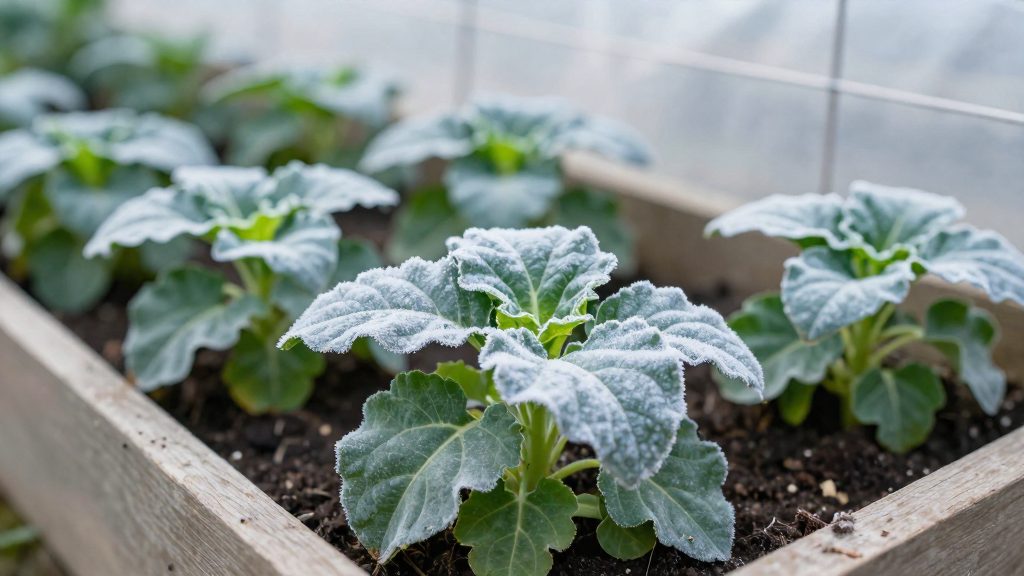
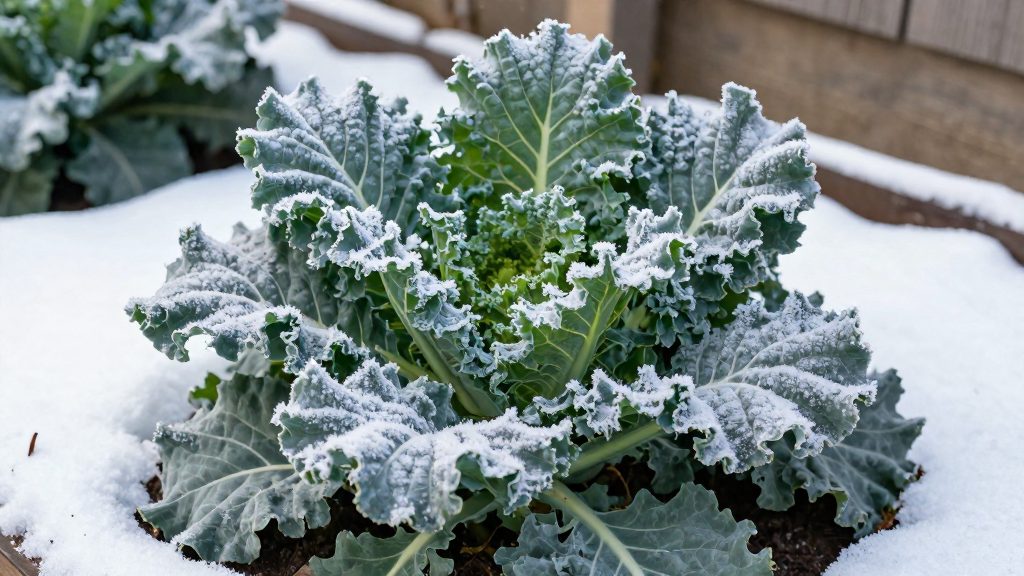
Kale is well suited to cold-climate gardens because its physiology tolerates low temperatures. Late-season leaves can also become sweeter after frost.
Why is kale so good for cold climates?
Cold tolerance of the mature plant
Mature kale tolerates cold down to roughly 20°F (about -7°C), according to Harvest to Table (2024). Halifax Seed (2024) adds that mature plants tolerate frost and even snow. This hardiness lets the plant remain in the garden through cold spells that would damage many tender crops. The sources consulted do not specify how long plants keep growing at these temperatures or how they respond to repeated freezing.
Germination at low soil temperatures
Kale seed germinates at temperatures as low as 4°C, according to Halifax Seed (2024). This means the seed itself does not require warm conditions to start growing. The sources consulted do not specify the germination rate at this temperature.
Frost sweetening of late-season leaves
Halifax Seed (2024) states that late-season leaves can become sweeter after frost. The sources consulted do not explain the biochemical mechanism behind this change, and they do not give a minimum frost temperature or duration needed to produce it.
Growth optimum near 16–18°C
Harvest to Table (2024) gives the growth optimum for kale as about 60–65°F (about 16–18°C). The optimum describes where growth is strongest, not the lowest temperature the plant can survive. Mild autumn weather in this range therefore supports vigorous leaf production. The plant’s cold tolerance helps it through the colder periods that follow, but about -7°C is a limit, not a guarantee of overwintering everywhere in Canada.
Summary of temperature reference values
| Trait | Value | Source |
|---|---|---|
| Cold tolerance of kale | Roughly 20°F (about -7°C) | Harvest to Table (2024) |
| Frost and snow tolerance of mature plants | Tolerated, no figure given | Halifax Seed (2024) |
| Seed germination | From 4°C (about 39°F) | Halifax Seed (2024) |
| Growth optimum | About 60–65°F (about 16–18°C) | Harvest to Table (2024) |
Choosing kale types and cultivars for a late harvest
When choosing a cultivar for a cold climate, the key question is whether it will reach harvest size before your region’s hard freezes arrive. The official sources consulted do not specify a cold-hardiness ranking between curly and Lacinato kale, so the comparison below covers what the sources confirm and general selection practice.
Curly and Lacinato types
Curly kale and Lacinato kale are the two common leaf types in home gardens. The sources consulted do not state whether one tolerates cold better than the other, so do not assume a difference. To compare them in your own garden, plant both types side by side and note which one still holds usable leaves in late autumn.
Traits relevant to late-season harvests
| Trait | What the sources say | Source |
|---|---|---|
| Days to maturity | About 60 days | Halifax Seed (2024) |
| Minimum cold | Roughly 20°F (about -7°C) | Harvest to Table (2024) |
| Growth optimum | About 60–65°F (about 16–18°C) | Harvest to Table (2024) |
How to select for a late harvest
- Days to maturity is the most direct figure for planning. Compare the maturity values in seed catalog descriptions. A cultivar that matures in about 60 days has the most room to finish before winter.
- Choose cultivars that are described as hardy, and confirm the claim against the frost tolerance figures above rather than relying on marketing terms alone.
- Local frost dates vary, so check them with a local source such as your provincial agriculture ministry or a regional garden centre.
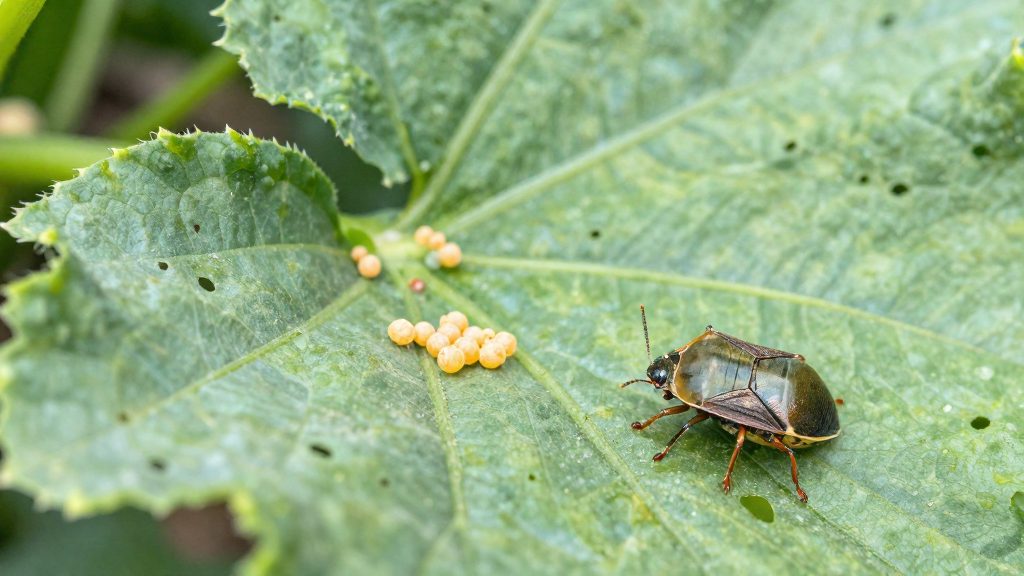
- Keep plants healthy through the season. Halifax Seed (2024) notes that aphids, cabbage worms and flea beetles are common pests.
The official sources consulted do not give separate cold-hardiness ratings for individual named cultivars, so treat any specific cultivar claim as something to verify with the seed supplier before you buy.
When to sow and transplant kale
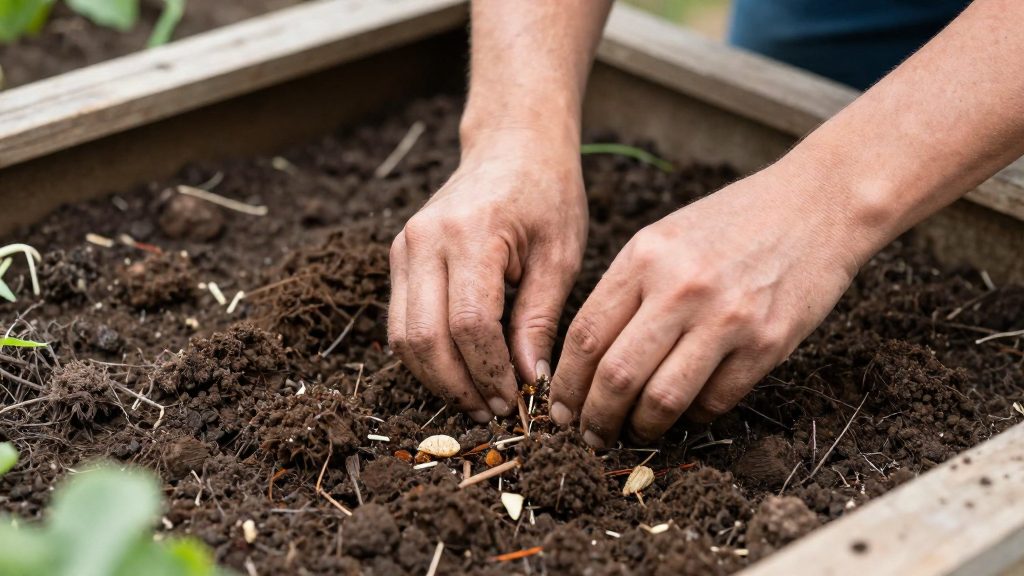
Kale timing in cold climates depends on two dates: the last spring frost and the first expected fall frost. Kale seed germinates at temperatures as low as 4°C (Halifax Seed, 2024), so germination is limited by cold soil more than by air temperature. Harvest to Table (2024) recommends that soil be at least 40°F (about 4°C) before sowing outdoors.
| Task | Timing | Condition |
|---|---|---|
| Sow seed or start transplants | 4–6 weeks before the last spring frost | Harvest to Table (2024) |
| Direct-sow outdoors | As soon as the ground can be worked in spring | Halifax Seed (2024) |
| Soil temperature check | At least 40°F (about 4°C) | Harvest to Table (2024) |
| Fall crop sowing | About 10 weeks before the first expected fall frost | Harvest to Table (2024) |
Spring sowing and transplanting
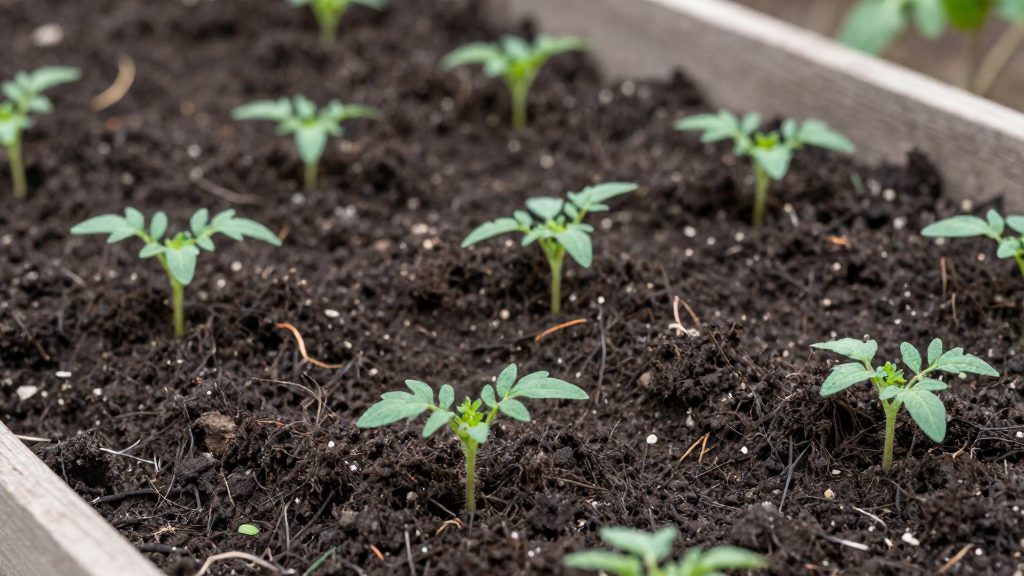
Sow seed or start transplants 4–6 weeks before the last spring frost. Transplants can then go out once the soil has reached the minimum temperature. Direct sowing follows a different trigger: sow outdoors as soon as the ground can be worked in spring, provided the soil is at least 4°C. Sowing before the soil reaches this level delays germination, even though the seed itself can germinate from 4°C.
Fall crop timing
For a fall crop, sow about 10 weeks before the first expected fall frost. Kale takes about 60 days to mature (Halifax Seed, 2024), so the sowing date must leave enough time for the plant to reach harvest size before cold weather slows growth. Count back from the local first frost date rather than the calendar date, since the first frost varies by region and season.
How do you prepare soil and spacing?
Kale grows best in well-drained soil with a pH of 6.5–6.8, rich in nutrients and placed in part to full sun. According to Harvest to Table (2024), the target soil pH is 6.5–6.8 and plants should be thinned to 12–15 inches (about 30–38 cm) apart, with rows 18–24 inches (about 45–60 cm) apart. According to Halifax Seed (2024), good drainage helps prevent fungus and rot, so the bed should be prepared before any plants go in.
Soil pH and chemistry
Test the soil pH before planting and adjust it toward the pH 6.5–6.8 range. The sources consulted give the target range but do not specify amendment rates, so base any lime or sulfur application on the results of a soil test rather than on a fixed quantity.
Drainage and nutrients
Kale needs nutrient-rich soil that drains freely. Loosen the planting bed before sowing or transplanting so that water moves through it instead of pooling on the surface. Avoid low spots where water stands after rain, because standing water works against the drainage the crop needs. Choose a site that receives part to full sun.
Spacing in rows
Set plants at the following distances:
| Spacing | Distance |
|---|---|
| Between plants in a row | 12–15 inches |
| Between rows | 18–24 inches |
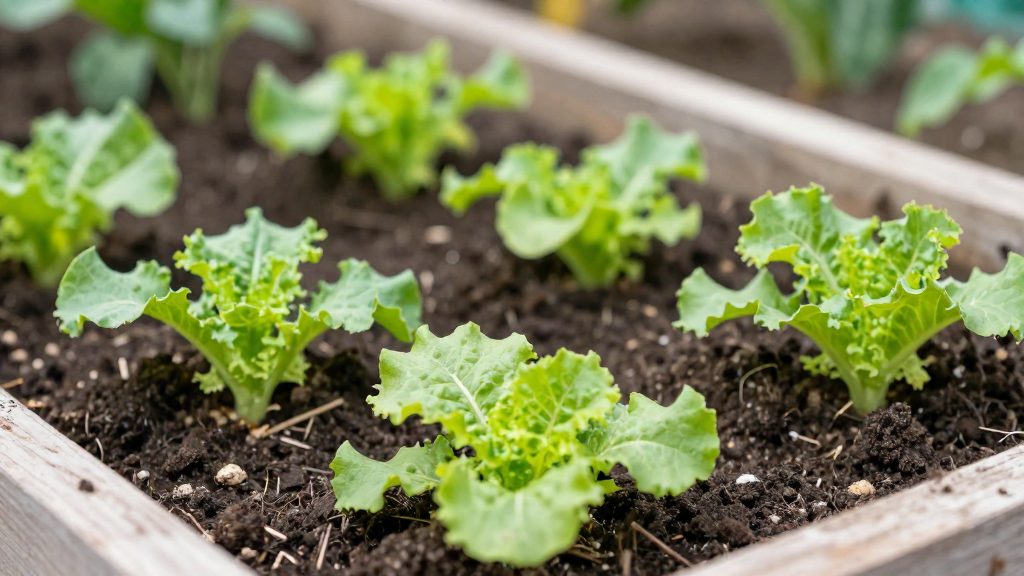
Thin seedlings to these distances once they have emerged, so that each plant has room for its leaves to develop.
Protecting kale from frost and snow
Physical protection is mainly needed for winter growing and for hard frost events. Harvest to Table (2024) recommends growing kale under a cold frame, a plastic tunnel or a row cover for winter, mounding soil up the stem, and mulching thickly with straw or chopped leaves when a hard frost is forecast. These methods work together: the structure keeps the plant growing through the cold season, and the soil and mulch insulate the base when temperatures drop sharply.
Cold frames and plastic tunnels
A cold frame or plastic tunnel is the main structure for winter growing. Both create a sheltered space over the bed, which allows kale to keep growing when outdoor conditions are harsh. Place the structure over the bed before the cold season sets in, and position the bed in full sun, as kale needs part to full sun in the open ground.
Mounding soil up the stem
Before a hard frost, draw soil up around the stem of each plant. The soil forms a protective collar around the lower stem, which is the part most exposed to cold air at ground level. Do this before the frost arrives rather than during it.
Thick straw or chopped leaf mulch
Apply a thick layer of straw or chopped leaves over the bed when hard frost is forecast. Chopped leaves and straw both insulate the soil and the plant base. Avoid packing mulch so tightly that it holds excess moisture against the stems.
| Method | When to use it | Purpose |
|---|---|---|
| Cold frame or plastic tunnel | Winter growing | Shelters the bed so plants keep growing |
| Mounding soil up the stem | Before hard frost | Protects the lower stem |
| Straw or chopped leaf mulch | When hard frost is forecast | Insulates soil and plant base |
Can you grow kale through winter in Canada?
Kale can survive winter in some Canadian gardens, but not everywhere. The official sources consulted do not specify hardiness zone-by-zone ranges, so suitability for a given garden depends on local minimum temperatures and how long they persist.
| Condition | Reference figure | Source |
|---|---|---|
| Cold tolerance | Down to roughly 20°F (about -7°C) | Harvest to Table (2024) |
| Best growth range | About 60–65°F (about 16–18°C) | Harvest to Table (2024) |
| Time to maturity | About 60 days | Halifax Seed (2024) |
Realistic winter harvest windows
Kale can be harvested late into the season. Harvest from mature plants during this period rather than waiting for spring.
A plant that is not mature by the time hard cold arrives will grow slowly or stop, so the official sources do not guarantee a harvest from late-started plants.
Indoor and greenhouse production as an alternative
In colder regions where outdoor plants cannot be kept growing, indoor or greenhouse growing offers an alternative. The official sources consulted do not specify light, humidity or day length requirements for indoor kale.
Whatever the setting, kale needs nutrient-rich, well-drained soil in part to full sun. Wet, cold soil is a particular risk over winter, so avoid waterlogged containers or beds.
Harvesting and pest control
Kale keeps producing when it is harvested correctly, and pest control rests on a few preventive methods. According to Halifax Seed (2024), the key harvesting practice is to leave the central terminal bud in place, since this is what keeps the plant producing. The same source names three common kale pests and three control measures: row covers or insect netting, crop rotation, and garden cleanup.
Harvesting technique
- Pick leaves while leaving the central terminal bud intact on every harvest.
- Harvest from plants that are growing well and keep the bud undamaged so the plant continues to produce new leaves.
Common pests
Halifax Seed (2024) lists three common kale pests:
- Aphids
- Cabbage worms
- Flea beetles
The sources consulted do not describe these pests’ life cycles, damage patterns, or seasonal activity, so this section does not provide timing for monitoring.
Control methods
Halifax Seed (2024) identifies three measures that help control these pests:
- Row covers or insect netting: a physical barrier placed over the plants to limit access by flying and crawling pests.
- Crop rotation: changing the planting location of kale from year to year rather than growing it in the same bed each season.
- Garden cleanup: removing plant debris from the growing area.
The sources consulted do not specify which method works best against each individual pest, nor do they list product treatments or application rates. The source lists these three measures as helping to control the pests.
Frequently asked questions
Can kale survive winter outdoors in a cold climate?
Mature plants tolerate cold down to roughly -7°C (about 20°F), according to Harvest to Table (2024), but that figure is a limit rather than a guarantee of overwintering. In colder regions, Harvest to Table (2024) recommends winter protection such as a cold frame, plastic tunnel or row cover, with soil mounded up the stem and thick mulch when a hard frost is forecast.
When should I sow kale in a cold climate?
Sow seed or start transplants 4–6 weeks before the last spring frost, and for outdoor sowing make sure the soil has reached at least 4°C (about 40°F), according to Harvest to Table (2024). For a fall crop, the same source advises sowing about 10 weeks before the first expected fall frost. Frost dates vary by location, so confirm your local dates with a regional gardening authority or a garden centre before planning.
Does frost make kale taste better, and how should I harvest late-season leaves?
According to Halifax Seed (2024), late-season leaves can become sweeter after frost. The sources consulted do not give a minimum frost temperature or duration needed to produce this effect. When harvesting, leave the central terminal bud in place, which Halifax Seed (2024) says keeps the plant producing.