Canadian Zone 4 and USDA Zone 4 are separate classification systems, and the same number does not guarantee the same planting dates. US Zone 4 typically has its last spring frost in May and its first fall frost in September or October, giving a frost-free season of roughly 120 to 160 days according to Urban Farmer Seeds (2026). Québec City is rated Canadian zone 4b, about USDA 4a, with a last spring frost on May 15, a first fall frost on September 30, and 138 frost-free days, according to Lawn by Season (2026).
Canadian Zone 4 or USDA Zone 4: What’s the Difference?
Both systems help set planting windows, but the zone number is only a starting point. The last spring frost date and the length of the frost-free season determine when each crop can go into the ground.
| Factor | US Zone 4 (general) | Québec City (Canadian 4b, about USDA 4a) |
|---|---|---|
| Last spring frost | Typically in May | May 15 |
| First fall frost | September to October | September 30 |
| Frost-free days | Roughly 120 to 160 | 138 |
US figures: Urban Farmer Seeds (2026). Québec City figures: Lawn by Season (2026).
Why one zone can cover different planting dates
- Subzone 4B runs about one week earlier in spring and about one week later in fall than 4A, according to Urban Farmer Seeds (2026).
- Québec City’s 138 frost-free days place it among Canada’s shorter growing seasons, according to Lawn by Season (2026).
How to time vegetables in a zone 4 garden
- Direct-sow hardy roots and greens first, in early spring.
- Wait for settled warmth and suitable soil temperature before sowing beans, corn, cucumbers, squash and melons.
- Count back from your local last frost date to schedule indoor starts.
- For fall crops, allow the days to maturity plus about two extra weeks, since autumn growth is slower. Start fall brassicas indoors early enough to transplant before cool weather arrives (Urban Farmer Seeds, 2026).
Lawn by Season (2026) gives a concrete Québec City example: start peppers and eggplant indoors in early March, transplant tomatoes and peppers 1 to 2 weeks after the last frost, and plant garlic from September to early October.
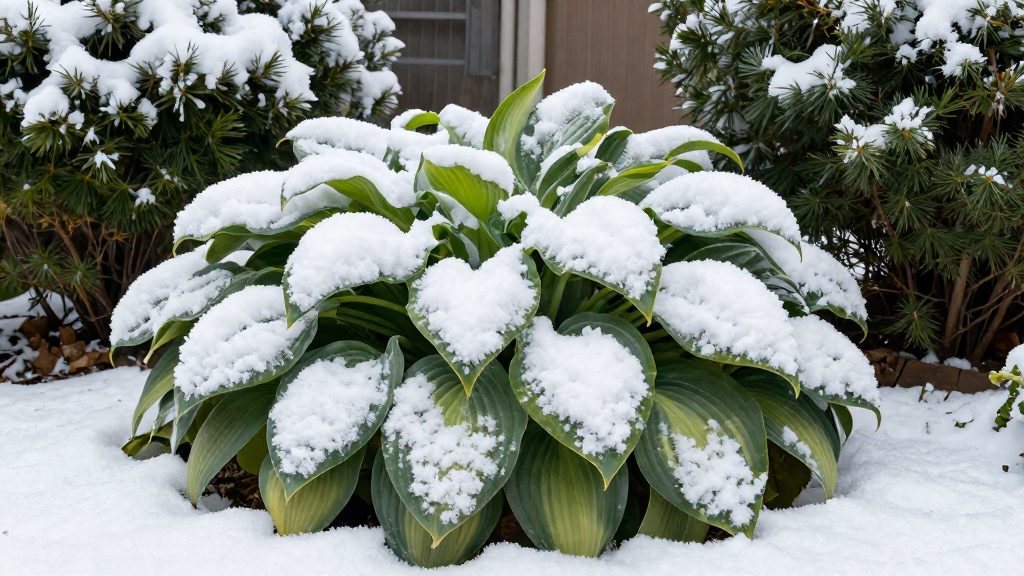
What are the frost dates in zone 4?
In USDA zone 4, the last spring frost typically falls in May and the first fall frost in September or October, giving a frost-free season of roughly 120 to 160 days, according to Urban Farmer Seeds (2026). In Québec City, classed as Canadian zone 4b, the last spring frost is May 15, the first fall frost is September 30, and the frost-free season lasts 138 days, according to Lawn by Season (2026).
| Location | Last spring frost | First fall frost | Frost-free days | Source |
|---|---|---|---|---|
| USDA zone 4 (general) | Typically May | September to October | About 120 to 160 | Urban Farmer Seeds (2026) |
| Québec City (Canadian 4b, about USDA 4a) | May 15 | September 30 | 138 | Lawn by Season (2026) |
How zone 4 subzones shift the dates
Subzone 4B is about one week earlier in spring and one week later in fall than 4A (Urban Farmer Seeds, 2026), so gardeners in 4B can start slightly earlier and those in 4A should expect a slightly shorter frost-free season.
Using the frost dates to time planting
- Hardy roots and greens: Sow once the soil can be worked.
- Warm-season crops (beans, corn, cucumbers, squash, melons): In Québec City, beans and corn are sown around May 15, the same date as the last spring frost (Lawn by Season, 2026).
- Indoor starts: In Québec City, peppers and eggplant are started indoors in early March and broccoli and cabbage in early April.
- Transplanting: Set brassicas and onions out 2 to 3 weeks before the last frost, and tomatoes and peppers 1 to 2 weeks after it, per Lawn by Season (2026).
Indoor Seed-Starting Schedule for Zone 4
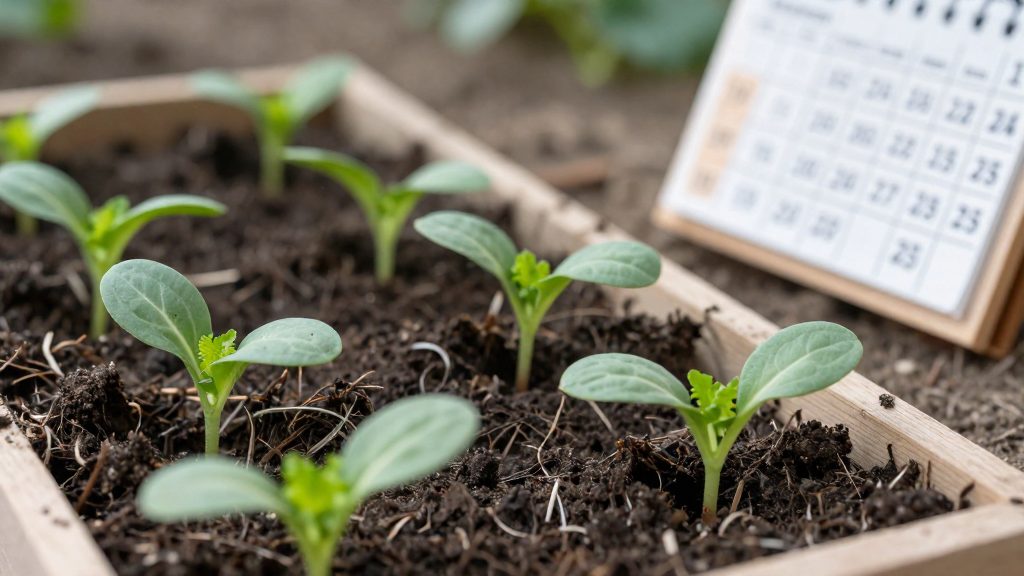
Indoor sowing in zone 4 is timed by counting back from the local last spring frost, not from a fixed calendar date. According to Urban Farmer Seeds (2026), indoor starts are scheduled this way. In zone 4, the last spring frost typically falls in May, and the frost-free season lasts roughly 120 to 160 days.
Counting back from last frost is the core method. Find the last frost date for your location, then set the sowing date so seedlings reach transplant size about the time conditions allow planting outdoors. The official sources consulted do not give a single interval in weeks that applies to every vegetable, so confirm the exact timing against a local frost table.
Lawn by Season (2026) gives a concrete example for Québec City, a zone 4b location with a last spring frost on May 15:
| Crop | Indoor start | Transplant timing |
|---|---|---|
| Peppers | Early March | 1–2 weeks after last frost |
| Broccoli | Early April | 2–3 weeks before last frost |
| Cabbage | Early April | 2–3 weeks before last frost |
The same source lists two crops with only part of the timing:
- Eggplant: indoor start in early March. The transplant date is not specified.
- Tomatoes: transplant 1–2 weeks after last frost. The indoor start date is not specified.
When to Direct-Sow in the Garden?
In zone 4, direct sowing falls into two windows set by frost dates. According to Urban Farmer Seeds (2026), zone 4 has a last spring frost typically in May, a first fall frost in September or October, and a frost-free season of roughly 120 to 160 days. Local dates still decide the exact timing.
Spring Sowing
Hardy roots and greens are the first direct-sown crops of the year. Sowing them early lets them mature before summer heat. Lawn by Season (2026) gives a Québec City example, a Canadian zone 4b location with a last spring frost on May 15, where peas, spinach, lettuce and radishes are direct-sown 4 to 6 weeks before the last frost.
Warm-Season Crops
In Québec City, beans and corn are sown around May 15 (Lawn by Season, 2026). Sowing earlier in cold soil slows germination and growth, so the calendar date should be checked against soil conditions in your own garden.
Subzone Adjustments
Subzone 4B runs about one week earlier in spring than 4A, so check which subzone applies to your garden before setting sowing dates (Urban Farmer Seeds, 2026).
Fall Sowing
For fall crops, roots and greens are direct-sown after the summer heat has passed.
| Crop group | Direct-sowing timing | Reference location |
|---|---|---|
| Peas, spinach, lettuce, radishes | 4 to 6 weeks before last frost | Québec City (Lawn by Season, 2026) |
| Beans, corn | Around May 15 | Québec City (Lawn by Season, 2026) |
| Fall roots and greens | After summer heat | Zone 4 general (Urban Farmer Seeds, 2026) |
When to Transplant Tomatoes and Peppers
Tomatoes and peppers are warm-season crops, so they go into the garden only after the danger of frost has passed and the weather has settled. In zone 4, the reference point is the local last spring frost, which usually falls in May. According to Urban Farmer Seeds (2026), indoor starts are timed by counting back from that local last frost. The frost-free season in zone 4 lasts roughly 120 to 160 days, which limits how early plants can safely go outdoors.
Lawn by Season (2026) gives a concrete example for Québec City, classed as Canadian zone 4b. Its last spring frost is May 15, and its schedule is as follows:
| Crop | Timing in Québec City (Lawn by Season, 2026) |
|---|---|
| Peppers | Start indoors in early March |
| Tomatoes | Transplant 1–2 weeks after last frost |
| Peppers | Transplant 1–2 weeks after last frost |
Because the transplant date depends on the last frost, the same calendar logic applies anywhere in zone 4, but the exact dates shift with the local climate. The official sources consulted do not give a single transplant date valid for all zone 4 locations.
To apply this method:
- Wait for settled weather before moving plants outside, even after the last frost date has passed.
- **Choose a sunny site for the transplanted seedlings, since both crops need full light to fruit.
Which vegetables to plant in autumn?
In zone 4, autumn sowing is timed backward from the first fall frost. The Urban Farmer Seeds calendar places it typically in September to October, with a frost-free season of roughly 120 to 160 days (Urban Farmer Seeds, 2026). Hardy roots and leafy greens are direct-sown after the summer heat has passed, while fall brassicas are started indoors early enough to be transplanted before cool weather arrives.
Direct-sown roots and greens
Sow roots and leafy greens directly in the ground after the summer heat has passed. Allow the days to maturity plus about two extra weeks, since autumn growth is slower.
Brassicas started indoors
Start fall brassicas indoors early enough to transplant them before cool weather arrives.
Garlic: a fall planting example
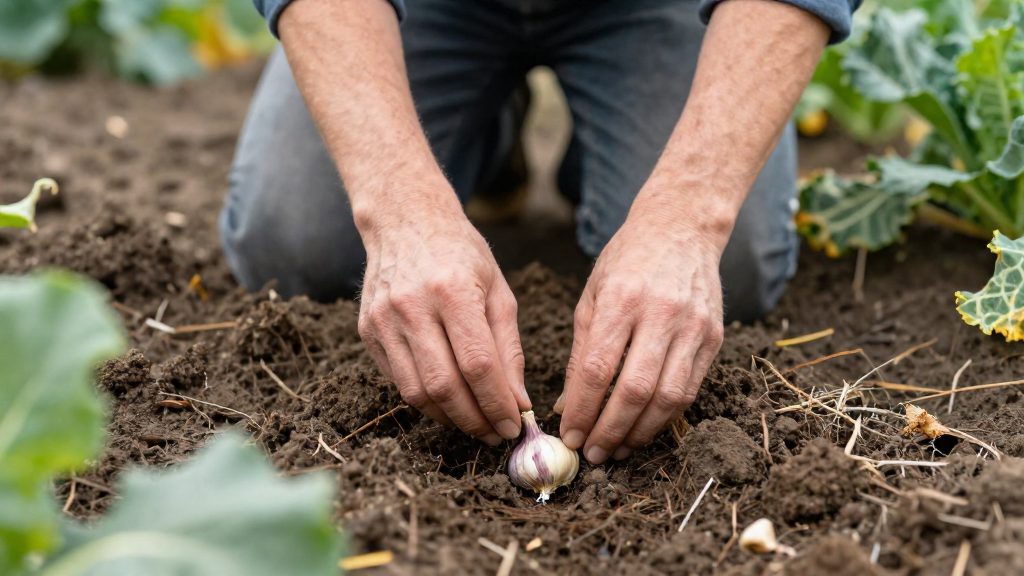
In Québec City, garlic is planted from September to early October (Lawn by Season, 2026). The first fall frost there falls on September 30.
Adapting the calendar to your region
The zone 4 planting calendar gives typical windows, but the actual dates depend on your local last spring frost and first fall frost. According to Urban Farmer Seeds (2026), zone 4 usually has its last spring frost in May and its first fall frost in September or October, with a frost-free season of roughly 120 to 160 days.
If you live near the boundary between subzones 4A and 4B, check which one your location falls into before setting dates.
Use these steps to adjust the calendar:
- Find your last and first frost dates from a local weather or agricultural service. Record both.
Québec City shows how a regional schedule is built. Lawn by Season (2026) reports a last spring frost of May 15, a first fall frost of September 30 and 138 frost-free days. Its timings are:
| Crop | Québec City timing (Lawn by Season, 2026) |
|---|---|
| Peppers and eggplant | Start indoors in early March |
| Broccoli and cabbage | Start indoors in early April |
| Brassicas and onions | Transplant 2 to 3 weeks before last frost |
| Peas, spinach, lettuce and radishes | Direct-sow 4 to 6 weeks before last frost |
| Beans and corn | Sow around May 15 |
| Tomatoes and peppers | Transplant 1 to 2 weeks after last frost |
Apply the same logic to your own frost dates: shift each window earlier or later by the difference between your last frost and the reference date.